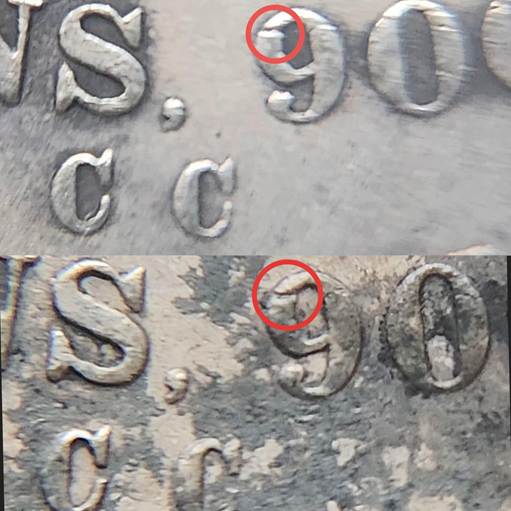
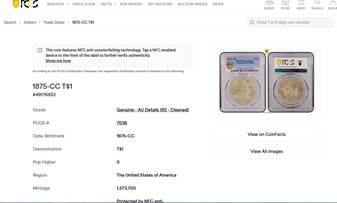
Common Mercury Dime Counterfeits


Key date coins are commonly counterfeited and should be viewed with scrutiny. This subject example of a 1916-D Mercury Dime surfaced and what many would call a “one glance” counterfeit.


The mintmark punch for the 1916-D is easily recognizable, along with 4 mintmark positions for genuine coins. This clearly isn’t a genuine mintmark and as one can tell by the surface quality the coin itself is a counterfeit.


This is one seen routinely through various Facebook groups, you would be hard pressed not to see one of these shared weekly. It isn’t just the key dates targeted (although that is the primary targets). Image comparison of a 1916-D, 1921-D, and 1939-D pictured below. A common reverse with a “bad” mintmark and small surface lump to the right of E.


Common markers in Red:

  • Surface lump to the right of E of ONE
  • Deformed mintmark shape and placement

Markers In Green indicate features not present on all examples. In this case two cracks running though U in “UNITED” and the A in “STATES”.


If you would like to know more about 1916-D markers, click here.

If you like posts like this, please go to our counterfeit archive with reports from Jack Riley, Jack D. Young, John Lorenzo and Michael Bugeja. Also, please subscribe so you can get our weekly newsletter and be informed whenever there is a new article or column.

Proxiblog also has hundreds of followers on Facebook Coin Groups. To get the latest discussion and commentary, be sure to friend us by clicking here.

You can find more information about errors and varieties as well as buying and bidding on coins in Coin News Updated: The Essential Guide to Online Bidding. Please consider purchasing the work for yourself or a friend, as it underwrites this hobbyist website. Thank you.

Family of “Fugazi” Lincoln Cents


By Jack Riley

Fugazi is an Italian slang term meaning “fake” or “bogus,”  referring to a counterfeit object, a sham, or a fraudulent person. People who counterfeit coins are shams and frauds.

We “out” them on Proxiblog.

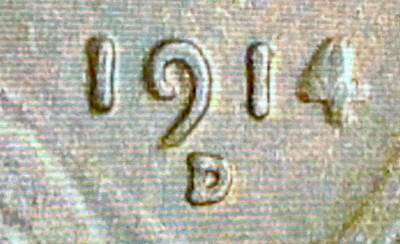
Prompting this article is a 1914-D cent that a friend shared in a large Facebook coin group. After I explained that this was not genuine, I received additional closeup images for analysis.


A closeup image of the date and mintmark shows this coin is not a genuine 1914-D. The shape and placement of the mintmark is incorrect. This, however, is not the case of an altered date or an added mintmark; the entire coin is counterfeit.


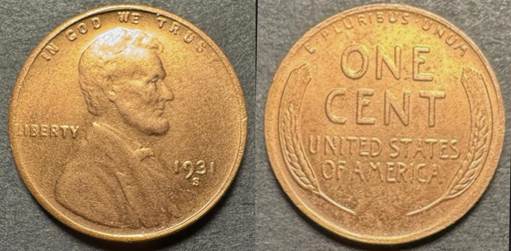
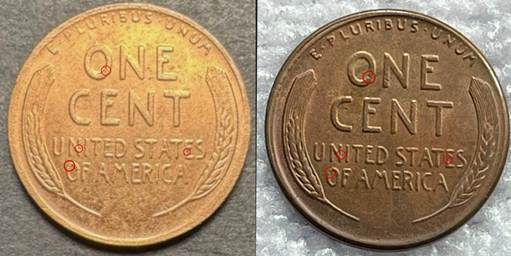
This 1931-S had surfaced on eBay within the last few months. Comparing both reverses it is clear these were produced from the same makers and related to a large “family” of counterfeits. I’m calling this family “Notched O.” More on that momentarily.


The image quality of the 1931-S is subpar, leaving blurry images, yet enough to discern the repeating marks.

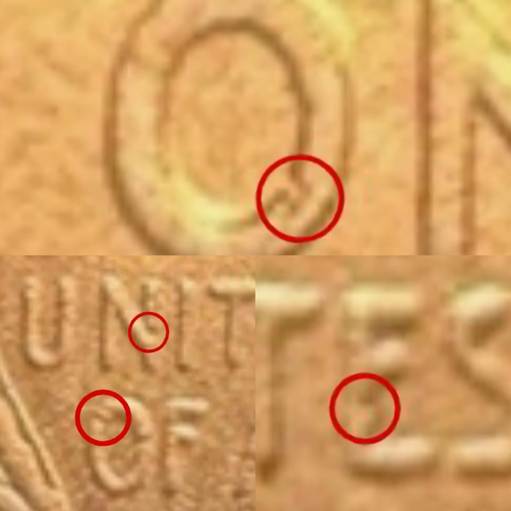
“Common marks” highlighted in Red:

  • Depression in O
  • Dent in “N” as well as the “O” in the word OF
  • Small indent of the “E”

At this writing I’ve only seen this on both 1914-D and 1931-S. Likely this exists on many key and semi key dates as well.

To check if your coin may belong to this “fugazi” (i.e. “fake”), look for those common marks highlighted above in red.

If you like posts like this, you can read more articles on counterfeit coins by Jack D. Young, Jack Riley and Michael Bugeja at this URL. Also, please subscribe so you can get our weekly newsletter and be informed whenever there is a new article or column.

Proxiblog also has thousands of followers on Facebook Coin Groups, YouTube and other venues. To get the latest discussion and commentary, be sure to friend us by clicking here.

You can find more information about errors and varieties as well as buying and bidding on coins in Coin News Updated: The Essential Guide to Online Bidding. Please consider purchasing the work for yourself or a friend, as it underwrites this hobbyist website. Thank you.
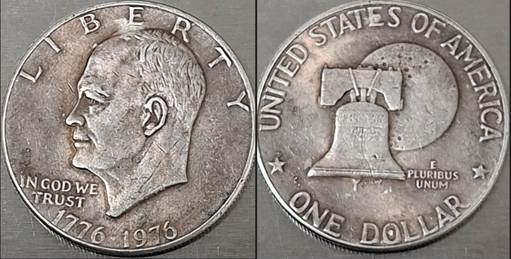
 

An extensive “Family” of counterfeit Washington Quarters


By Jack Riley

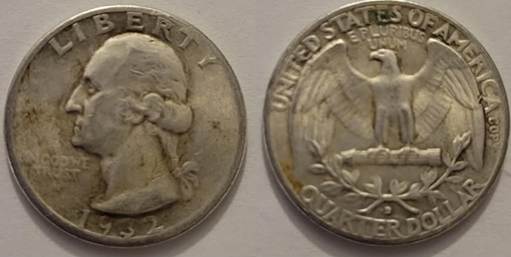
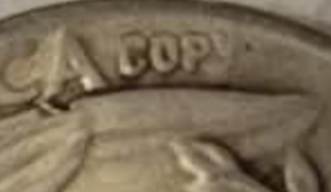
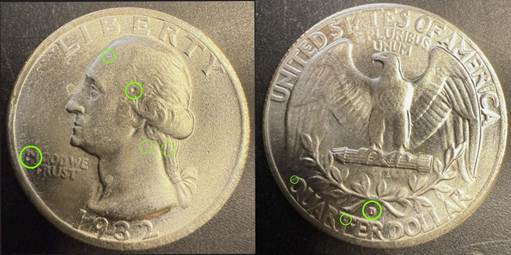
This article stems from a “copy” stamped key date 1932-D Washington Quarter. This abides by the Hobby Protection Act and isn’t to deceive anyone. As we know, counterfeiters don’t abide by the law!


The next example was sent to me by a friend. Highlighted obverse markers match the previous “copy.”


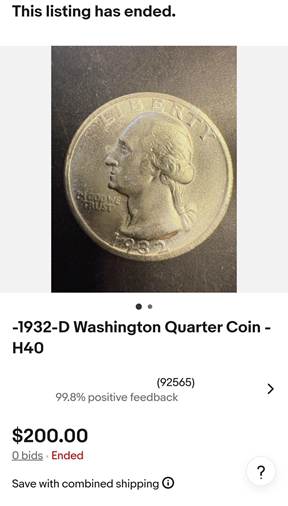
An example surfaced on eBay from a rather large seller. After a brief discussion with them showing this to be a counterfeit they removed the listing. The obverse shares a couple repeating marks, but we see additional ones to be used in the future. The reverse is a match to the example shared to be by a fellow collector.


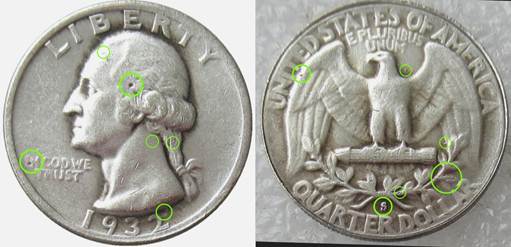
Another internet venue provides us images of a 1932-S that shares this “common obverse.” Highlighted in green are repeating marks for this reverse.


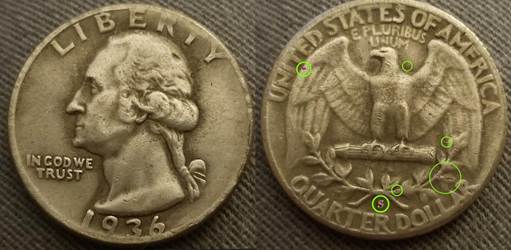
It isn’t only key date coins that counterfeiters target! This 1936-S shares the same reverse as the aforementioned 1932s.


Keep in mint that shopping venues Temu and Etsy sell thousands of replicas, some die struck, further eroding the hobby market.


It is also important to learn die markers for the 1932-D and S key dates. Click here for that.

f you like posts like this, you can read more articles on counterfeit coins by Jack D. Young, Jack Riley and Michael Bugeja at this URL. Also, please subscribe so you can get our weekly newsletter and be informed whenever there is a new article or column.

Proxiblog also has thousands of followers on Facebook Coin Groups, YouTube and other venues. To get the latest discussion and commentary, be sure to friend us by clicking here.

You can find more information about errors and varieties as well as buying and bidding on coins in Coin News Updated: The Essential Guide to Online Bidding. Please consider purchasing the work for yourself or a friend, as it underwrites this hobbyist website. Thank you.
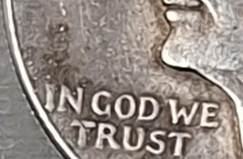
Primer on “Not PCGS” Fakes

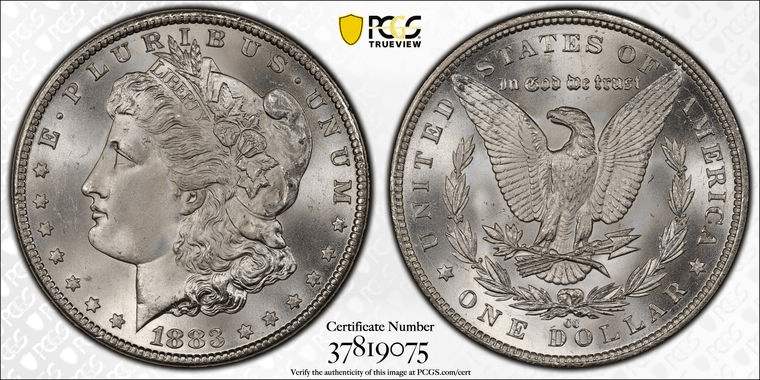
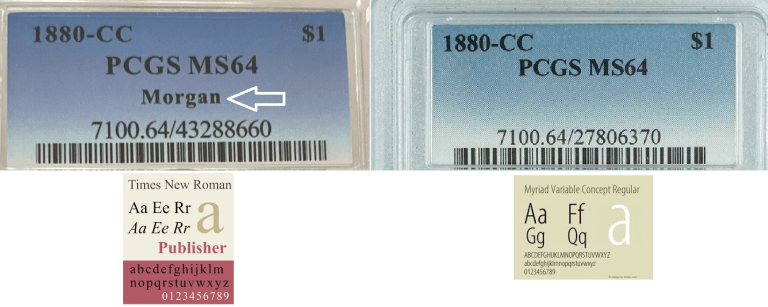
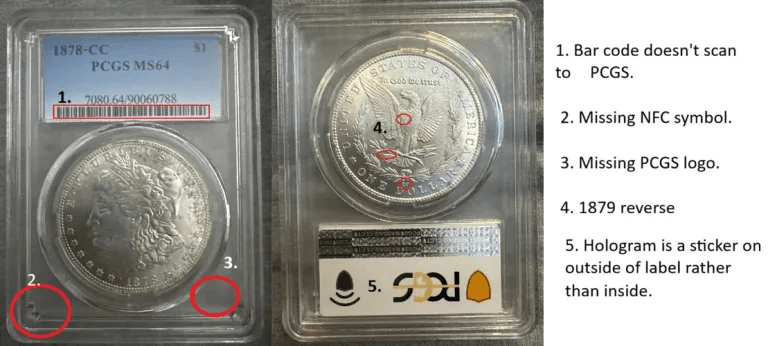
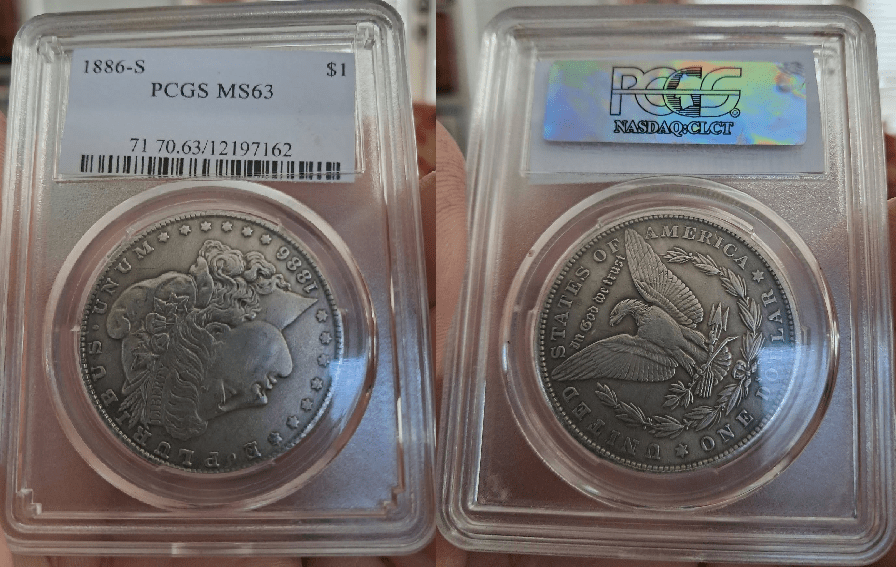
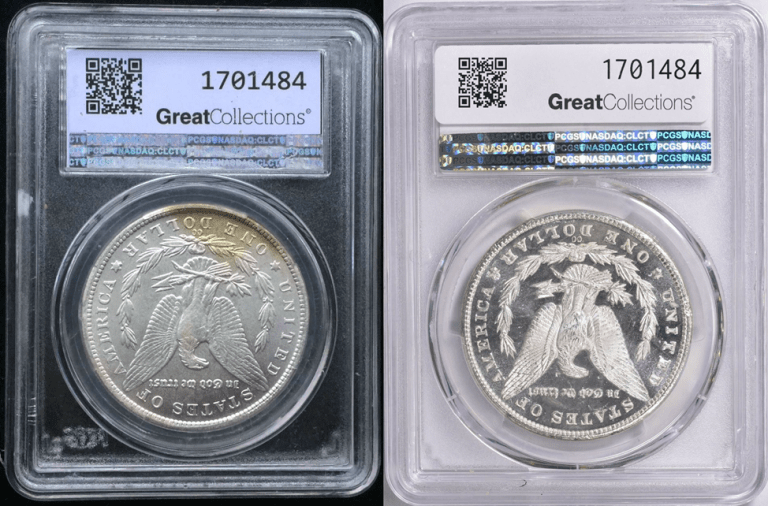
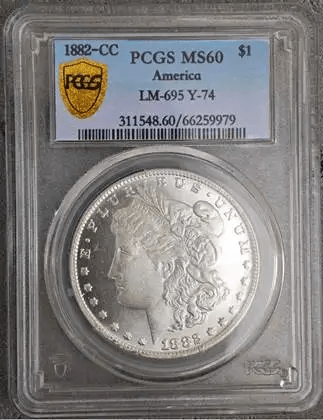
This video documents the various ways to identify fake Chinese holders and coins, including lack of logos on slab, pasted Gold Shield sticker, wrong fonts, wrong 1921 label, wrong reverse and so much more. Below the video is a an example of a Carson City Morgan dollar with six significant problems signifying a counterfeit.


This coin was posted on a Facebook coin group feed.


WRONG FONT


Missing NFC Logo


PCGS Cert Shows Different Coin


QR Code Opens to Chinese Fake Certification Site


For more in-depth analysis, see “Detecting Counterfeit Coins.

If you like posts like this, you can read more articles on counterfeit coins by Jack D. Young, Jack Riley and Michael Bugeja at this URL. Also, please subscribe so you can get our weekly newsletter and be informed whenever there is a new article or column.

Proxiblog also has thousands of followers on Facebook Coin Groups, YouTube and other venues. To get the latest discussion and commentary, be sure to friend us by clicking here.

You can find more information about errors and varieties as well as buying and bidding on coins in Coin News Updated: The Essential Guide to Online Bidding. Please consider purchasing the work for yourself or a friend, as it underwrites this hobbyist website. Thank you.

Counterfeit Lafayette Dollars


By Jack Riley

Internet venues often give rather interesting finds. In this case, modern counterfeit Lafayette Dollars.

The Lafayette Dollar was the first U.S. commemorative silver dollar, and the first coin to feature an American citizen (Lafayette; made honorary citizen by Congress) and a U.S. President (Washington) together. Add to that its scarcity in mint condition due to low sales and melting.

So this coin is a target of counterfeiters.

The image below is from a semi-large eBay seller who has a number of legitimate coins listed; however, in the mix of these there lies a counterfeit Lafayette Dollar. If anyone wants to authenticate a Lafayette Dollar there are 5 known DuVall varieties and that can be sourced from VAMWorld; these examples do not attribute.


A comparable example below is sourced from a larger Facebook coin group. Presented as s questionable, the coin at a glance looks suspicious.


Comparing the two “coins” we can see a few repeating marks highlighted in green:

  • Depression in A
  • Small circular dot behind the eye
  • Depression on the top of the tail
  • Two sporadic field dots above the date

This third example below clearly stated “copy” and was derived from another online source known for selling counterfeit U.S. coins. Additional markers in red denote common similarities; yet these did not appear present on the eBay example. They are present on the piece shared in the large group.

Highlighted repeating marks in red:

  • Lines protruding from ETT
  • Spike from T
  • Apparently scratch from behind the shoulder
  • “Boot Spur”

If you spot a counterfeit coin on eBay, report it immediately using the “Report Item” link on the listing to eBay’s Trust & Safety team.

If you like posthttps://www.amazon.com/dp/B0D131V2QRs like this, you can read more articles on counterfeit coins by Jack D. Young, Jack Riley and Michael Bugeja at this URL. Also, please subscribe so you can be informed whenever there is a new article or column.

Proxiblog also has hundreds of followers on Facebook Coin Groups. To get the latest discussion and commentary, be sure to friend us by clicking here.

You can find more information about errors and varieties as well as buying and bidding on coins in Coin News Updated: The Essential Guide to Online Bidding. Please consider purchasing the work for yourself or a friend, as it underwrites this hobbyist website. Thank you.

NOT NGC 1909s VDB


By Jack Riley

My daily internet browsing yields some interesting finds. Occasionally some nice varieties and of course a number of counterfeits. On my routine search of counterfeit 1909s VDB cents this example surfaced.


As we recommended to all collectors when looking at third party graded coins to always check the cert number. The cert matches an NGC authenticated example.


I shared the images with fellow Proxiblog contributor Jack Young and he made this collage image. eBay counterfeit example on the left and genuine NGC example on the right. Quoting Jack “A swing and a miss.”


So this obviously is not a genuine NGC authenticated example, nor is this a legitimate NGC holder! So one may ask “Is the coin real?” Well, no it isn’t. The images provided were very blurry and difficult to distinguish which related “family” it belonged to. What is visible and discernible is it shares a common obverse that is mismatched across the series with an indentation on Lincoln’s lapel.


The 1909-S VDB is the most counterfeited coin exported from China. In addition to fakes, they make die stuck replicas–sometimes with all die markers, sometimes not. It takes an expert eye to detect them. And as I now show, they sometimes come in NGC and PCGS fake holders.

Checking the cert is important. NGC shows photos of its slabbed coins. PCGS shows photos only if TrueView accompanies the coin. That makes China fakes in PCGS holders suspect. Often, however, the counterfeit holders lack accurate bar codes and other insignia.

The best way to guard against buying a counterfeit coin is to purchase one from a reputable dealer. Barring that, view my and Jack Young’s and Michael Bugeja’s articles on counterfeit coins published by Proxiblog.

If you like posts like this, please subscribe so you can be informed whenever there is a new article or column.

Proxiblog also has more than a thousand friends and followers on Facebook Coin Groups and thousands more across YouTube and social media. To get the latest discussion and commentary, be sure to friend us by clicking here.

You can find more information about errors and varieties as well as buying and bidding on coins in Coin News Updated: The Essential Guide to Online Bidding. Please consider purchasing the work for yourself or a friend, as it underwrites this hobbyist website. Thank you.

Counterfeit “Lumped Wheat” Stalk Reverse


By Jack Riley

I enjoy browsing through various Facebook coin groups and seeing what collectors have acquired and enjoy. While scrolling through a rather large group I came across a post where a fellow collector had completed his Lincoln Wheat Cent collection. A major milestone for any collector! In the mix was a 1909s Cent, about which I commented, and later had a private message conversation explaining that this was a counterfeit and showed proof.

He stated it was bought on eBay from a non-reputable seller in a “shotgun roll.” These are rolls of wheat cents hand assembled with generally a nicer condition coin or key date on the ends. This fell within the 30-day return policy so the collector should get his money back after returning the coins to the seller.


Another online venue offered this counterfeit 1909s. Both coins share a common reverse that has been known for awhile.


Image comparison of both coins show many repeating marks. Highlighted in green are common to all coins with this reverse and include:

  • Lump at the edge of wheat stalk
  • Small lump inside of ONE

Highlighted in red are common but not seen on all examples.

  • Crack from the rim to Wheat stalk
  • Extending Crack through the stalk to the field

Being the Lincoln Cent series is one of the most popular to collectors and many key/semi key dates are needed to complete the set, it is of no surprise this counterfeit family is extensive. Other dates that have been seen from this family include the 1931s, 1955 “DDO”, and 1924D cents imaged below.


A close-up collage of identifying marks.


If anyone thought it was just key/semi key dates that are counterfeited, you would be wrong. Here is a common date 1958 exhibiting the “Lumped reverse.”


For more information, including die markers, see Michael Bugeja’s post, titled, “Identifying Fake 1909-S VDB Cents.” Now collectors have two comprehensive articles about this key date. Proxiblog strongly encourages any Lincoln cent collector to read and refer to these two articles before bidding on any raw 1909-S VDB. Also, make sure to check the certification to ensure that the holder also is not counterfeit.

Proxiblog advises newer collectors to follow these general guidelines:

  1. If you are ready to bid hundreds of dollars on a coin, resist buying a raw one and shop for one holdered by PCGS, NGC, ANACS and CAC.
  2. Be especially careful when purchasing raw coins from eBay and other online venues. AI bots cannot detect counterfeits, so you are on your own.
  3. Make sure the seller takes returns and has good reviews. Also, the number of positive reviews is a good indicator. If someone has 0 sales or even fewer than 100, do not take a chance.
  4. If you already bought the coin, weigh it and go to PCGS CoinFacts for the date and mintmark, checking your coin against weights and dimensions.
  5. Read this article about detecting counterfeits.

If you like posts like this, you can read more articles on counterfeit coins by Jack Riley, Jack D. Young and Michael Bugeja at this URL. Also, please subscribe so you can get our weekly newsletter and be informed whenever there is a new article or column.

Proxiblog also has more than a thousand friends and followers on Facebook Coin Groups and thousands more across YouTube and social media. To get the latest discussion and commentary, be sure to friend us by clicking here.

You can find more information about errors and varieties as well as buying and bidding on coins in Coin News Updated: The Essential Guide to Online Bidding. Please consider purchasing the work for yourself or a friend, as it underwrites this hobbyist website. Thank you.

Common Fake P-Mint Morgan Dollars


By Jack Riley

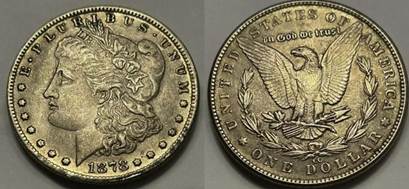
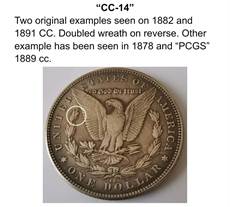
Prompting this article is a counterfeit 1878-P Morgan Dollar previously listed in an eBay auction. The coin immediately caught my attention due to a well known counterfeit C3 reverse. Interestingly, 1878-P Morgan Dollars can feature a C3 reverse paired with a broken right fourth star–a detail that makes this particular counterfeit especially noteworthy.


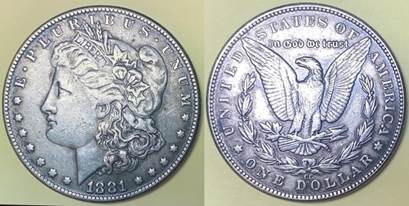
In a comparison with this 1884-P example we can see the reverse is a match. The 1884 coin also shows clear signs of being cast and weighs less than 23 grams. The weight further reinforces the conclusion that is a counterfeit.


A detailed comparison of the reverses reveal repeating circulation marks:

  • A noticeable depression of the “N” in the Motto.
  • Two small circular lumps positioned above above the wreath.
  • A distinct indentation adjacent to the eagle’s head.

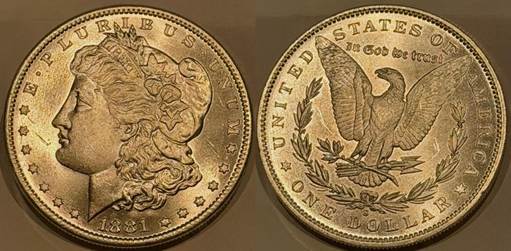
This counterfeit “Family” is extensive, encompassing nearly every date within the Morgan Dollar series.

Markers highlighted in Red indicate additional markers that are not presented on all specimens of this reverse but have been observed across several known examples.

Markers highlighted in Green denote consistent features found on every instance of this “common reverse”, serving as the most reliable identifiers.


Remarkably, while drafting this article, yet another 1878 Morgan Dollar appeared for sale on eBay, further underscoring the prevalence of this counterfeit operation.


The obverse is crudely executed, whereas the reverse presents a more convincing appearance. Though the listing features blurred and seemingly edited photographs, raising questions of intent. In this instance, the images are presented without highlighted markers to allow readers to examine these features in their unaltered form. Observant readers will recognize that this reverse is identical to that of the 1879-P example illustrated above.


Once again, these counterfeits remind me to advise newer collectors to follow these general guidelines:

  1. If you are ready to bid hundreds of dollars on a coin, resist buying a raw one and shop for one holdered by PCGS, NGC, ANACS and CAC.
  2. Be especially careful when purchasing raw coins from eBay and other online venues. TAI bots cannot detect counterfeits, so you are on your own.
  3. Make sure the seller takes returns and has good reviews. Also, the number of positive reviews is a good indicator. If someone has 0 sales or even fewer than 100, do not take a chance.
  4. Weigh the coin and go to PCGS CoinFacts for the date and mintmark, checking your coin against weights and dimensions.
  5. Read this article about detecting counterfeits.

If you like posts like this, you can read more articles on counterfeit coins by Jack Riley, Jack D. Young and Michael Bugeja at this URL. Also, please subscribe so you can get our weekly newsletter and be informed whenever there is a new article or column.


Proxiblog also has more than a thousand friends and followers on Facebook Coin Groups. To get the latest discussion and commentary, be sure to friend us by clicking here.

You can find more information about errors and varieties as well as buying and bidding on coins in Coin News Updated: The Essential Guide to Online Bidding. Please consider purchasing the work for yourself or a friend, as it underwrites this hobbyist website. Thank you.

Counterfeit IN-Line Lincoln Cents

By Jack Riley

The Lincoln cent series is arguably the most popular in numismatics, with many young collectors getting their start filling Whitman Folders in hopes to find the “key dates.” With such a popular series and many expensive coins to complete the set, one would expect to see many counterfeits. Many types of fake wheat cents exist, including altered dates, added mintmarks, cast coins, and plated cents. This article dives into a modern counterfeit common reverse used interchangeably on mainly key date coins that I refer to as the “IN-Line” reverse.

Images of two counterfeit 1909s VDB cents offered on eBay.


Both coins showcase a Deep N reverse (Type 2) which was used in 1909 and followed through the end of the series in 1958; however, all genuine 1909s VDB cents have a Shallow N (Type 1).

A comparison of the reverse shows common circulation marks between the two. A dent in the “O” culminating with the “IN” slash.


Interestingly this reverse was utilized with and without the “VDB” initials! This 1914-D and 1955 DDO share the “IN-Line” reverse with no remnants of the VDB initials.


This extensive family even consist of struck counterfeit common date “Off-center” errors!


Since viewing can be a challenge to the readers, I assembled close-up collage of the highlighted markers. 


This has primarily been used to create counterfeit key date and semi key date coins. However, with the addition of the off-center strike 1946s, it is clear this can be found on common dates as well as counterfeit error coins.

If you are collecting key dates, especially the 1909-S VDB, be sure as well to view Michael Bugeja’s article with all the requisite die markers.

If you like posts like this, you can read more articles on buying, selling and collecting at Proxiblog.org. Also, please subscribe to get our weekly newsletter and be informed whenever there is a new article or column.

Proxiblog also has hundreds of followers on Facebook Coin Groups. To get the latest discussion and commentary, be sure to friend us by clicking here.

You can find more information about errors and varieties as well as buying and bidding on coins in Coin News Updated: The Essential Guide to Online Bidding. Please consider purchasing the work for yourself or a friend, as it underwrites this hobbyist website. Thank you.

Fake 1918 Half: “Ruptured ‘N’ Family”

By Jack Riley

A counterfeit 1918 Half Dollar–part of what I refer to as the “Ruptured N Family”–has been documented for several years and recently surfaced on Facebook, prompting this article. As is common with many modern counterfeits, the piece displays grainy surfaces, raised lumps within the fields, and design elements that appear inconsistent with genuine examples and poorly executed.

Another example offered online from a non-reputable source.


A comparison of the obverses show repeating marks with a prominent depression of the “N” and a noticeable dent in the lower gown.


Of course, this would not be considered a “family” without additional dates. Evidence suggests a large-scale operation, with counterfeiters mixing and matching both obverse and reverse dies. Notably the 1920 and 1947 dated examples also display the distinctive large dot on the sun (highlighted in red).


Given the mix of various date and mintmark combinations, I did not provide an overview of the reverses, as they differ significantly. On the obverse, however, two consistent diagnostics are always present.


Once again, this counterfeit family reminds me to advise newer collectors to follow these general guidelines:

  1. If you are ready to bid hundreds of dollars on a coin, resist buying a raw one and shop for one holdered by PCGS, NGC, ANACS and CAC.
  2. Be especially careful when purchasing raw coins from eBay and other online venues. TAI bots cannot detect counterfeits, so you are on your own.
  3. Make sure the seller takes returns and has good reviews. Also, the number of positive reviews is a good indicator. If someone has 0 sales or even fewer than 100, do not take a chance.
  4. Weigh the coin and go to PCGS CoinFacts for the date and mintmark, checking your coin against weights and dimensions.
  5. Read this article about detecting counterfeits.

If you like posts like this, you can read more articles on counterfeit coins by Jack Riley, Jack D. Young and Michael Bugeja at this URL. Also, please subscribe so you can get our weekly newsletter and be informed whenever there is a new article or column.

Proxiblog also has thousands of followers on Facebook Coin Groups, YouTube and social media. To get the latest discussion and commentary, be sure to friend us by clicking here.

You can find more information about errors and varieties as well as buying and bidding on coins in Coin News Updated: The Essential Guide to Online Bidding. Please consider purchasing the work for yourself or a friend, as it underwrites this hobbyist website. Thank you.