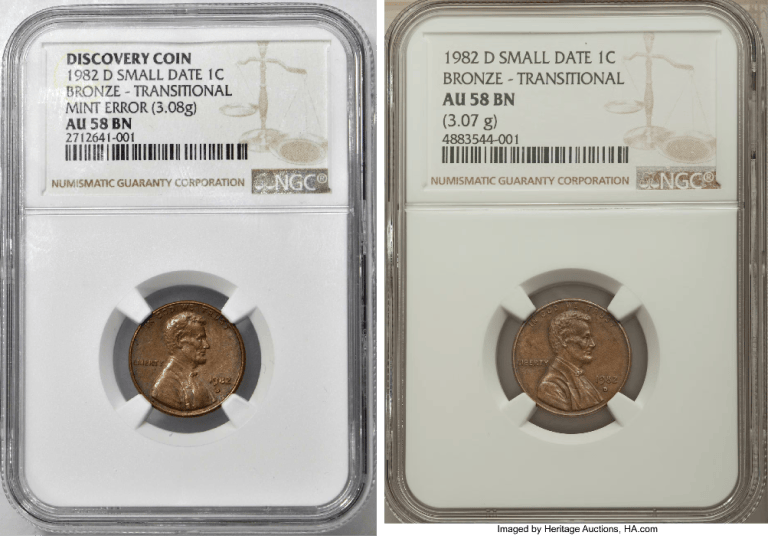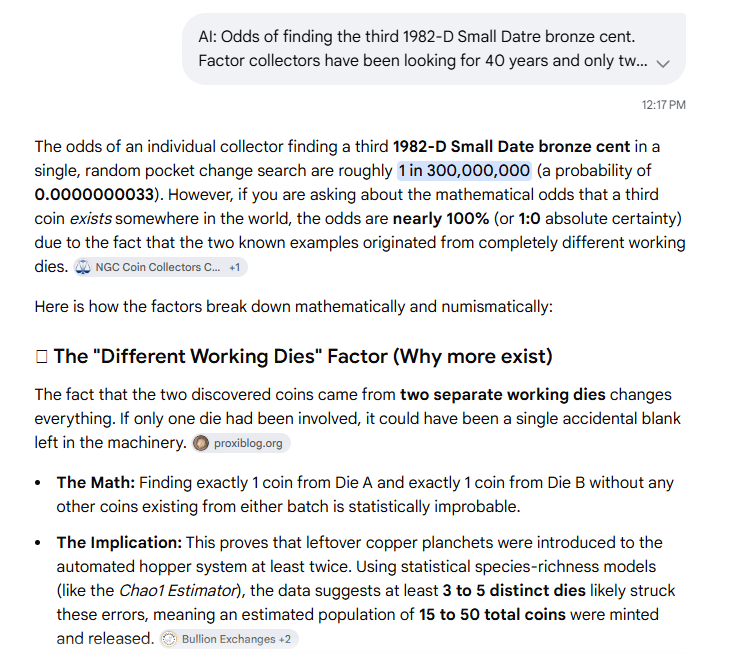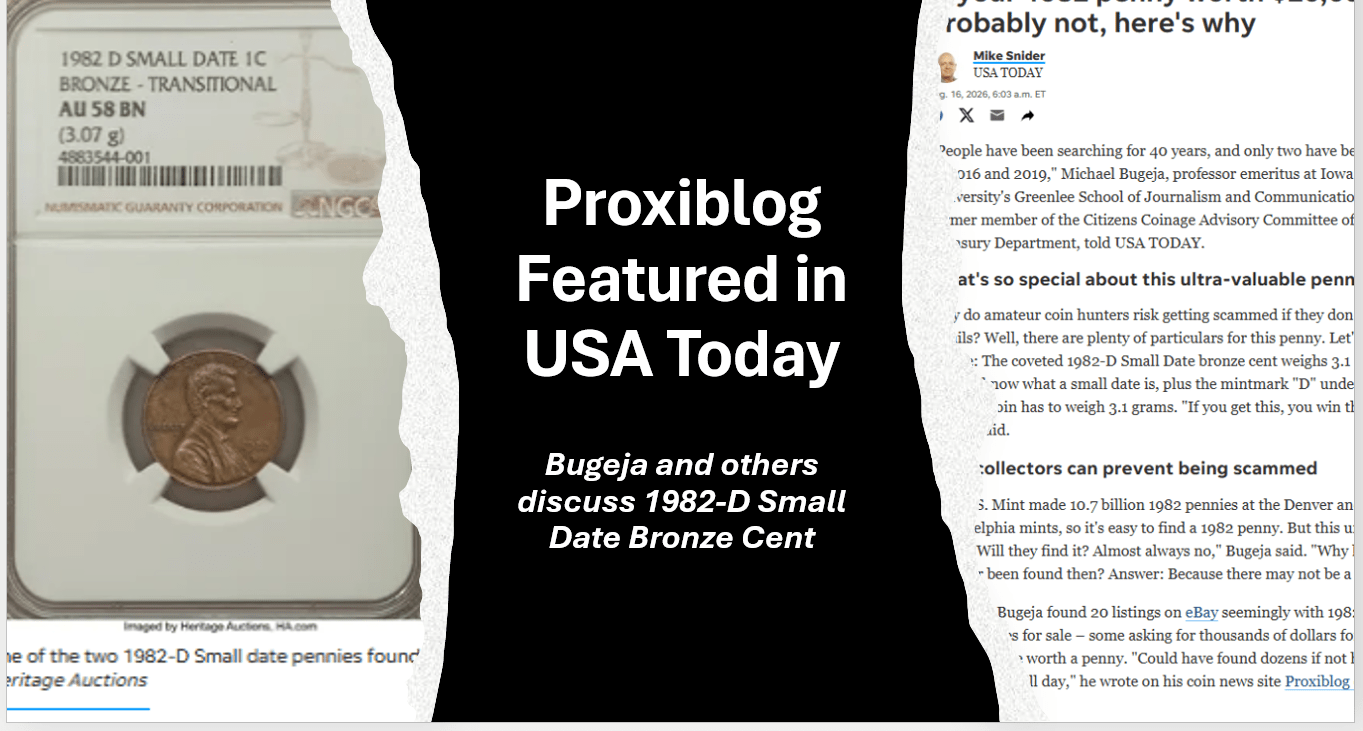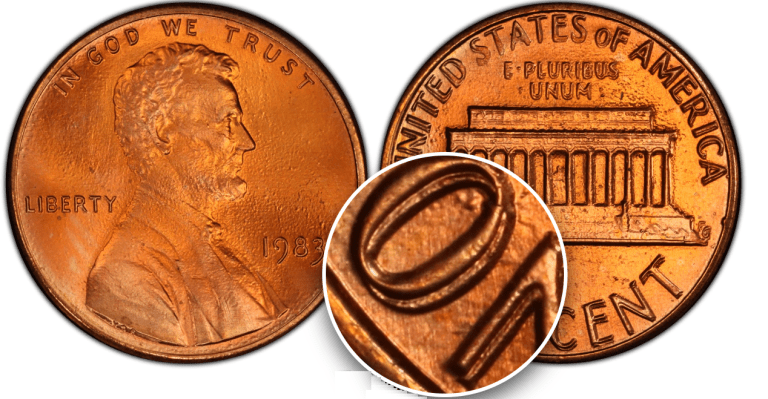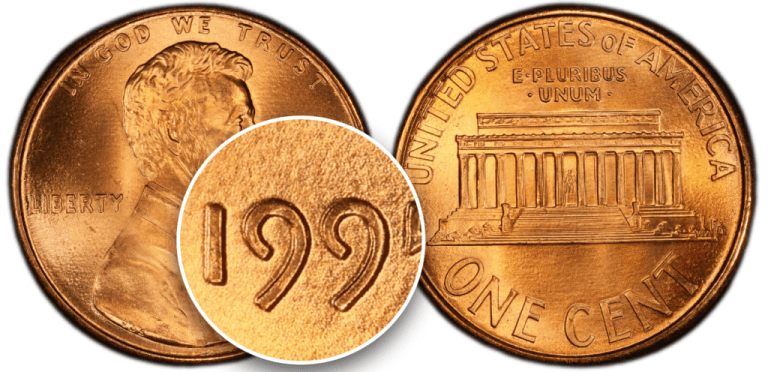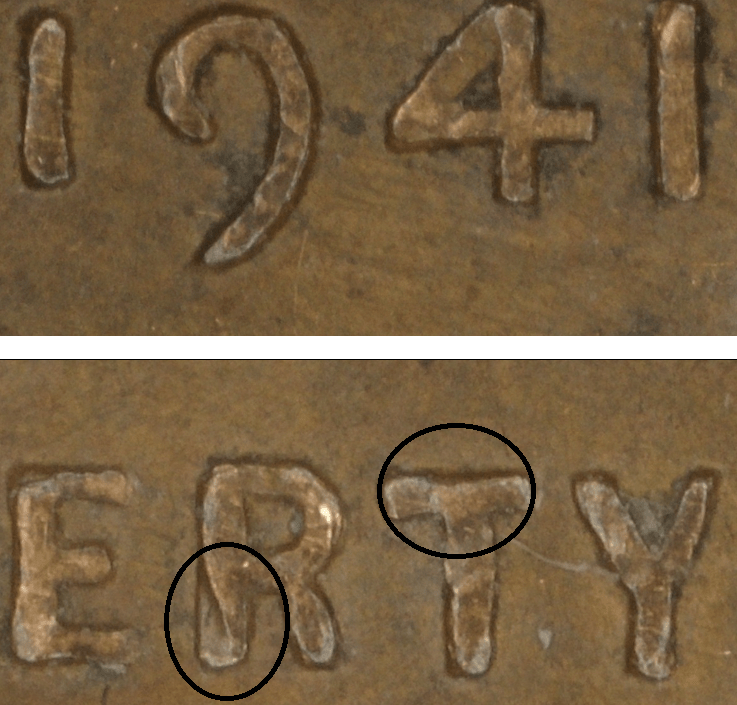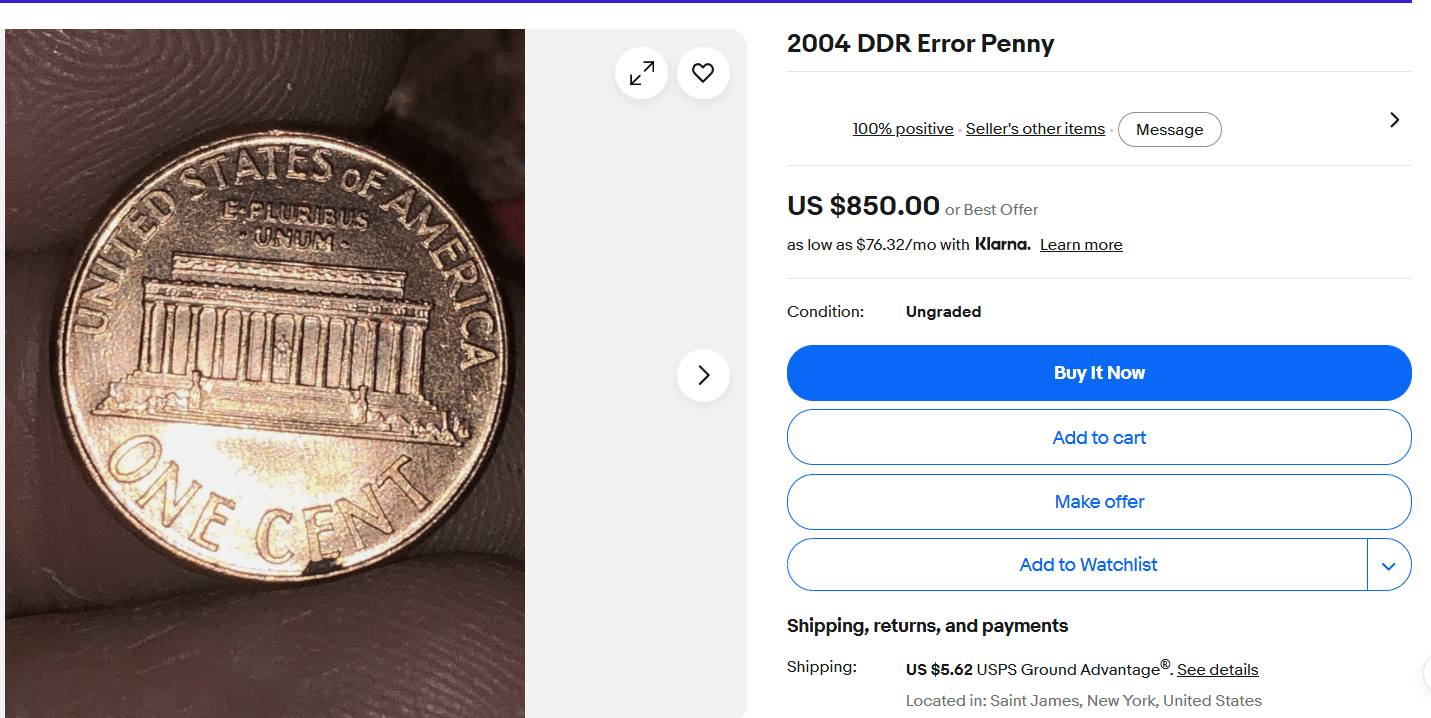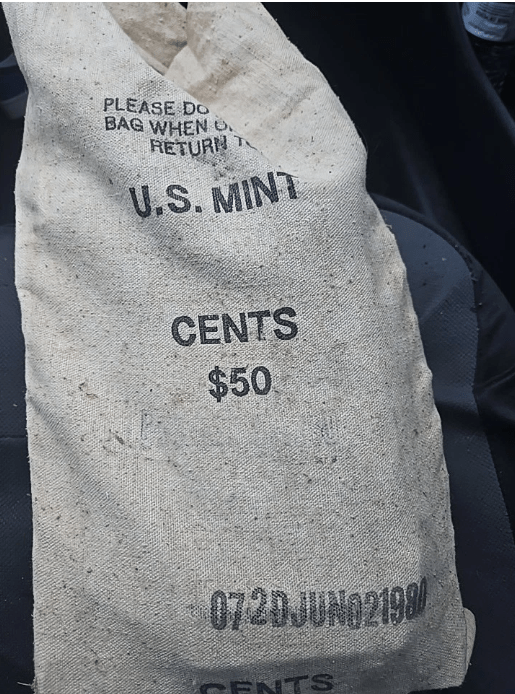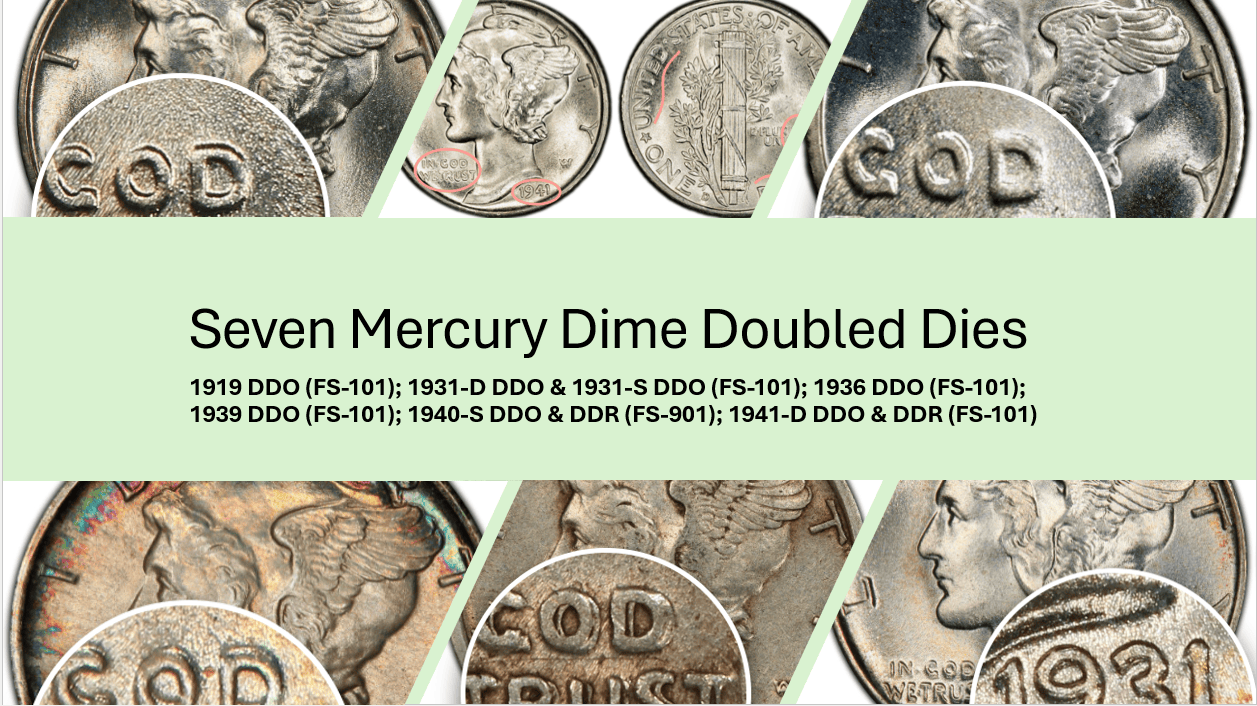
There are all manner of scams by people looking to cash in on collectors who do not know markers for ultra rarities. And when it comes to the 1982-D Small Date Bronze transitional error, there is a desperation by newbies educated by clickbait social media that the third example is out there in pocket change.
Sellers take advantage of such ignorance.
If you are interested in an article about the various types of 1982 cents, including all markers for the transitional error, click here.
But let’s cut to the chase with basic knowledge.
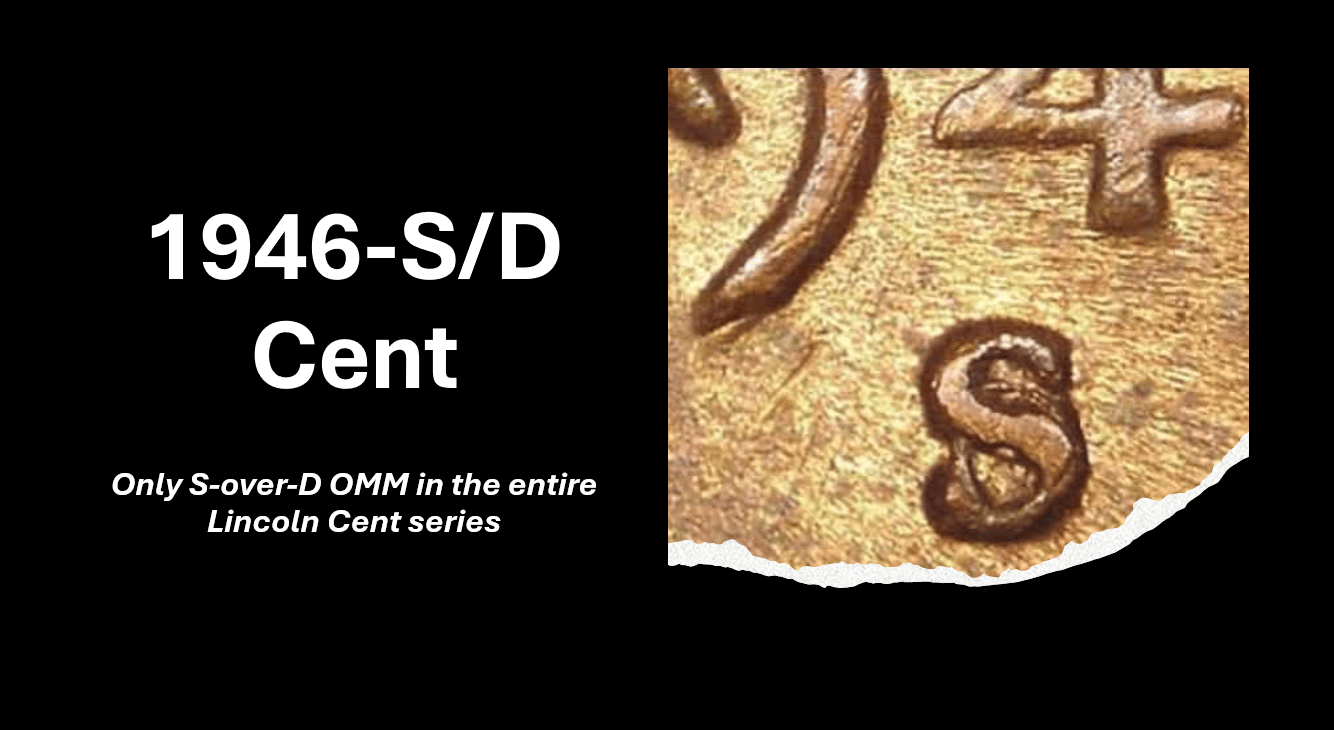
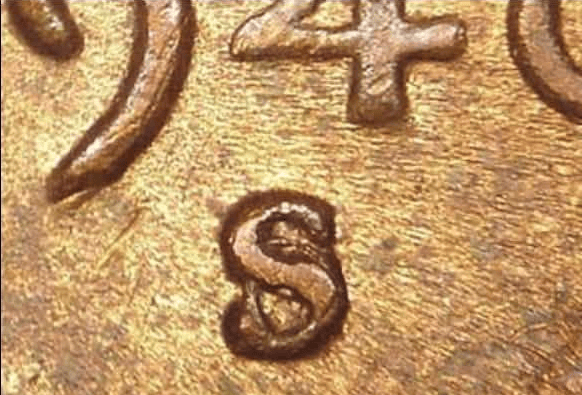
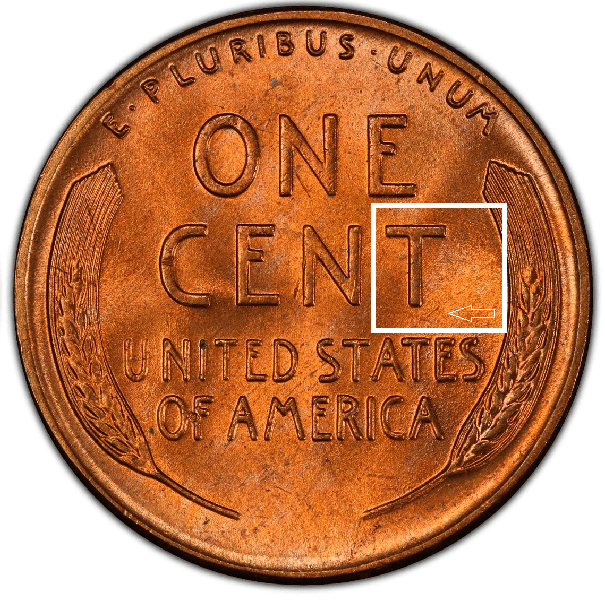
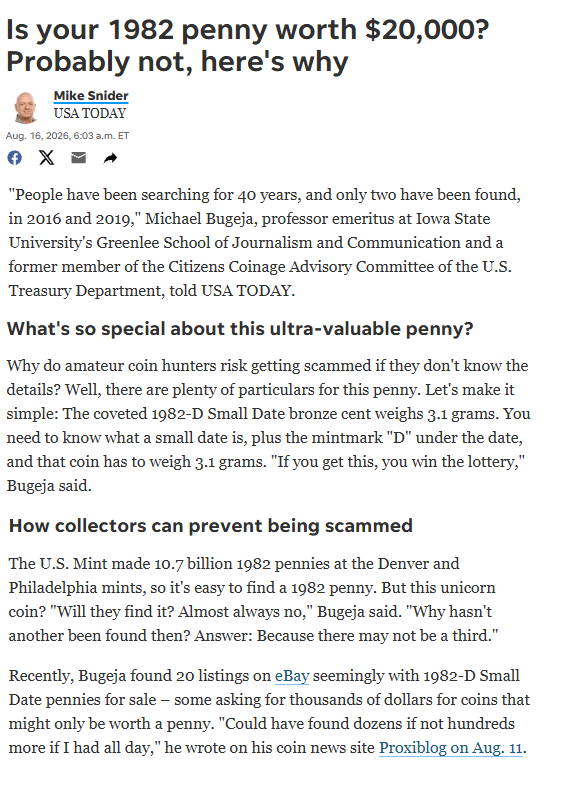
Only two 1982-D Small Date 3.1 grams have been found.
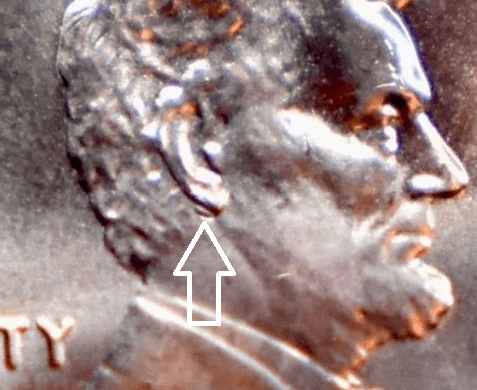
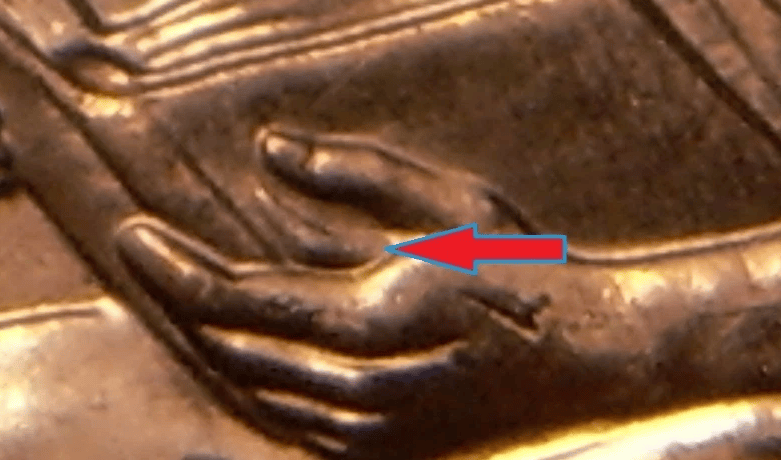
Here’s how they look close up.
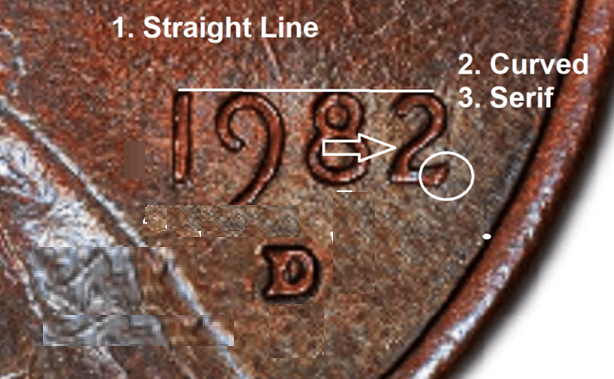
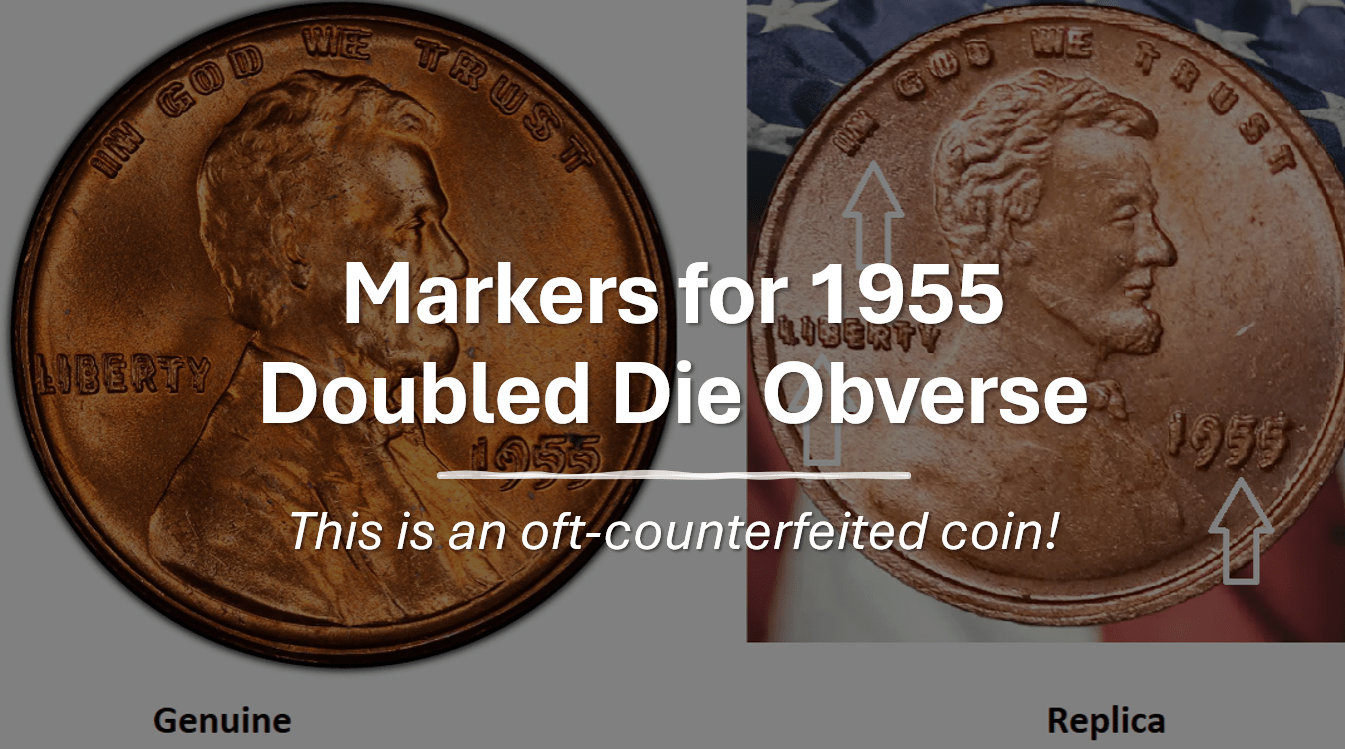
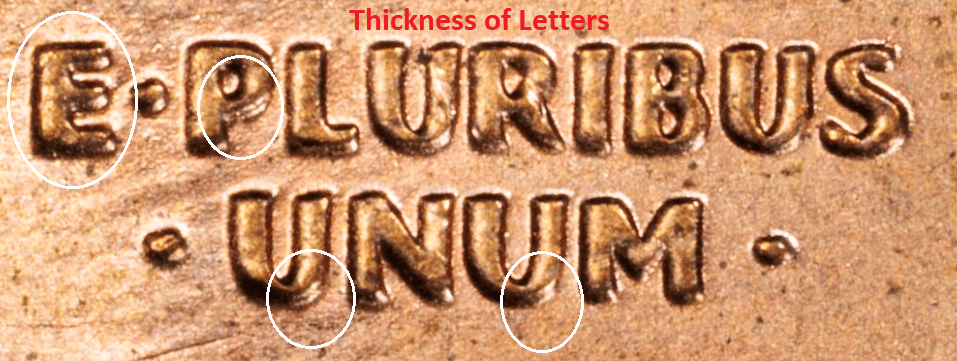
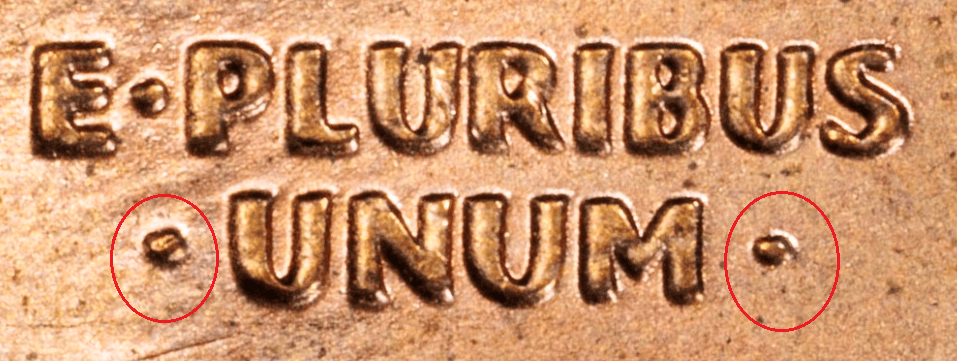
Here are markers for the small date.
DO NOT bid or buy any coin that is placed on a scale reading 3.1. You’ll be buying a zinc small date, of little or no value. Or a coin on tinkered scale.
You will see several examples on eBay of sellers showing a regular 1982-D large date bronze cent in a PCGS holder. Sellers think if they claim a regular strike is the small date, you’ll believe it, only because it is holdered by PCGS and you don’t know the markers.
Here’s an example:
Here’s how to decipher.
There are two numbers below the condition. In this case below, 146021.58, means two things: 146021 goes to the CoinFacts designation and the 58, the condition, AU58. In the image below, you can see that the 146021 goes to the regular large date strike.
Here’s another example with the seller claiming this large date is a small date. Again, the 146021 gives it away.
The seller of the above coin did not take kindly to my message that this is a scam.
He doesn’t like his time being wasted. He just wants to waste your money.
Ultra rarities are not found in pocket change; when one is, that becomes a national news story. If you think you found one, do not post it on social media and claim authenticity. If you are so sure, send it to PCGS, NGC, ANACS or CAC. And if you want to buy an ultra rarity, make sure you know how to read the holder company label.
If you like posts like this, subscribe so you can be informed whenever there is a new article or column.
Proxiblog also has thousands of followers on Facebook Coin Groups, YouTube and other social media. To get the latest discussion and commentary, be sure to friend us by clicking here.
You can find more information about types, varieties, errors, grading, bidding and buying in Coin News Updated: The Essential Guide to Online Bidding. Please consider buying or gifting the work for a friend, as it underwrites this hobbyist blog. Thank you.
Machines that make coins do so with tens of tons of pressure from incredibly high-speed mass production coining presses that use brittle steel dies on all manner of planchets, some with thin-plating zinc. As working dies reach the end of their lives, or as machines rattle from all that pressure, these common errors occur on different denominations (consult the Illustrated Glossary for definitions):
die chatter
die chips
die cracks
die gouge
delamination
die dent
die deterioration
filled mint marks
machine doubling
plating blisters
roller marks
split plating
struck through
These are only worth a few dollars, if you can find anyone who wants to buy them. Go to the “sold” button on eBay and you’ll see the results.
Here’s some die crack examples:
How, specifically, do these errors happen?
Die Deterioration, Chips, Cracks, Gouges, Die Chatter: These occur when working dies–minting hundreds of thousands of coins–become worn from the pressure and brittle. Minute pieces of the die break or crack from the pressure, and metal fill the voids with raised appearance.
Machine Doubling, Die Deterioration Doubling, Die Dents: These are mechanical errors as opposed to mint errors. They occur when the die bounces or moves during coining. The result is not raised but shelflike.
Filled Mintmarks: Until the late 1980s, mintmarks were punched directly into the working die. This was an extra step back then, so not only do the mintmarks appear in different places but also, depending on the punch, were susceptible to clogging.
Plating Blisters, Split Plating Doubling: After 1982, cents were made of zinc. these are caused by trapped gas or thin copper plating breaking over the zinc core, often mimicking doubling.
Roller Marks: Not technically an error, these resemble the mint error on cents called “woodies” (again, consult the glossary) that look like wood grain due to improper annealing. But roller lines are caused by uncleaned rollers used in the minting process.
Delamination: This happens a metal alloy does not cohere properly, resulting in the surface peeling off. These are common in older coins, especially zinc cents.
You do not need a coin microscope to see these. Magnification makes these common errors look significant; they are not. At best these sell for a few dollars on eBay.
If you like posts like this, subscribe so you can be informed whenever there is a new article or column.
Proxiblog also has thousands of followers on Facebook Coin Groups, YouTube and other social media. To get the latest discussion and commentary, be sure to friend us by clicking here.
You can find more information about types, varieties, errors, grading, bidding and buying in Coin News Updated: The Essential Guide to Online Bidding. Please consider buying or gifting the work for a friend, as it underwrites this hobbyist blog. Thank you.
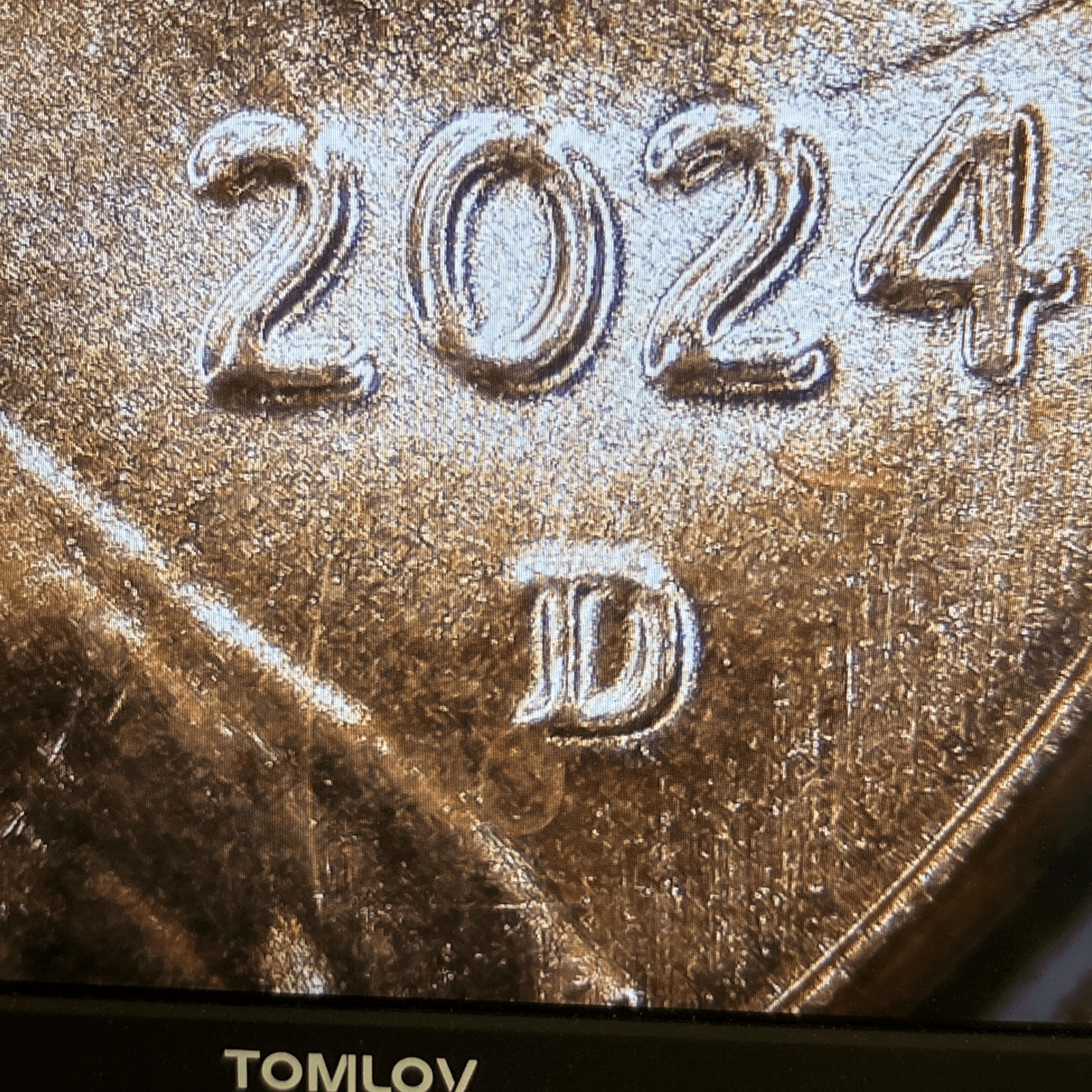
The “dropped star” error–technical name, “Struck-Through Dropped Filling”–is easy to detect because a star-shaped device appears in the wrong place. The error, authenticated by PCGS, exists in a 2024-D Kennedy Half Dollar.
Some believe the PCGS example is a “one of one” find, meaning, there may be no other similar error in the series. Or there just be one or more in different places. Here’s why.
The dropped star happens when grease or metal shavings fill the device. The striking continues and eventually releases the plug (also called “mint goop”) so it is struck on a subsequent planchet.
Think of the process as clogging and compacting on one planchet, dislodging and then being struck on a new planchet.
In this Kennedy half case, the star was ejected and appears on his profile. That’s interesting! The star in question was on the reverse and the plug stamped the star on the obverse of another planchet!
Here is a close-up photographed by Jeffrey Flynt who wrote about the find for PCGS.
Flynt has an optimistic outlook for error finders. He writes, “My journey from a routine coin roll hunt to a PCGS-certified ‘Dropped Star Obverse’ discovery coin has been an incredible experience. It highlights that even in the age of modern coinage, exciting and significant finds are still possible if you look closely.”
Keep in mind that the dropped star can also be a dropped number or letter as happened on other coins. For instance, a 2007-D Idaho quarter had an extra incuse “R” between the “R” and “T” in “LIBERTY.” Ken Potter, one of our top numismatists, wrote about this for Numismatic News.
He states, “Up until a few years ago the Dropped Letter error type was rarely encountered but with the Mint’s schedule for striking coins tighter than ever, it appears that routine die cleaning rarely occurs anymore.”
Here’s an example of a 1960-D dropped letter authenticated by PCGS:
Here’s a dropped “D” on a 1976-D Bicentennial Quarter.
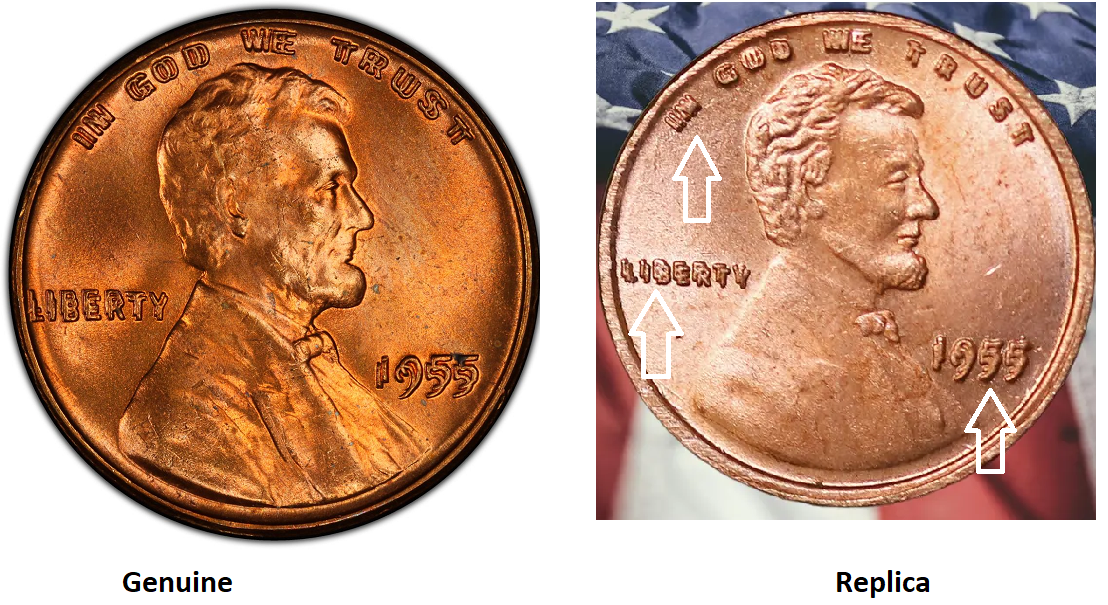
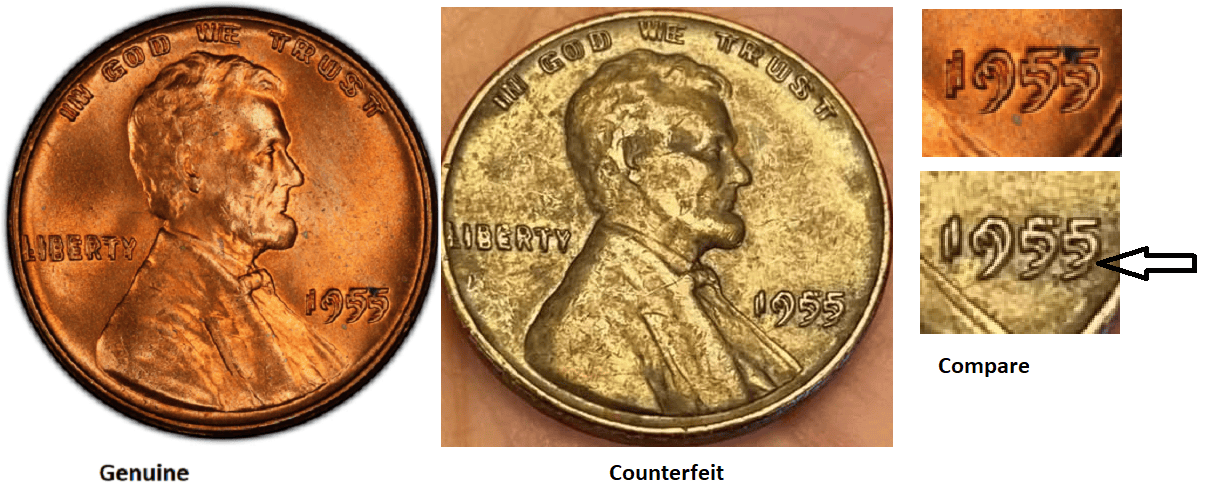
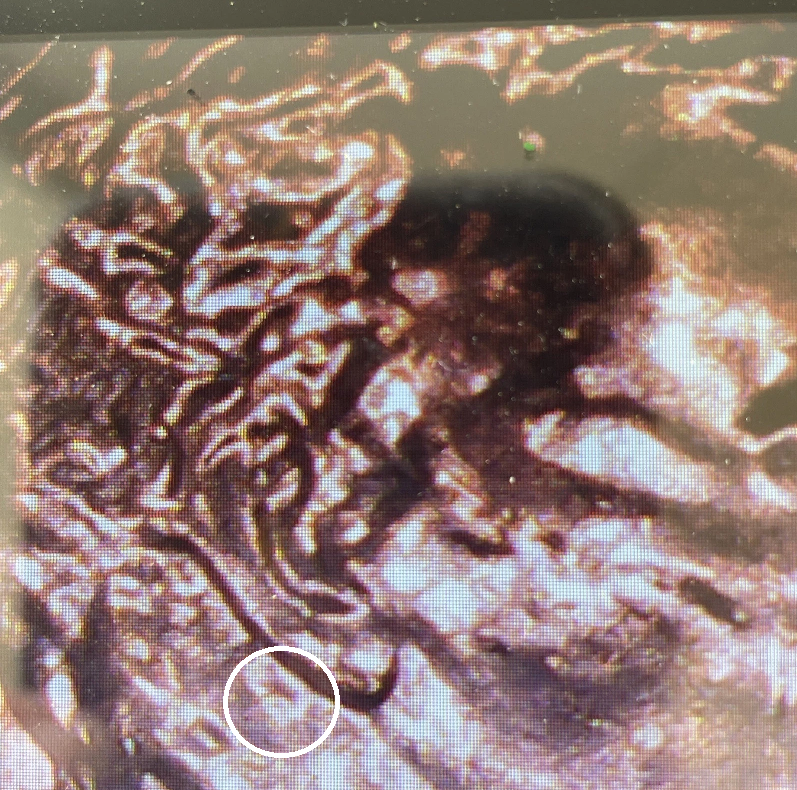
Error and variety hunters have patience. They may look for anomalies on thousands of coins before finding an dropped device, number or letter. Unfortunately, there are fake added mintmarks and devices just as there are counterfeit and replica examples. Also, there is PAREIDOLIA, the tendency to perceive images in visual patterns, often leading to misidentification of coin errors.
For instance, “Daniel from CoinHELPu” questions whether PCGS made a mistake labeling this a dropped star. He believes the mark just may look like a star.
Proxiblog will keep monitoring this error, publishing new authenticated finds.
If you like posts like this, please subscribe so you can get our weekly newsletter and be informed whenever there is a new article or column.
Proxiblog also has thousands of followers on Facebook Coin Groups, YouTube and social media. To get the latest discussion and commentaries, click here.
You can find more information about errors and varieties as well as buying and bidding on coins in Coin News Updated: The Essential Guide to Online Bidding. Please consider purchasing the work for yourself or a friend, as it underwrites this hobbyist website. Thank you.
Double denomination coins are genuine errors struck on a previously struck planchet of a different denomination (e.g., a cent on a dime). Double struck coins are struck twice with the same dies, often overlapping.
Let’s investigate these genuine error coins and distinguish them from post mint damage (vise and glue coins).
Double Denomination
A double denomination error happens when a previously struck coin, often a smaller denomination like a dime, is fed into a press for a larger denomination like a cent. Because there are two denominations, struck over each other, the error is known by this name. Typically, this happens when struck coin bounces or falls into the wrong hopper or is jammed in the machine, coming loose during striking of another coin.
Technically, this is a machine error. But unlike machine doubling, double denomination coins are rare and highly sought after. The strike also usually ends up misaligned on the planchet.
The most frequent holdered examples include the so-called “11-cent coin”–a cent on a dime. Often a Roosevelt dime is struck with a Lincoln cent. One way to tell is identifying the reeded edge from the dime. Replicas and fakes often do not include this identifying aspect.
Other denominations include a 15c Coin, or Jefferson Nickel on a Cent; 35c Coin, or Quarter on a Dime; and a $1.05 Coin Sacagawea Dollar on a Nickel.
Also, the dates of these double struck coins do not have to match. Two different dates usually occur with machine-jammed coins that come loose during striking of another, as in this example:
Double Struck
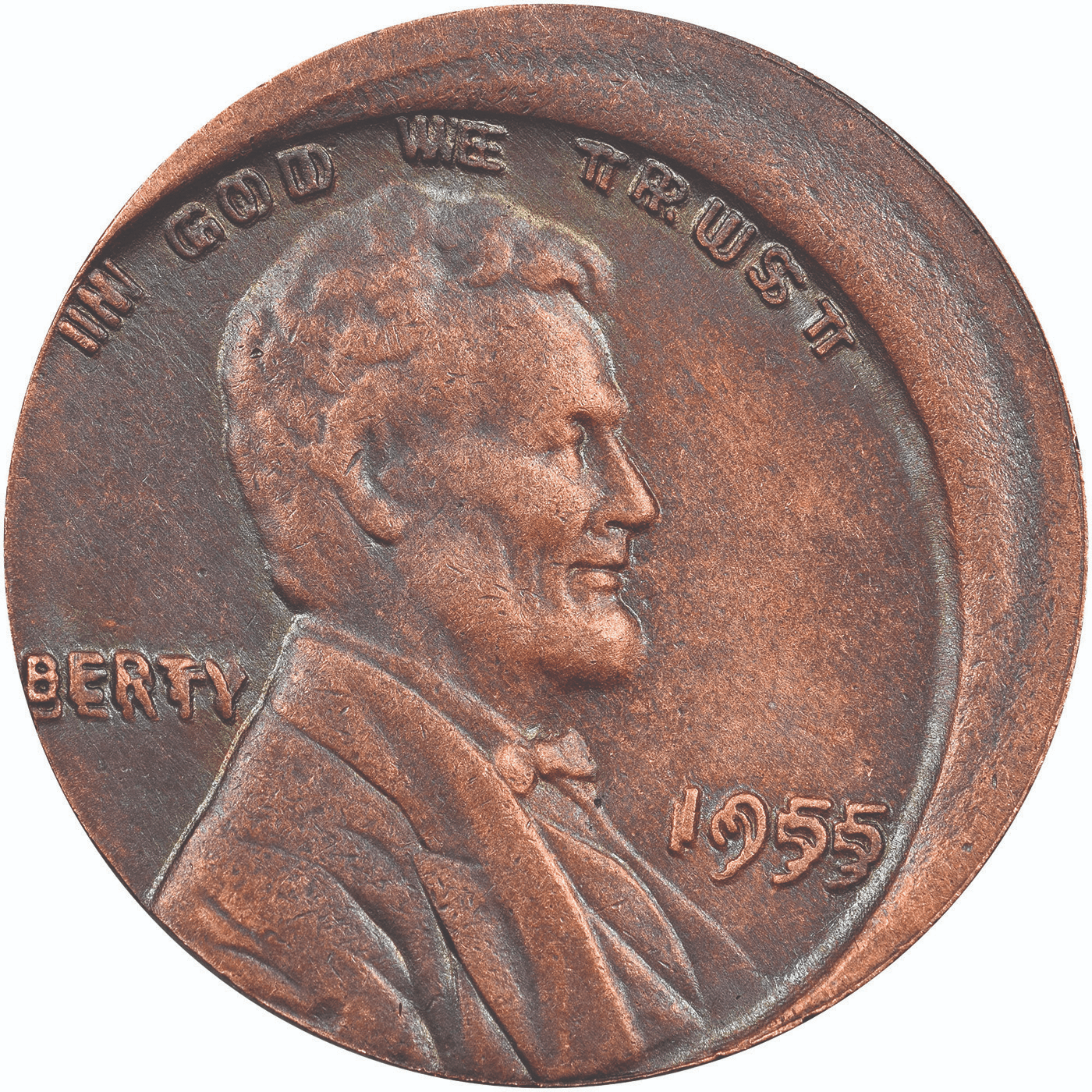
This error happens when a struck coin did not eject from the coining chamber and gets struck again, or several times. The result is an overlapping and distorted design with one strike flattening the other. Some double-struck coins have a date; others, as in the above example, do not.
There are different types of double struck coins. The most common is a coin struck correctly that doesn’t eject with the second strike off center. Another type happens with a second image struck over the first. Less common are multiple strikes,
You can see the various examples on the PCGS website. Here’s a double struck off center cent from that site:
The most common double strikes include Lincoln Cents (1959-2008) and clad Jefferson Nickels, Roosevelt Dimes and Modern Washington Quarters.
Vise and Glue Coins
A “vise job” is evidence of post mint damage. It is not an error. Someone squeezed one coin atop another using a vise, hammer or pliers so that it resembles a double struck or denomination coin.
You can spot a vise job when letters or the date appeal backward or the design is sunken into one rather than raised as would be a genuine error.
Note the backward spelling of “America” on this coin:
You can also do similarly with glue. These often appear like double strikes with a ghost image seemingly stuck to a regular strike. Upon inspection, you should see a foreign raised substance. A person uses glue to get an imprint of one coin and then layers it on another. If the raised area looks shiny, you probably have a glue coin.
As the glue dries, however, it may turn darker rather than transparent, looking like metal as below:
If in the market to purchase a double denomination or double struck coin, and are unsure how to identify replicas and forgeries, make sure that it is in a reputable holder. Keep in mind that China has been exporting these fakes. Here’s some examples from Etsy, all selling for under $30.
If you are interested in the various coin conditions like double denomination and double struck, be sure to visit our illustrated coin glossary, the largest on the web, with close to 300 entries.
If you like posts like this, subscribe so you can be informed whenever there is a new article or column.
Proxiblog also has thousands of followers on Facebook Coin Groups, YouTube and other social media. To get the latest discussion and commentary, be sure to friend us by clicking here.
You can find more information about types, varieties, errors, grading, bidding and buying in Coin News Updated: The Essential Guide to Online Bidding. Please consider buying or gifting the work for a friend, as it underwrites this hobbyist blog. Thank you.
If you want a quick refresher of the major types of doubling–hub, machine and die deterioration–view this video. It will help you identify those types with audio explanations by Michael Bugeja.
Click here for an article on the 5 types of doubling.
Also, Proxiblog has assembled some 50 videos on this site and YouTube. Click the photo below to see them.
If you like posts like this, subscribe so you can be informed whenever there is a new article or column.
Proxiblog also has thousands of followers on Facebook Coin Groups, YouTube and other social media. To get the latest discussion and commentary, be sure to friend us by clicking here.
You can find more information about types, varieties, errors, grading, bidding and buying in Coin News Updated: The Essential Guide to Online Bidding. Please consider buying or gifting the work for a friend, as it underwrites this hobbyist blog. Thank you.
No one is exactly sure how this variety happened, but the US Mint–under pressure then to produce billions of coins–mistakenly used the reverse of a 1968-S Proof Dime for the reverse of 1969-P, 1970-P and 1970-D Roosevelt business strikes. The official variety is known as 1969 rev. of 1968, 1970 rev. of 1968 and 1970-D rev. of 1968 (FS-901).
The FS-901 refers to a catalog number identified by Bill Fivaz and J.T. Stanton, co-authors of the Cherrypickers’ Guide to Rare Die Varieties of United States Coins.
“Reverse of 1968” on these three dimes is a numismatic variety recognized by all major holdering companies. The 1968 reverse shows two distinct, well-defined, and sharp valleys in the torch flame, whereas the business strike reverse has a less defined, blurry flame.
The 1969-P FS-901 is generally considered the rarest of the three with about 15 holdered by PCGS. 1970-D FS-901 is the most common with about 30 holdered by PCGS. About 20 for the 1970 rev. of 68.
All of these varieties can be found in rolls, although they are very scarce.
While this is a rare variety by population data, PCGS values remain low, ranging from $50-100.
You can find the variety on eBay selling about the same or higher, although the coins are unholdered, as in these examples:
If you are a dime roll hunter, keep your eyes peeled for other Roosevelt dime varieties:
As you can see, there are not many varieties for Roosevelt dimes, but click the links above and go to Proxiblog for articles explaining die markers.
If you like posts like this, subscribe so you can be informed whenever there is a new article or column.
Proxiblog also has thousands of followers on Facebook Coin Groups, YouTube and other social media. To get the latest discussion and commentary, be sure to friend us by clicking here.
You can find more information about types, varieties, errors, grading, bidding and buying in Coin News Updated: The Essential Guide to Online Bidding. Please consider buying or gifting the work for a friend, as it underwrites this hobbyist blog. Thank you.
The 1956 Franklin Half Dollar was struck with two different reverse designs, Type I and Type II, concerning the small eagle on the reverse. Type I features four distinct feathers to the left of the perch, while the Type II shows only three visible feathers. Both types were minted, with Type I used for both circulation strikes and proofs, and Type II primarily used on proofs.
The reason for this post is the value of Type I proofs. This design was exclusively for business strikes. That makes proofs with this design valuable. For instance, in mint state PR64, type I retails for $210 while Type II goes for $44.
As you can see, identifying Type I will bring huge value that only increases with if cameo or deep cameo. At gem PR65, Type I cameo retails for $225 and deep cameo, $975; compare to Type II, cameo PR65, $67, and Type II, deep cameo, $165.
Here’s how to tell, compliments PCGS CoinFacts:
You can count those feathers as die markers. But an easier way is to note how Type I has a poor strike, not showing the complete feathers:
That’s where to look.
The best way to find Type I is via proof sets, which typically go for $50:
You will need magnification on sets like the one above to see if the offering is Type I or II.
You can find Type I on eBay because the seller doesn’t know what he has:
If you use a photo app to expand the photo, you’ll see this is Type I:
If you like posts like this, subscribe so you can be informed whenever there is a new article or column.
Proxiblog also has thousands of followers on Facebook Coin Groups, YouTube and other social media. To get the latest discussion and commentary, be sure to friend us by clicking here.
You can find more information about types, varieties, errors, grading, bidding and buying in Coin News Updated: The Essential Guide to Online Bidding. Please consider buying or gifting the work for a friend, as it underwrites this hobbyist blog. Thank you.
The 1878-S Morgan has a mintage of 9,774,000 and is valuable in higher grades, but a small detail on an otherwise even silver melt coin is a coveted variety. It’s called “Long Nock.”
Let’s define “Nock,” an uncommon word, except for archers, whose definition is a notch at either end of a bow for holding the string.
So right off the word leads us to the quiver of arrows held by the eagle on the reverse.
Morgan 1878-S “Long Nock” coin refers an extended length of the arrow shaft (the “nock”) in the eagle’s talon. This variety is a result of a design variation used on the first set of dies delivered to the San Francisco Mint.
Let’s compare a regular 1878-S reverse with a “long nock” one with this photo from PCGS CoinFacts:
The “long nock” feature extends the tip of the central arrow.
This variety has several specific variations in the VAM directory (named after the directory compiled by Leroy Van Allen and A. George Mallis):
These varieties happened because of an urgent need to produce Morgan dollars at various mints in 1878. The first 10 pairs of dies for the San Francisco Mint had the “long nock” design. When the US Mint asked engraver George T. Morgan to revise the design, reducing the relatively high relief (shortening die life), the nock was shortened and the number of tail feathers on the eagle were reduced from eight to seven.
Value for this variety is high but few ever exceed almost uncirculated levels. The top pop at PCGS is AU53.
At Very Fine 20, the coin retails for $275 and increases by about $100 each Sheldon grade higher up until AU53.
Nevertheless, you will find 1878-S Morgans everywhere–even in slabbed coins–with the owner or holdering company missing the variety. (If you submit a coin without identifying and paying for a variety, that designation will not be on the label.)
Happy hunting!
If you like posts like this, subscribe so you can be informed whenever there is a new article or column.
Proxiblog also has thousands of followers on Facebook Coin Groups, YouTube and other social media. To get the latest discussion and commentary, be sure to friend us by clicking here.
You can find more information about types, varieties, errors, grading, bidding and buying in Coin News Updated: The Essential Guide to Online Bidding. Please consider buying or gifting the work for a friend, as it underwrites this hobbyist blog. Thank you.
Five valuable VAMs exist for the 1880-P Morgan dollar whose working dies differed from each other significantly, resulting in their being listed among popular “Top 100” VAM list.
The “spikes” are readily seen above the “8” with another die marker on the “0.” This retails for about $65 in XF40; $180, AU55; and $1,140, MS63.
1880 VAM 7 8/7 Crossbar
1880-P VAM-7 Crossbar overdate is one of the most difficult to identify and rarely found in high grades. VAMWORLD advises to look for the horizontal line crossing the top of the second 8 of the date. Values are XF40, $185; AU55, $485; and MS63, $5,500.
1880 VAM 8 8/7 Ears
The second 8 in the date has two short ears on top. Values are XF40, $1,250; AU55, $5,500; and MS62, $15,500.
1880 VAM 9 8/7 Stem
VAMWORLD states the second 8 has raised metal on right side of upper loop and bottom loop has faint outline 7 stem with raised metal at top right. Values are XF40, $65; AU55, $100; and MS63, $240.
1880 VAM 11 Checkmark
Note the doubled “880” with remains of 7 showing on the upper left surface of the second 8, creating that checkmark. Values are AU55, $90; MS63, $185.
While many 1880-P coins exist in circulated condition, the above VAM varieties are rare in pristine mint state, prooflike and deep mirror.
Also, if seeking to purchase one of these varieties, your best option is to find one slabbed by PCGS. NGC, ANACS or CAC.
If you like posts like this, please subscribe so you can get our weekly newsletter and be informed whenever there is a new article or column.
Proxiblog also has more than a thousand friends and followers on Facebook Coin Groups and thousands more across YouTube and social media. To get the latest discussion and commentary, be sure to friend us by clicking here.
You can find more information about errors and varieties as well as buying and bidding on coins in Coin News Updated: The Essential Guide to Online Bidding. Please consider purchasing the work for yourself or a friend, as it underwrites this hobbyist website. Thank you.

It’s called “hub doubling” for a reason. Before we get into what causes hub doubling, let’s define what the hub actually is and its role in the minting process.
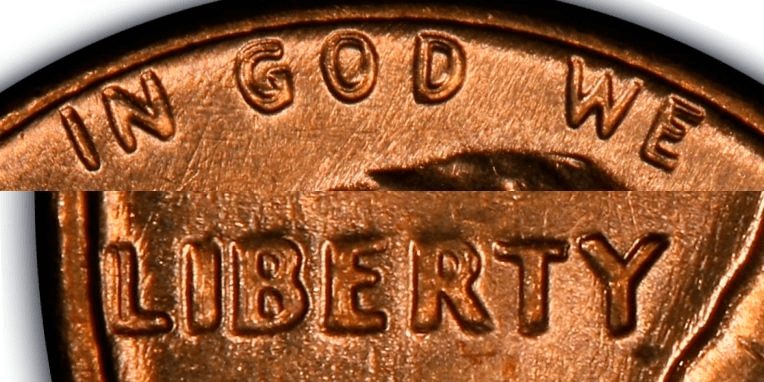
Role of the Hub
A coin hub is a steel tool or punch with “positive,” or raised images of a coin’s design. The Mint uses the hub to create working dies (which have the negative, or sunken, image). The working dies are what actually strike the coin blanks to create the coins of all denominations. Here is an example.
As you can see, a hub is a master tool in the die-making process, ensuring that multiple working dies can be made consistently.
Its life, however, goes through many hands at the Mint. For starters, a design is created by an artist. That process involves dozens of people. A master hub is then made from this design. That creates all the working dies. One pair of working dies can produce hundreds of thousands of coins, and multiple working dies are created from hubs to keep up with large production runs.
Here is an example of working dies made by the hub.
Hub doubling occurs when the working die is misaligned or mismatched with the planchet. Every coin struck from that flawed die will exhibit the same doubling. That is why you cannot find a one-of-a-kind error.
Causes of Doubling
Before the mid 1990s, multiple impressions, or strikes, were required to transfer the complete design from the hub to the working die. A single press wasn’t powerful enough. The die blank had to be repeatedly heated and pressed. This issue often was the cause of doubled dies.
During this process, the hub and the die blank may not have been perfectly aligned during subsequent hubbings. This misalignment results in a duplicated image on the die face deviating from the approved design.
Errors and varieties happen when the hub or die inadvertently expands, contracts or tilts between hubbings due to improper annealing (heating) or pressure issues.
You won’t find many true and prominent modern doubled dies because the Mint now uses what is called “Single-Squeeze Process.” In other words, a high-pressure squeeze creates the die without all that warming and striking.
Here’s an example of that machine.
Doubling can still occur in the single-squeeze process if the hub slightly rotates or shifts under the extreme pressure before settling into place.
Also, the new machinery also virtually eliminated what used to be called “repunched mintmark.”
Hub doubling is a flaw in the die itself, so all coins produced by that die will show identical doubling. This is different from machine doubling, which is a minor, flat, shelf-like doubling that occurs during the actual coin striking process due to the die bouncing or shifting. As the working die deteriorates and is not changed for a new one by a Mint employee, you also will get machine doubling due to die deterioration.
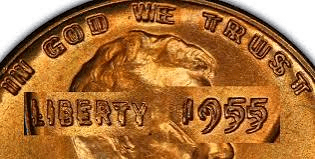
Here’s an example of hub doubling featuring raised and rounded impressions v. machine doubling’s flat impressions.
Now let’s see how a true hub doubled die looks with the most famous example below.
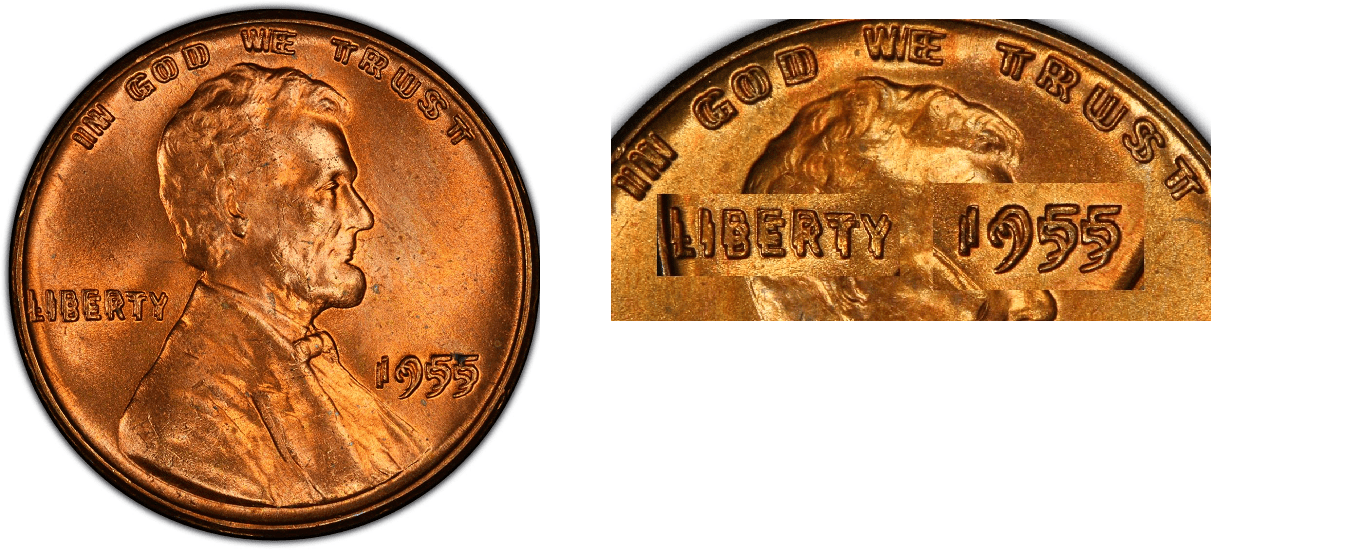
Most Famous Example: 1955 DDO
The 1955 DDO is one of the most pronounced examples of hub doubling. You are not apt to see another like this because of the new improved machinery at the Mint. But this happened then because of pressure on the Mint to produce more cents in a high intensity work environment for the employees.
The night shift was so busy that many of the doubled die cents were mixed with other cents and released into circulation before the error was discovered. Employees and supervisors who learned about the mistake were not coin collectors. They actually believed the defective items had no special value.
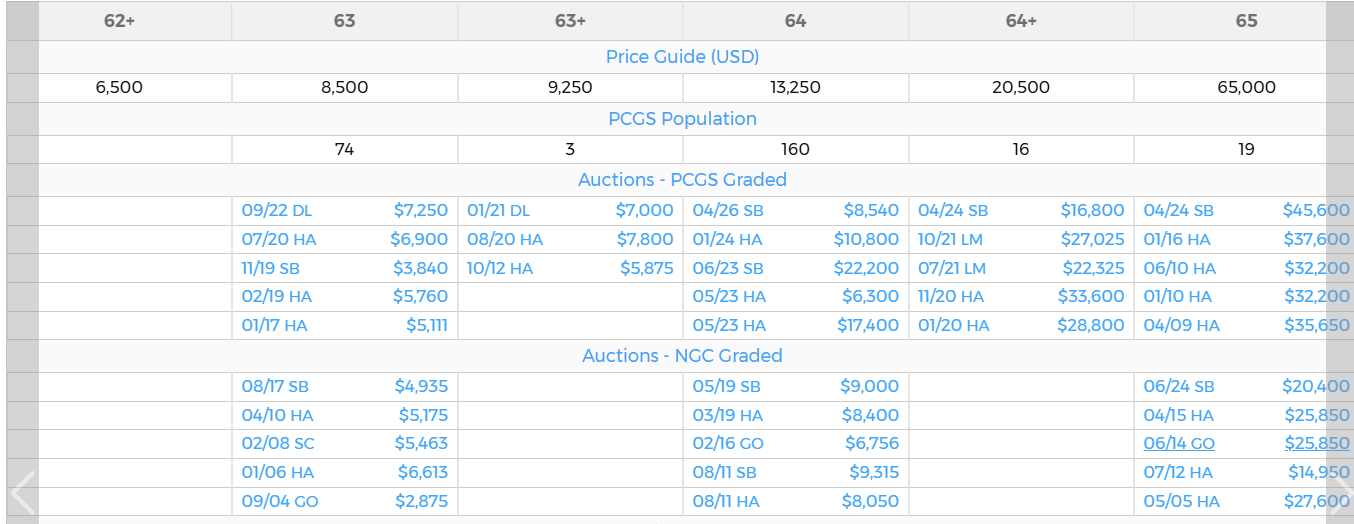
The 1955 DDO is the top doubled die, with values between $1,000 to $300,000+ (depending on condition). Here are other Lincoln Cent doubled dies:
1969-S DDO
Clear doubling on the date, “LIBERTY,” and “IN GOD WE TRUST” ($13,000 to $600,000 depending on condition).
There is also an ultra-rare 1958 doubled die penny, but only three have been found to date.
Numismatic News reported in 2023 that GreatCollections of Irvine, Calif., handled the sale of the above coin. It received 117 bids and was hammered at $1,136,250 with buyer’s fee.
If you like posts like this, subscribe to Proxiblog so you can be informed whenever there is a new article or column.
Proxiblog also has thousands of followers on Facebook Coin Groups, YouTube and social media. To get the latest discussion and commentary, be sure to friend us by clicking here.
You can find more information about types, varieties, errors, grading, bidding and buying in Coin News Updated: The Essential Guide to Online Bidding. Please consider buying or gifting the work for a friend, as it underwrites this hobbyist blog. Thank you.