The 2006 Lincoln Cent DDO FS-101 is one of the few true doubled dies since 1996 when the US Mint upgraded their machinery with what is called a “Single-Squeeze” hubbing process. The intent was to eliminate doubled dies altogether, but still we can see the method is not entirely fool proof.
The variety has its own PCGS number, meaning if you use it in the submission process you do not have request a special error variety label costing more money.
The key markers are a ghost image of an earlobe:
There is doubling on the date, thicker than regular strike, with noticeable spreading on the “6.”
It’s difficult to see, but there is also some doubling on the lower portion of Lincoln’s beard.
“Liberty” is a main marker, too, exhibiting extra thickness. Note the notch on the “T”:
The error happened when the working die was placed slightly out of alignment. Thousands are out there in rolls and pocket change.
There also is an FS-102 variety, lacking a clear ghost image of the earlobe. Markers are similar.
As you can see, PCGS shows significant values, based on condition, from about $30 in low mint state red to hundreds in super gem.
If you like posts like this, subscribe so you can be informed whenever there is a new article or column.
Proxiblog also has thousands of followers on Facebook Coin Groups, YouTube and social media. To get the latest discussion and commentary, be sure to friend us by clicking here.
You can find more information about types, varieties, errors, grading, bidding and buying in Coin News Updated: The Essential Guide to Online Bidding. Please consider buying or gifting the work for a friend, as it underwrites this hobbyist blog. Thank you.
Clash marks are valuable, but people often try to mimic them with a vise, pressing two coins together. Other times, for one reason or another, glue creates an impression of one coin on another. Do not bid on any of these until you can tell them apart. As you might imagine, eBay and online auctions often label vise and glue coins as clash marks.
Here are all three:
You can easily distinguish them by looking for specific tells under a loupe or magnifying glass. You want to check if the extra impression is raised or sunken, and whether the lettering is oriented normally or backwards. If backward, you’re looking at a vise or glue coin.
TYPE
CLASH MARKS
VISE COIN
GLUE COIN
RELIEF
Raised Devices
Sunken Devices
Flat Layered
ORIENTATION
Normal
Backward/Reversed
Backward/Reversed
THICKNESS
Normal
Flat/Distorted
Thick/Sticky
A die clash happens at the Mint when erroneously the obverse and reverse dies strike each other without a blank planchet between them. The so-called “ghost” image will be raised, not sunken or flatly layered.
Vise coins are created by pressing two coins together with a vise or hammering them to mimic the clashed die. Because of the method, the lettering will be backward, flattened, distorted or damaged, especially by the rims.
A glue coin happens any number of ways when two coins are bonded by an adhesive. When separated, the ghost image appears flat and layered on the other coin.
Often the tone of the coin will be altered with a dried or amber look, as you might anticipate with glue. True, flat and layered can be confused with raised of a die clash. To be sure, dip the coin in acetone and the ghost will dissolve.
Sometimes people use a vise to create weird patterns, thinking those unfamiliar with how coins are minted will consider this an error or variety.
You’ll find many more examples of vise and glue coins on Facebook because few people know how to tell these apart from clashed dies. They find them in rolls, typically, because someone realized this wasn’t a mint error.
Sometimes glue takes strange shapes. Again, you need to know how coins are made to understand how this could never happen at the Mint.
Depending on the condition of the coin and the denomination, because clashed dies, vise jobs and glue coins happen across denominations, values vary from minor examples $30 to major ones in the hundreds or even thousands of dollars.
If you like posts like this, subscribe so you can be informed whenever there is a new article or column.
Proxiblog also has thousands of followers on Facebook Coin Groups, YouTube and other social media. To get the latest discussion and commentary, be sure to friend us by clicking here.
You can find more information about types, varieties, errors, grading, bidding and buying in Coin News Updated: The Essential Guide to Online Bidding. Please consider buying or gifting the work for a friend, as it underwrites this hobbyist blog. Thank you.
The “Flared FG” is a transitional variety found on some 1988 and 1988-D Lincoln cents. It occurred when U.S. Mint employees mistakenly used a redesigned die for 1989 cents.
The initials, “FG,” to the right of the Lincoln Memorial building, refer to designer Frank Gasparro.
This variety requires magnification to identify.
As you can see in this expanded photo above, the “flared” initial is the “G.” It has a noticeable serif. The regular lacks that. Now notice the thickness, or higher relief, of the flared “FG.” The revision was meant to make the initials clearer and distinct.
That’s how you tell.
Again, though, because the variety requires close inspection, have handy a regular 1988/88-D cent so you can compare.
These are easy to find because of the huge mintage: 6,092,810,000 for 1988; 5,253,740,443, 1988-D.
Then compare initials, as below.
The variety designation is FS-901 “Reverse of 1989.” Worn examples sell for a few dollars to $25; mint state, about $150. Several at MS68 have sold for hundreds of dollars.
If you intend to purchase or bid on an example from eBay or Facebook, make sure that the photos are clear enough and magnified so that you can identify the variety. Here’s a typical photo; you can try expanding it with your own photo app. But in general, avoid these.
If you like posts like this, subscribe so you can be informed whenever there is a new article or column.
Proxiblog also has thousands of followers on Facebook Coin Groups, YouTube and social media. To get the latest discussion and commentary, be sure to friend us by clicking here.
You can find more information about types, varieties, errors, grading, bidding and buying in Coin News Updated: The Essential Guide to Online Bidding. Please consider buying or gifting the work for a friend, as it underwrites this hobbyist blog. Thank you.
While new hobbyists typically search for the unicorns–1992/92-D Close AM cents–veteran collectors know that chances are infinitely better looking for the 1998, 1999 and 2000 Wide AM varieties.
If you are interested in the 1992/92-D Close AM cents, click here. This post is about the 1998, 1999, and 2000 Wide AM varieties, all from the Philadelphia Mint.
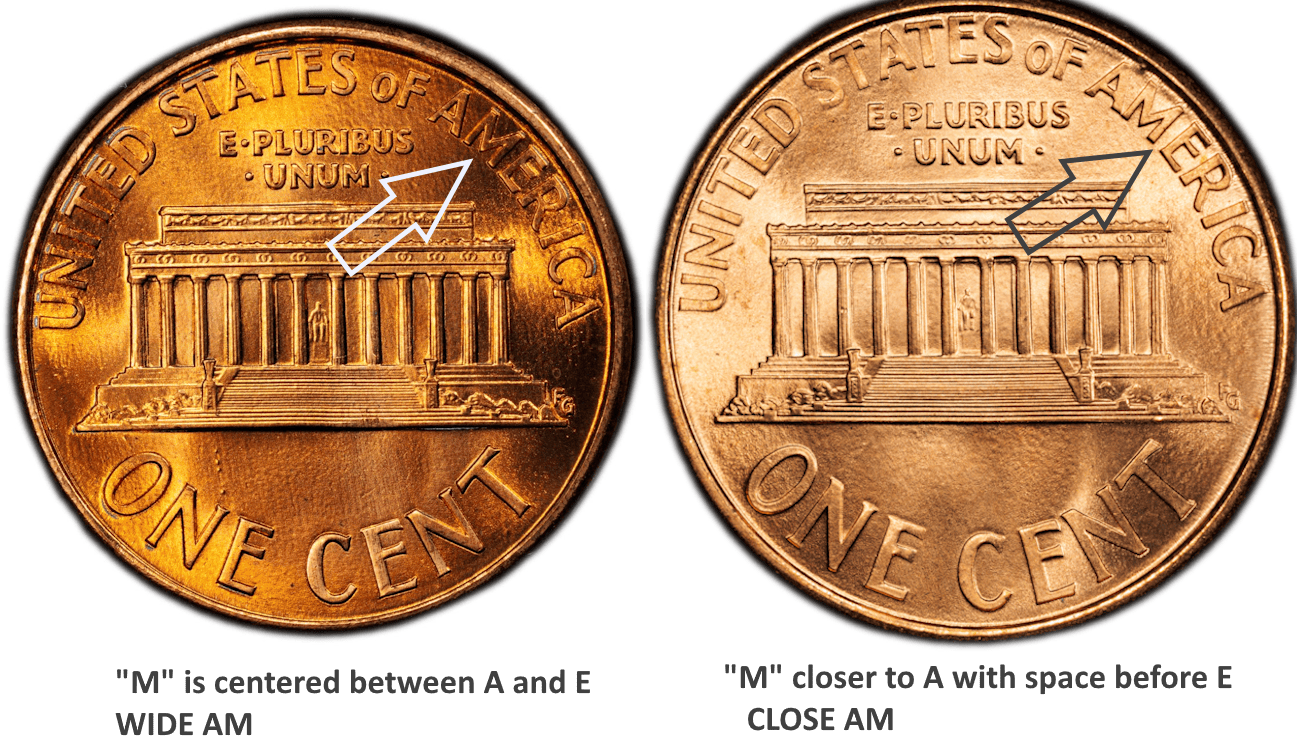
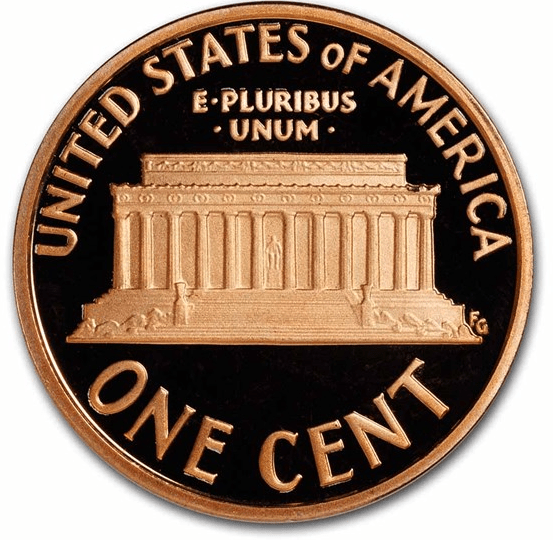
In 1994, the U.S. Mint developed rules for Lincoln Memorial Cents. Business strikes were supposed to use a “Close AM” reverse die. Proof coins would use the “Wide AM” reverse die.
Between 1998-200, two US Mints produced business strikes for cents, Philadelphia and Denver. At the Philly facility, coin operators mistakenly used a “Wide AM” reverse die on some of the production runs.
There are three markers to discern what you have.
Let’s dissect each of these.
Now let’s compare with the regular correct business strikes:
An easy way to determine wide v. close is to look at the position of the “M” in “America.” If that letter is centered between the “A” and the “E,” it is wide. If the “M” is close to the “A” than the “E,” it is close.
Let’s compare.
Other markers:
Values for these varieties depend on the coin’s condition and color (Brown, Red-Brown, or Red).
Here are mintage estimates and values for each year:
YEAR
ESTIMATED VARIETY MINTAGE
RANGE OF VALUES
1998
100,000
$25 to $150, Lower Mint State
1999
2,000
$400 to $1,000+, Lower Mint State
2000
200,000+
$15 to $35, Lower Mint State
Do not purchase raw Wide AM 1998-2000 cents unless you know the markers. Almost every raw example on eBay has the wrong markers (Close AM) for the rare 1999 cent. Examples:
One more point. Lincoln proof cents from 1998 through 2000 are supposed to have a Wide AM.
Finally, there are true “unicorn” coins, theorized but never found, including the 1964 Morgan Dollar and the 1965 Kennedy Half on a 1964 90% Silver Planchet. You can add the 1998-D Wide AM, 1999-D Wide AM and 2000-D Wide AM to that list.
ALL of the several 1998-D, 1999-D and 2000-D Cents on eBay listed as “Wide AM” are just regular “Close AM” cents. Example:
If you like posts like this, subscribe so you can be informed whenever there is a new article or column.
Proxiblog also has thousands of followers on Facebook Coin Groups, YouTube and social media. To get the latest discussion and commentary, be sure to friend us by clicking here.
You can find more information about types, varieties, errors, grading, bidding and buying in Coin News Updated: The Essential Guide to Online Bidding. Please consider buying or gifting the work for a friend, as it underwrites this hobbyist blog. Thank you.
When the US Mint makes a transition from one type of planchet to another, as we have seen with the popular 1982-D Small Date brass cent, unused planchets are sure to be stuck somewhere in the coinage bins, which is precisely what happened with 1965 dimes and quarters.
To get your hands on one or both, you need to be rich … or lucky with rolls and pocket change. Nevertheless, you’ll have better odds with these than the 1982-D Small Date transitional error, of which only two have been found.
1965 Dime on 90% Silver Planchet
1965 dimes were supposed to be copper-nickel. The price of silver was responsible for common denominations to transition to clad. A small number of silver blanks got into feeder bins. Between 20-100 of the rarity may have escaped into circulation.
Value is between $3,000 and $13,000 and higher, depending on condition and certification grade by a top-tier holdering company.
To determine if you found the rarity, look at the edge. If you see a copper stripe, you have the clad dime. If you can’t see the stripe, weigh it. A clad dime weighs 2.27 grams; the silver dime, 2.5 grams.
1965 Quarter on 90% Silver Planchet
The same thing happened with quarters as with the dime above. Some leftover 1964 silver planchets got into 1965 clad hoppers. Fewer than 20 are believed to have left the Mint.
An authentic 1965 Washington quarter accidentally struck on a 90% silver planchet is valued between $4,000 and $17,000+, depending on its condition and professional grade and certification. Again, look at the edge. If you see a copper stripe, you have the common clad quarter. If not, weigh it. A clad quarter weighs 5.67 grams whereas a silver one weighs 6.25 grams.
The 1965 Half Dollar “Unicorn”
Hobbyists searching for the “Unicorn”–a coin so rare as to be mythic–continue to look for a 1965 Half Dollar struck on a 1964 90% silver planchet. Hey, if the same thing happened with the dime and quarter, why not the JFK Half?
Good luck with that. None have been found.
If you think you found the unicorn, it should weigh 12.5 grams whereas a 40% regular strike should weigh 11.5 grams.
It goes without saying, beware of replicas and alterations and false claims on eBay and Facebook.
If you like posts like this, subscribe so you can be informed whenever there is a new article or column.
Proxiblog also has thousands of followers on Facebook Coin Groups, YouTube and other social media. To get the latest discussion and commentary, be sure to friend us by clicking here.
You can find more information about types, varieties, errors, grading, bidding and buying in Coin News Updated: The Essential Guide to Online Bidding. Please consider buying or gifting the work for a friend, as it underwrites this hobbyist blog. Thank you.
One of the most accessed Proxiblog articles–thousands, each week–concerns the transitional error 1982-D Small Date bronze cent. But did you know there are 15 famous transitional errors in which the wrong planchet was used during production?
They are happened the same way: The wrong planchet got stuck in a hopper or production bin and somehow was shaken loose and struck.
Here are examples:
1943 Bronze Cents
When the Mint switched from zinc-coated steel cents in 1943, some 30 examples were minted with copper planchets. Each has specific markers, including the date.
To see all the markers for the 1943-P, 20-30 specimens; 1943-D and 1943-S, click here.
1944 Steel Cents
Just as in 1943, the wrong planchet–this time steel cents–got into the hoppers of 1944 bronze planchets. About 30 specimens are estimated to have left the mint.
To see all the markers for the 1944-P, 1943-D and 1943-S, click here.
One of the rarest, next to the 1943-D copper cent (only one example found), is the 1982-D Small Date bronze cent. Only two examples have been found.
1982-D Small Date Bronze Cent
One of the rarest ultra rarities with only two found in 2016 and 2019, the 1982-D Small Date 3.1 grams continues to be one of the most sought-after coins, primarily because social media publicized it across online venues, including YouTube and Facebook.
Again, markers are important–not only the weight. Here’s a quick illustration about Small Date and two aspects of the number “2” on the date.
This rarity occurred when 1964 90% silver planchets got into 1965 copper-nickel clad dimes. At the time the Mint was producing both 1964 silver coins and 1965 clad coins, a small number of silver blanks got into feeder bins. Between 20-100 of the rarity may have escaped into circulation.
To determine if you found the rarity, look at the edge. If you see a copper stripe, you have the clad dime. If you can’t see the stripe, weigh it. A clad dime weighs 2.27 grams; the silver dime, 2.5 grams.
1965 Silver Quarter
The same thing happened with quarters as with the dime above. Some leftover 1964 silver planchets got into 1965 clad hoppers. Fewer than 20 left the Mints.
Again, look at the edge. If you see a copper stripe, you have the common clad quarter. If not, weigh it. A clad quarter weighs 5.67 grams whereas a silver one weighs 6.25 grams.
1977-D Silver Clad Quarter
This transitional error happened when a few–estimates are a dozen or so–40% silver Bicentennial planchets, again left over from previous production, got into the wrong hopper.
Again, do the edge and weight tests. If you see a copper stripe on the edge, you have clad quarter. If not, weigh it. A clad quarter weighs 5.67 grams; the transitional error, 5.75 grams.
1965 Half Dollar on Cupra Planchet
In 1965, the Mint struck both silver-clad half dollars and other denominations (like dimes or quarters above). Because both metal stocks were being processed and held simultaneously in the same facility, stray copper-nickel planchets were accidentally fed into the half dollar coining press.
Again, do the edge test on this. You should see a copper stripe. Weigh it on a digital scale. A standard 1965 40% silver-clad half dollar weighs (11.5) grams, the cupra error, significantly less, based on the strike (typically 11 grams or less).
1971-D and 1977-D 40% Silver Kennedy Half Dollars
When the half dollar went clad in 1971, leftover 40% silver planchets from 1970 were struck on this error coin. When the Mint struck 1976 40% silver halves, again a few planchets made it into the 1977 Denver facility. The clad half should show a copper stripe on the edge. If you don’t see that, weigh the coin: A common 1971 and 1977 Kennedy half dollar weighs 11.34 grams; a 40% silver 1971-D or 1977-D, 11.50 grams
Fewer than 30 of these may have made it into circulation.
1974-D and 1977-D Silver Clad Eisenhower Dollars
In 1973, the San Francisco Mint struck both copper-nickel and 40% silver-clad dollars. Some silver planchets were rejected because of poor strikes. These got into the 1974-D barrels and were mistakenly struck on 40% planchets. In 1976, the Mint produced 40% silver Bicentennial Ike dollars. Again, some of the leftovers got into the 1977-D bins.
You can do the edge and weight test on the 1974-D and 1977-D dollars. Edge should show copper stripe. If so, the weight will be 22.68 grams. If you don’t see the stripe, the weight for the transitional error will be 24.59 grams.
Fewer than 15-30 of these are believed to have made it into circulation.
If you like posts like this, subscribe so you can be informed whenever there is a new article or column.
Proxiblog also has thousands of followers on Facebook Coin Groups, YouTube and other social media. To get the latest discussion and commentary, be sure to friend us by clicking here.
You can find more information about types, varieties, errors, grading, bidding and buying in Coin News Updated: The Essential Guide to Online Bidding. Please consider buying or gifting the work for a friend, as it underwrites this hobbyist blog. Thank you.
There are all manner of scams by people looking to cash in on collectors who do not know markers for ultra rarities. And when it comes to the 1982-D Small Date Bronze transitional error, there is a desperation by newbies educated by clickbait social media that the third example is out there in pocket change.
Sellers take advantage of such ignorance.
If you are interested in an article about the various types of 1982 cents, including all markers for the transitional error, click here.
But let’s cut to the chase with basic knowledge.
Only two 1982-D Small Date 3.1 grams have been found.
Here’s how they look close up.
Here are markers for the small date.
DO NOT bid or buy any coin that is placed on a scale reading 3.1. You’ll be buying a zinc small date, of little or no value. Or a coin on tinkered scale.
You will see several examples on eBay of sellers showing a regular 1982-D large date bronze cent in a PCGS holder. Sellers think if they claim a regular strike is the small date, you’ll believe it, only because it is holdered by PCGS and you don’t know the markers.
Here’s an example:
Here’s how to decipher.
There are two numbers below the condition. In this case below, 146021.58, means two things: 146021 goes to the CoinFacts designation and the 58, the condition, AU58. In the image below, you can see that the 146021 goes to the regular large date strike.
Here’s another example with the seller claiming this large date is a small date. Again, the 146021 gives it away.
The seller of the above coin did not take kindly to my message that this is a scam.
He doesn’t like his time being wasted. He just wants to waste your money.
Ultra rarities are not found in pocket change; when one is, that becomes a national news story. If you think you found one, do not post it on social media and claim authenticity. If you are so sure, send it to PCGS, NGC, ANACS or CAC. And if you want to buy an ultra rarity, make sure you know how to read the holder company label.
If you like posts like this, subscribe so you can be informed whenever there is a new article or column.
Proxiblog also has thousands of followers on Facebook Coin Groups, YouTube and other social media. To get the latest discussion and commentary, be sure to friend us by clicking here.
You can find more information about types, varieties, errors, grading, bidding and buying in Coin News Updated: The Essential Guide to Online Bidding. Please consider buying or gifting the work for a friend, as it underwrites this hobbyist blog. Thank you.
Machines that make coins do so with tens of tons of pressure from incredibly high-speed mass production coining presses that use brittle steel dies on all manner of planchets, some with thin-plating zinc. As working dies reach the end of their lives, or as machines rattle from all that pressure, these common errors occur on different denominations (consult the Illustrated Glossary for definitions):
die chatter
die chips
die cracks
die gouge
delamination
die dent
die deterioration
filled mint marks
machine doubling
plating blisters
roller marks
split plating
struck through (grease)
These are only worth a few dollars, if you can find anyone who wants to buy them. Go to the “sold” button on eBay and you’ll see the results.
Here’s some die crack examples:
How, specifically, do these errors happen?
Die Deterioration, Chips, Cracks, Gouges, Die Chatter: These occur when working dies–minting hundreds of thousands of coins–become worn from the pressure and brittle. Minute pieces of the die break or crack from the pressure, and metal fill the voids with raised appearance.
Machine Doubling, Die Deterioration Doubling, Die Dents: These are mechanical errors as opposed to mint errors. They occur when the die bounces or moves during coining. The result is not raised but shelflike.
Filled Mintmarks: Until the late 1980s, mintmarks were punched directly into the working die. This was an extra step back then, so not only do the mintmarks appear in different places but also, depending on the punch, were susceptible to clogging.
Plating Blisters, Split Plating Doubling: After 1982, cents were made of zinc. these are caused by trapped gas or thin copper plating breaking over the zinc core, often mimicking doubling.
Roller Marks: Not technically an error, these resemble the mint error on cents called “woodies” (again, consult the glossary) that look like wood grain due to improper annealing. But roller lines are caused by uncleaned rollers used in the minting process.
Delamination: This happens a metal alloy does not cohere properly, resulting in the surface peeling off. These are common in older coins, especially zinc cents.
You do not need a coin microscope to see these. Magnification makes these common errors look significant; they are not. At best these sell for a few dollars on eBay.
If you like posts like this, subscribe so you can be informed whenever there is a new article or column.
Proxiblog also has thousands of followers on Facebook Coin Groups, YouTube and other social media. To get the latest discussion and commentary, be sure to friend us by clicking here.
You can find more information about types, varieties, errors, grading, bidding and buying in Coin News Updated: The Essential Guide to Online Bidding. Please consider buying or gifting the work for a friend, as it underwrites this hobbyist blog. Thank you.
The “dropped star” error–technical name, “Struck-Through Dropped Filling”–is easy to detect because a star-shaped device appears in the wrong place. The error, authenticated by PCGS, exists in a 2024-D Kennedy Half Dollar.
Some believe the PCGS example is a “one of one” find, meaning, there may be no other similar error in the series. Or there just be one or more in different places. Here’s why.
The dropped star happens when grease or metal shavings fill the device. The striking continues and eventually releases the plug (also called “mint goop”) so it is struck on a subsequent planchet.
Think of the process as clogging and compacting on one planchet, dislodging and then being struck on a new planchet.
In this Kennedy half case, the star was ejected and appears on his profile. That’s interesting! The star in question was on the reverse and the plug stamped the star on the obverse of another planchet!
Here is a close-up photographed by Jeffrey Flynt who wrote about the find for PCGS.
Flynt has an optimistic outlook for error finders. He writes, “My journey from a routine coin roll hunt to a PCGS-certified ‘Dropped Star Obverse’ discovery coin has been an incredible experience. It highlights that even in the age of modern coinage, exciting and significant finds are still possible if you look closely.”
Keep in mind that the dropped star can also be a dropped number or letter as happened on other coins. For instance, a 2007-D Idaho quarter had an extra incuse “R” between the “R” and “T” in “LIBERTY.” Ken Potter, one of our top numismatists, wrote about this for Numismatic News.
He states, “Up until a few years ago the Dropped Letter error type was rarely encountered but with the Mint’s schedule for striking coins tighter than ever, it appears that routine die cleaning rarely occurs anymore.”
Here’s an example of a 1960-D dropped letter authenticated by PCGS:
Here’s a dropped “D” on a 1976-D Bicentennial Quarter.
Error and variety hunters have patience. They may look for anomalies on thousands of coins before finding an dropped device, number or letter. Unfortunately, there are fake added mintmarks and devices just as there are counterfeit and replica examples. Also, there is PAREIDOLIA, the tendency to perceive images in visual patterns, often leading to misidentification of coin errors.
For instance, “Daniel from CoinHELPu” questions whether PCGS made a mistake labeling this a dropped star. He believes the mark just may look like a star.
Proxiblog will keep monitoring this error, publishing new authenticated finds.
If you like posts like this, please subscribe so you can get our weekly newsletter and be informed whenever there is a new article or column.
Proxiblog also has thousands of followers on Facebook Coin Groups, YouTube and social media. To get the latest discussion and commentaries, click here.
You can find more information about errors and varieties as well as buying and bidding on coins in Coin News Updated: The Essential Guide to Online Bidding. Please consider purchasing the work for yourself or a friend, as it underwrites this hobbyist website. Thank you.
Double denomination coins are genuine errors struck on a previously struck planchet of a different denomination (e.g., a cent on a dime). Double struck coins are struck twice with the same dies, often overlapping.
Let’s investigate these genuine error coins and distinguish them from post mint damage (vise and glue coins).
Double Denomination
A double denomination error happens when a previously struck coin, often a smaller denomination like a dime, is fed into a press for a larger denomination like a cent. Because there are two denominations, struck over each other, the error is known by this name. Typically, this happens when struck coin bounces or falls into the wrong hopper or is jammed in the machine, coming loose during striking of another coin.
Technically, this is a machine error. But unlike machine doubling, double denomination coins are rare and highly sought after. The strike also usually ends up misaligned on the planchet.
The most frequent holdered examples include the so-called “11-cent coin”–a cent on a dime. Often a Roosevelt dime is struck with a Lincoln cent. One way to tell is identifying the reeded edge from the dime. Replicas and fakes often do not include this identifying aspect.
Other denominations include a 15c Coin, or Jefferson Nickel on a Cent; 35c Coin, or Quarter on a Dime; and a $1.05 Coin Sacagawea Dollar on a Nickel.
Also, the dates of these double struck coins do not have to match. Two different dates usually occur with machine-jammed coins that come loose during striking of another, as in this example:
Double Struck
This error happens when a struck coin did not eject from the coining chamber and gets struck again, or several times. The result is an overlapping and distorted design with one strike flattening the other. Some double-struck coins have a date; others, as in the above example, do not.
There are different types of double struck coins. The most common is a coin struck correctly that doesn’t eject with the second strike off center. Another type happens with a second image struck over the first. Less common are multiple strikes,
You can see the various examples on the PCGS website. Here’s a double struck off center cent from that site:
The most common double strikes include Lincoln Cents (1959-2008) and clad Jefferson Nickels, Roosevelt Dimes and Modern Washington Quarters.
Vise and Glue Coins
A “vise job” is evidence of post mint damage. It is not an error. Someone squeezed one coin atop another using a vise, hammer or pliers so that it resembles a double struck or denomination coin.
You can spot a vise job when letters or the date appeal backward or the design is sunken into one rather than raised as would be a genuine error.
Note the backward spelling of “America” on this coin:
You can also do similarly with glue. These often appear like double strikes with a ghost image seemingly stuck to a regular strike. Upon inspection, you should see a foreign raised substance. A person uses glue to get an imprint of one coin and then layers it on another. If the raised area looks shiny, you probably have a glue coin.
As the glue dries, however, it may turn darker rather than transparent, looking like metal as below:
If in the market to purchase a double denomination or double struck coin, and are unsure how to identify replicas and forgeries, make sure that it is in a reputable holder. Keep in mind that China has been exporting these fakes. Here’s some examples from Etsy, all selling for under $30.
If you are interested in the various coin conditions like double denomination and double struck, be sure to visit our illustrated coin glossary, the largest on the web, with close to 300 entries.
If you like posts like this, subscribe so you can be informed whenever there is a new article or column.
Proxiblog also has thousands of followers on Facebook Coin Groups, YouTube and other social media. To get the latest discussion and commentary, be sure to friend us by clicking here.
You can find more information about types, varieties, errors, grading, bidding and buying in Coin News Updated: The Essential Guide to Online Bidding. Please consider buying or gifting the work for a friend, as it underwrites this hobbyist blog. Thank you.