AI can compose false rarity affirmation


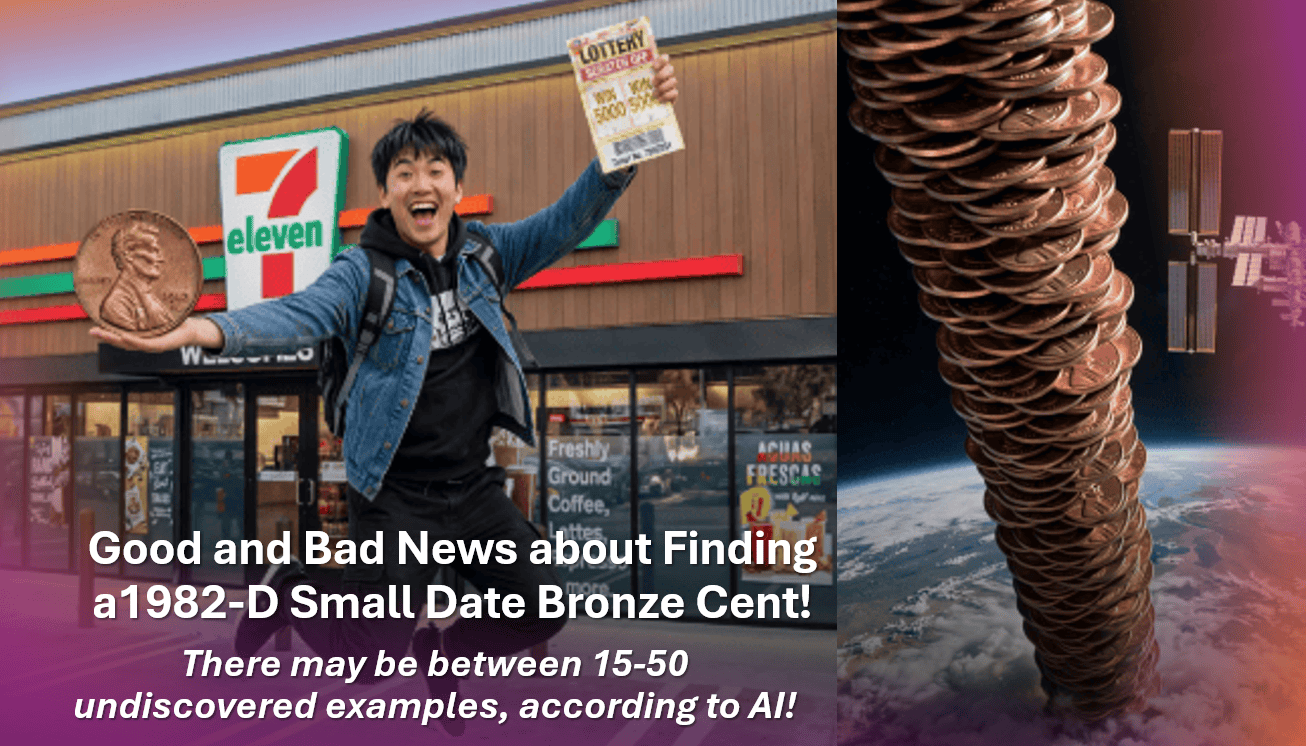
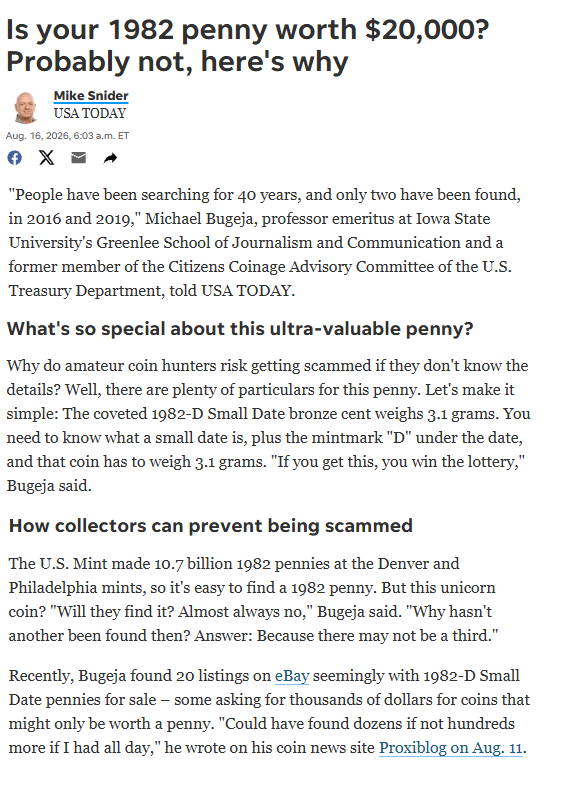
Recently a Facebook coin group member posted a notice stating that he had found the coveted 1982-D Small Date bronze cent–verified by PCGS! Only two have been discovered, in 1916 and 1919, although social media has used the rarity to lure newbies into thinking that have the variety or that it can easily be found.

Here is what he wrote:

“This right here is for everyone that doubted me … chew that up and swallow it. no I’m not gonna be a jerk. I’m super excited. I have proved the 1982D small date with the weak D mint mark and a QDO. And a TDR it has now been verified and authenticated by PCGS as a new variety.”

He provided this proof:


Some 180 Facebook coin group members commented on his post. Here’s a snippet with Tyler Broughton noting the inconsistencies of his supposed PCGS email:


True, the person may be just hoping his submission brings the desired result. We all have been there. But what to make of the letter? It is seemingly informed and may have convinced viewers that indeed, the person did find the rarity. Many commentators congratulated him on his lottery-level find.

Without divulging his name, or the Facebook post and email, I contacted PCGS. A representative confirmed that the company would never send an email like this in advance of encapsulation. There is no Express/Gold service level. There is no Variety/Plus team (that’s NGC). Neither would it divulge internal means of certification.

Let’s take a breath.

It may be that this person indeed found a rarity. For his sake, let’s give him the benefit of the doubt. Perhaps he so believes in his diagnostics that he is sharing the good news before he gets any news. That, however, is not the point of this article. This is: How do we as hobbyists deal with a verification email that might sway us to believe that a coin, indeed, is an ultra rarity? Suppose we saw an email like this on a coin that we might want to purchase? Is this a new way to fool mhobbyists?

My answer was ChatGPT. I fed AI a few basic facts, the rarity, the date of submission, the service level and a few other details. It took me 2 minutes. Here’s what I received:


This is a chilling discovery–not of a rarity–but of how a rarity can be disguised with a fake email or letter, courtesy of AI. I won’t do this, but I could have found PCGS letterhead and pasted the above there. I could invent an email from PCGS–even with an employee name. I could no any number of things, and machine intelligence would help me.

We as hobbyists have to be on top of every new method to beguile us. This may only be the start with AI providing fictional text, video and images of our fondest numismatic desires.

If you like posts like this, subscribe so you can be informed whenever there is a new article or column.

Proxiblog also has thousands of followers on Facebook Coin Groups and other social media. To get the latest discussion and commentary, be sure to friend us by clicking here.

You can find more information about types, varieties, errors, grading, bidding and buying in Coin News Updated: The Essential Guide to Online Bidding. Please consider buying or gifting the work for a friend, as it underwrites this hobbyist blog. Thank you.

Odds of Finding Ultra Rarities


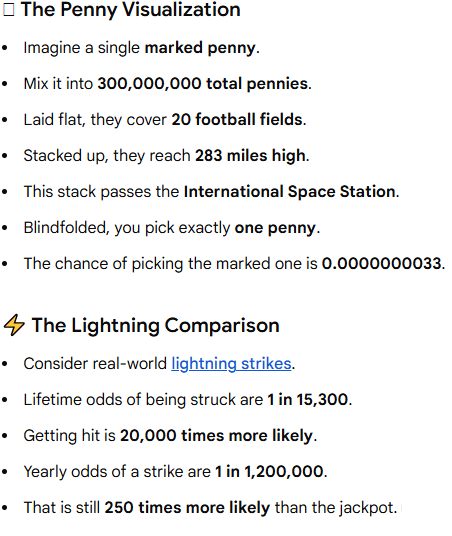
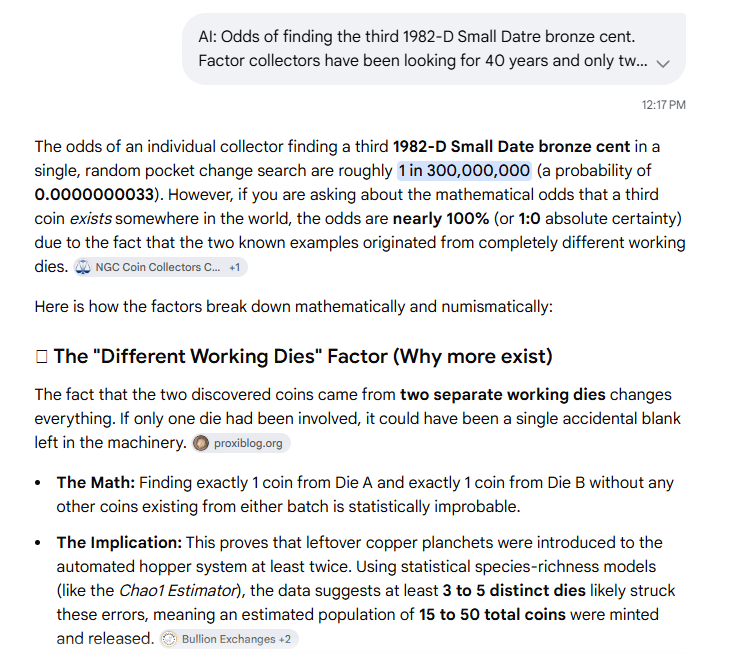
Clickbait social media sites have tricked new coin collectors into believing they can find ultra rarities in pocket change and bank rolls. What are the odds?

We’ll calculate those odds later. But here’s the list of what you in all likelihood will never find:

  • 1974-D Aluminum Cent
  • 1943-D Copper Cent
  • 1944-S Steel Cent
  • 1982-D Small Date 3.1 grams
  • 1943-S Copper Cent
  • 1944-D Steel Cent
  • 1983/83-D Copper Cent
  • 2000 Sacagawea Mule
  • 1944 Steel Cent
  • 1943 Copper Cent
  • 1969-S DDO Cent
  • 1971-D DDO Cent

Social media scammers also proclaim “no mintmark” coins are rarities. No mintmark means minted in Philadelphia; missing mintmark is the rarity. Again, later in the article, we will show you just how many of these rarities are believed minted:

  • 1968 No S Proof Dime
  • 1990 No S Lincoln Cent
  • 1970 No S Roosevelt Proof Dime
  • 1975 No S Roosevelt Proof Dime
  • 1983 No S Roosevelt Proof Dime
  • 1971 No S Jefferson Proof Nickel
  • 1976 No S Eisenhower Proof Dollar
  • 1982 No P Mintmark

But not to despair! There are hundreds of findable rarities in rolls and pocket change. They won’t make you rich, but will make you a coin collector–a true hobbyist–who knows how to spend time wisely.

Clickbait Social Media

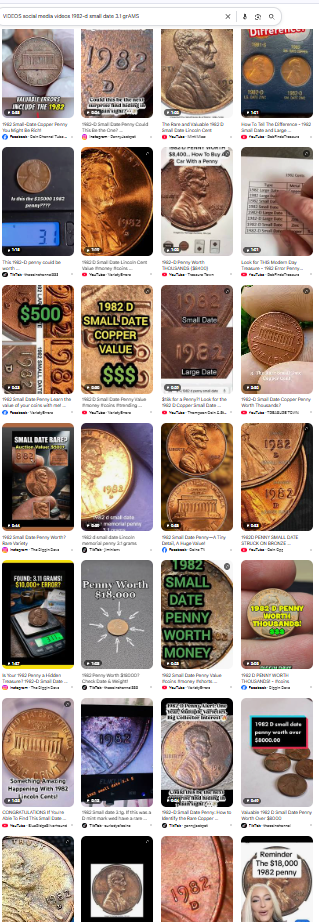
Scammers on Facebook and YouTube foster the belief you can get rich and retire with pocket change.

Here’s a sample YouTube video:


There are only 5 known 1943-S Copper Cents. People have been checking their change and bank rolls for 70 years. To calculate odds of your finding one, factor this: some 125 million Americans consider themselves coin collectors to some degree. Twenty percent of Millennials, or 14.5 million, have taken a keen interest in numismatics.

New collectors have purchased coin microscopes and visit TikTok, Google, YouTube, eBay, Facebook and other social media venues, believing they can strike it rich by checking their change at the grocery store or making several trips to the bank for rolls.

Now consider the past 50-70 years of Americans collecting coins and looking for ultra rarities like 1943 copper cents or 1944 steel ones. What do you think the odds are of your finding one of them?

Now factor the hundreds of thousands of fake ultra rarities exported to the US by China. These often find themselves in rolls and auctions. Etsy, an American company flooded with Chinese sellers, and Temu, a Chinese company, also have saturated the coin market place with replicas. See this article for examples.

AI Calculates Odds

In addition to being a numismatist, I am a distinguished professor (actual title) emeritus at an institution of science and technology. My research specialty is artificial intelligence. I fed data into several sites and databases to calculate the odds of your finding one of these treasures.

In the table below, you will see those top 12 rarest coins and their values along with the odds of your finding one in pocket change or bank rolls.

Brace yourself:


Social media is undermining the hobby along with Chinese counterfeiters who count on your not knowing die markers for rarities. If you don’t, you can spend thousands on replicas.

Some examples:

Just consider the 1943-S restrike copper cent offerings on Etsy:


eBay scammers buy these restrikes and then list them as ultra rarities. Here’s an example:


You also can find “missing mintmark” rarities in online auctions

Missing Mintmarks

The Philadelphia Mint did not use a mint mark on coins until 1980, with the exception of the 1979 Susan B. Anthony dollar, 1942-45 35% silver Jefferson war nickels, and the 2017 Lincoln 225th anniversary cent.

Here’s another table about how many missing mint mark coins are believed to have been released into circulation.


Here are tactics of counterfeiters and scammers:

  • Altering Normal Coins: Forgers might take a regular dime and try to remove the mintmark.
  • Tooling: Look for signs of filing or polishing where the mintmark should be.
  • Fake “No-S” Proofs: A common tactic is to take a regular business strike (like a 1970-S) and try to remove the ‘S’ to pass it off as the rare proof version.

If you would like to learn more about the above missing mint mark coins, click here for a full article.

Findable Rarities

There are hundreds of varieties and error coins that hobbyists still can find in pocket change in bank rolls and that are holdered by PCGS, NGC and ANACS. For a comprehensive list, click here.

Coin collecting is in part about value and investment. The difference between now and past decades is where new hobbyists are getting misinformation. In the past, most numismatists embraced the hobby because of the history, art, culture and metallurgy of coins, medals and paper money.

That is why Proxiblog recommends these three articles for new hobbyists:

HOW TO COLLECT COINS *** HOW TO GRADE COINS *** HOW TO SELL COINS


If you like posts like this, subscribe so you can be informed whenever there is a new article or column.

Proxiblog also has thousands of followers on Facebook Coin Groups, YouTube and social media. To get the latest discussion and commentary, be sure to friend us by clicking here.

You can find more information about types, varieties, errors, grading, bidding and buying in Coin News Updated: The Essential Guide to Online Bidding. Please consider buying or gifting the work for a friend, as it underwrites this hobbyist blog. Thank you.
How to Collect Coins


This post is about how to be a coin collector. It may be one of the most important articles you will read, if you follow all of these steps. Also, memorize this mantra: The value of the hobby is the hobby.

Stop Searching Minor Errors

A prime example is the 1969-D floating roof cent or get-rich-quick ones that have long been discovered, such as:

Only fools will buy the ridiculous 1969-D floating roof cent below. That is not a mint error. The floating roof mirage only means the U.S. Mint continued to strike coins with a worn die. But hucksters on eBay will sell you one for hundreds of dollars.

Here’s an example of a face value cent:


Here is a hyped value example on eBay. No one will buy this coin for that astronomical price; but newbies will look for one (they aren’t difficult to find) and then believe they have struck it rich.


Buy the Red Book


The Red Book’s official name in A Guide Book of United States Coins. It not only contains all the denominations, errors, varieties, histories, and so much more–it also explains the hobby in much greater detail than this post. See my video about the Red Book:


Choose a Precious Metal

These are coins made of gold, silver, palladium and platinum, all available as bullion from the U.S. Mint:


Yes, these coins can be expensive, especially gold and platinum; but silver is reasonable with spot prices typically rising over time. These are investments that you might collect and leave as legacy for your heirs.


Choose a Denomination

Here are the most popular coins to collect:

  • Morgan Dollar (1878-1904/1921): 90% silver and 10% copper. Large coin reminiscent of American culture and history, weighing 26.73 grams.
  • Franklin Half Dollar (1948-63): 90% silver and 10% copper. An easy series to collect with affordable key dates, challenging hobbyists to replace coins with ever higher uncirculated ones.
  • Washington Quarter (1932-64): 90% silver and 10% copper. Like the Franklin Half Dollar, a relatively easy series to collect with only one affordable key date (1955), all still available across the Sheldon grading spectrum. Moreover, this denomination has an additional designation, full bell lines, knowledge of which can bring substantial values.
  • American Silver Eagle: (1986-): 99.9% silver. Among the most beautiful of designs by Adolph A. Weinman, portraying the the Liberty Goddess on the obverse originally used on Walking Liberty Half Dollars (1916-1947).

Browse the Red Book for a series that speaks to you, looking at first for easy ones to assemble, such as the Kennedy Half dollar (1964-) and then more challenging ones, such as the Mercury Dime (1916-45).

This Mercury Dime series has expensive key dates and desirable varieties and errors. For instance, the 1916-D has a mintage of a mere 264,000. Even lower mint state examples command values above $1000. And then there are these valuable errors, 1942 over 41 and 1942 over 41-D, and regular/micro mint mark varieties in the 1945-S example, also depicted below:


Collect Year, Mint Mark and Varieties Sets

After you choose a denomination, or several, start collecting by year (year date set). For instance, it is relatively easy to collect every year of the Mercury dime, substituting the easily found 1916 dime for the rare 1916-D dime. If you are more ambitious, try for the entire set (all years, mint marks). Then go for the entire set with major varieties (1942/1 error, 1945-S/micro S).


The beauty here is that once you have a set, or nearly one, you can begin replacing lower grade examples with higher ones, selling the lower ones to finance the higher ones. That is the joy of collecting.


Key Date Sets


These key dates are among the most difficult to collect because prices, such as the aforementioned 1916-D Mercury Dime, are so expensive. But over time you can amass a collection of the most desirable key dates and varieties, such as these:

  • Indian Head Cent: 1877, 1888/7
  • Lincoln Cent: 1909-S VDB, 1914-D, 1922-D Missing D Strong Reverse, 1955 Doubled Die Obverse
  • Two-Cent: 1864 Small Motto, 1867 Doubled Die Obverse
  • Three-Cent Silver: 1855
  • Three-Cent Copper Nickel: 1883, 1884, 1885
  • Shield Nickel: 1880, 1883/2
  • Liberty Head Nickel: 1885, 1886, 1912-S
  • Buffalo Nickel: 1914/3, 1916 Doubled Die Obverse, 1918/7-D, 1926-S, 1935 Doubled Die Reverse, 1937-D 3 Legs.
  • Mercury Dime: 1916-D, 1919-D, 1919-S, 1942/1, 1942/41-D
  • Roosevelt Dime 1968-S No S, 1975-S No S
  • Barber Quarter Dollar: 1896-S, 1901-S1913-S
  • Standing Liberty Quarter: 1916, 1918/7-S, 1927-S
  • Washington Quarter Dollar: 1932-D, 1932-S, 1937 Doubled Die Obverse, 1950-D/S
  • Morgan Dollar: 1889-CC, 1893-S, 1895-S, 1903-O (not to mention VAMs, varieties and major errors).
  • Peace Dollar: 1928, 1934-S (not to mention VAMs and varieties.

You can strive for key dates across one denomination or one of the dates from each of the above series. In any case, these will always be in demand and you can collect ever higher grades, creating a substantial investment.


Know Numismatic Terms

If you are planning a trip abroad to a country with a different language, you buy a tour guide book, use AI for translations, or just memorize the operative phrases before you travel. You need to do the same with coin collecting.

How many of these numismatic terms do you know?


If you do not know terms, please consult this illustrated glossary so that you not only know the definitions but also can identify them because of photos.


Other Features

There is so much more to the hobby than what I have suggested here. You have to learn how to grade, understanding the Sheldon scale (beyond the scope of this article). Also, many coins are condition rarities, common in lower grades and rare in higher ones, such as the 1884-S Morgan Dollar. Some coins have destinations that increase value, such as full bell lines, full bands, full steps, etc.


See this post for more examples.


You also might want to visit these popular Proxiblog articles:

If you like posts like this, subscribe so you can be informed whenever there is a new article or column.

Proxiblog also has thousands of followers on Facebook Coin Groups, YouTube and other venues. To get the latest discussion and commentary, be sure to friend us by clicking here.

You can find more information about types, varieties, errors, grading, bidding and buying in Coin News Updated: The Essential Guide to Online Bidding. Please consider buying or gifting the work for a friend, as it underwrites this hobbyist blog. Thank you.
7 types of 1982 cents and one get-rich error. How to tell what you have.


Let’s begin by defining the 7 types of 1982 cents. The copper ones should weigh 3.1 grams; the zinc ones, 2.5 grams. The copper ones are Large Date, Philadelphia; Small Date, Philadelphia; and Large Date, Denver. The zinc ones are Philadelphia, Large Date; Philadelphia, Small Date; Denver, Large Date; and Denver, Small Date.

All of those seven are readily available in pocket change. They are valuable only in very high mint state grades.

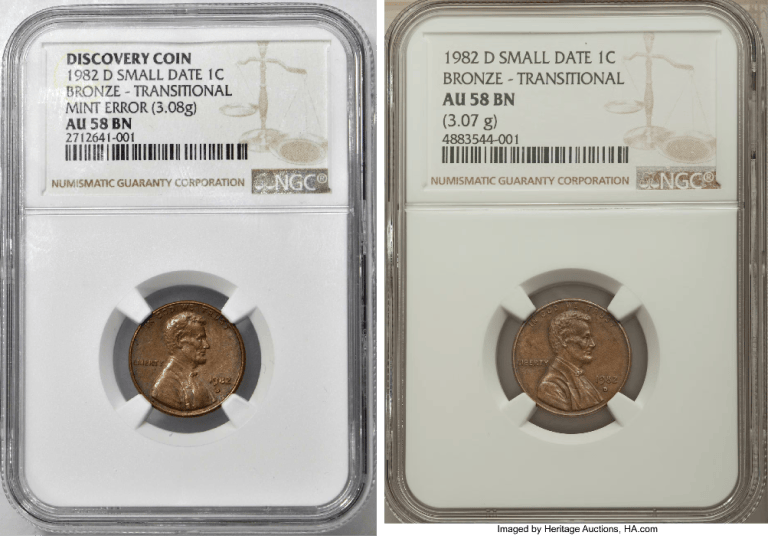
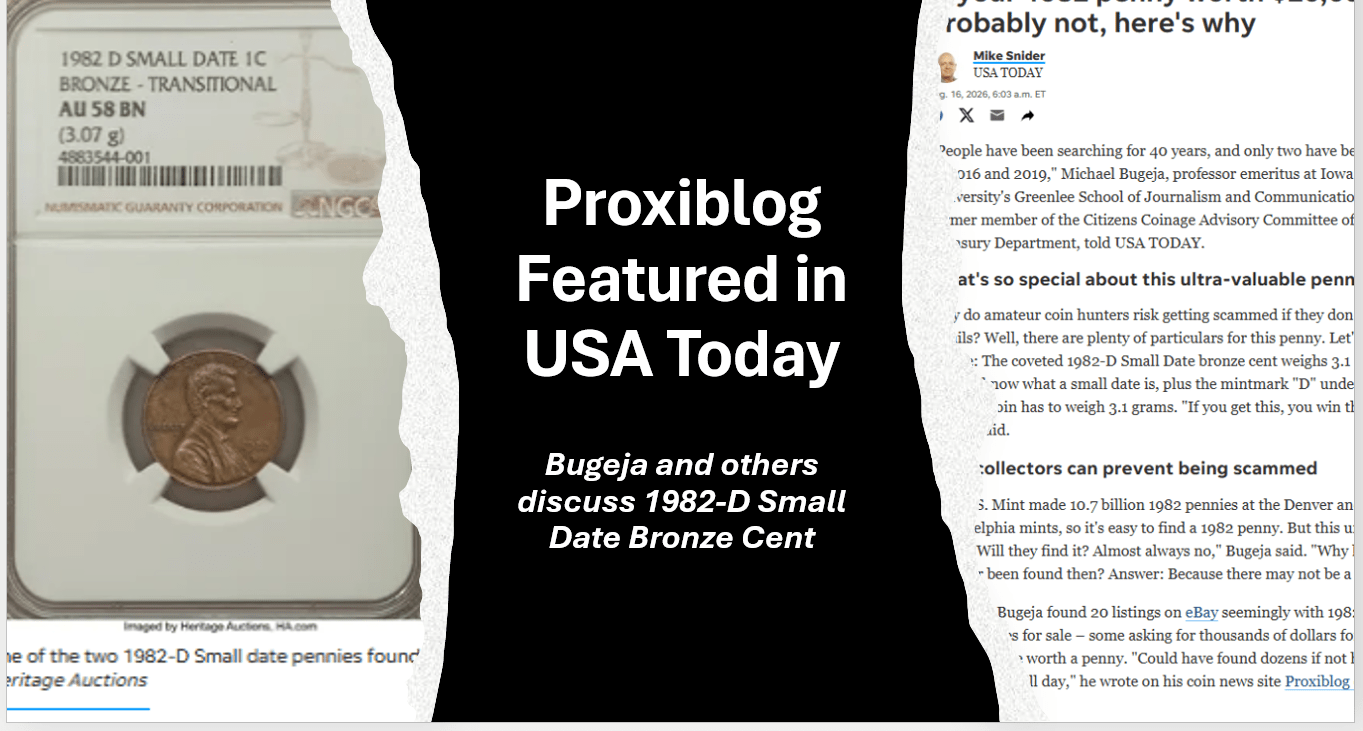
The transitional error–and only two have been found 40+ years–is the 1982-D, Small Date, 3.1 grams.

Before 2016, numismatists theorized that there may be an 1982-D small date weighing 3.1 grams, otherwise known as a transitional error, in that this coin was supposed to be struck on a zinc planchet and not the copper one.

The U.S. Mint went from copper to zinc in that year because the copper coin was worth more than face value due to the rise in value of that metal.

Numismatic News reported in 2016 that the much-publicized theorized transitional error had been found in a lightly circulated AU58 cent. You can read about that here.

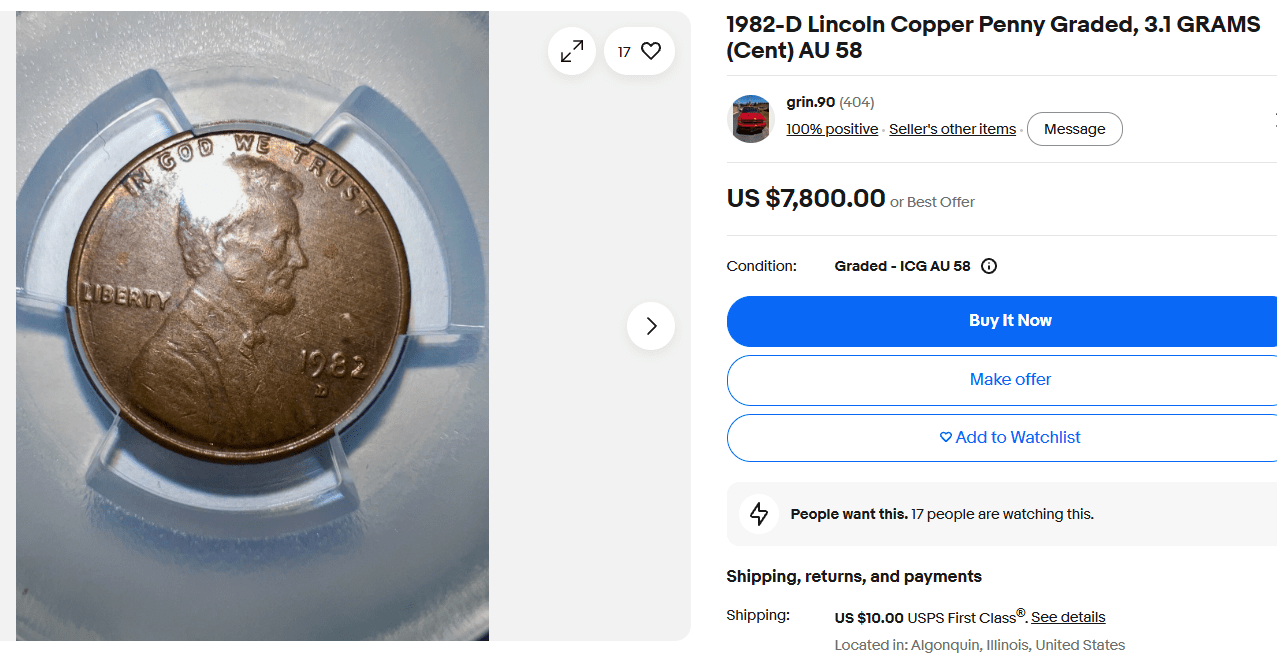
A few years later that publication reported that a second such coin, also AU58, had been found, depicted earlier.

Here is the discovery coin in 2016.


Here is the second example from 2019.


Some numismatist want to dub the 1982-D Small Date bronze cent as a variety and not an error. Ken Potter, the foremost authority on this cent, wrote this in Numismatic News: “Some feel the 1982 cent has grown from a seven-coin set to an eight-coin set if one wants to consider one of these a variety and part of the set. However, this is unlikely to occur due to the rarity of the pieces. As such, it is being considered an error like the 1943 copper cents.”

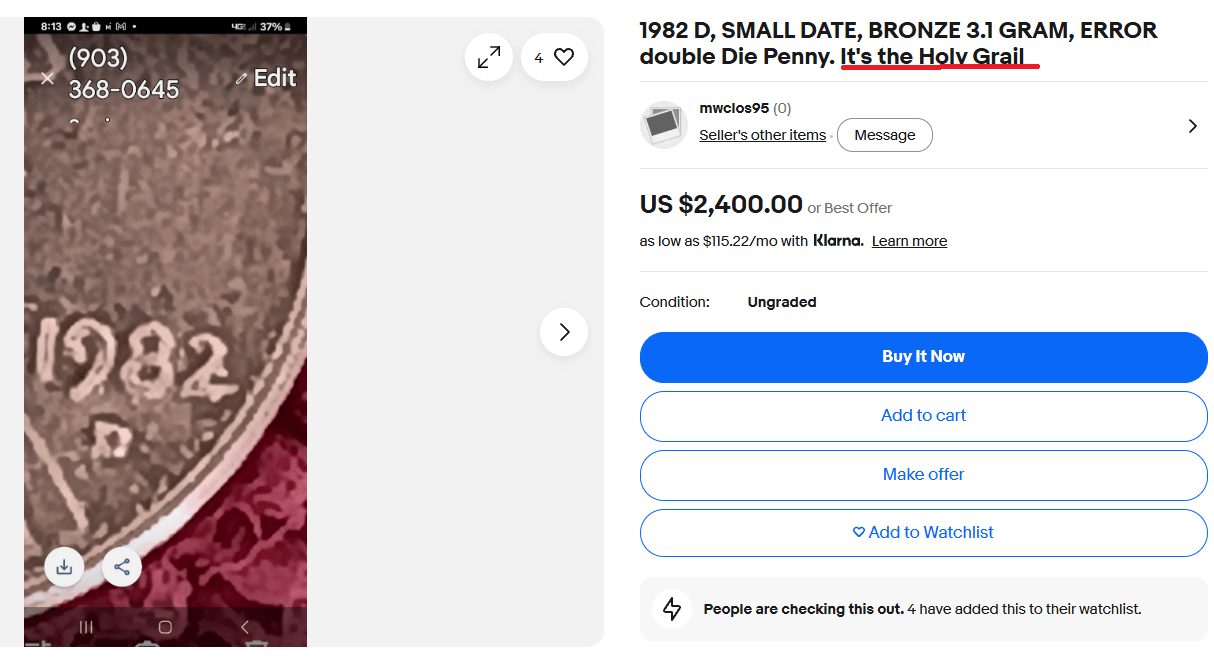
The key word in the above excerpt is “rarity.” No one has yet to find other examples of this error apart from the two mentioned here. Nevertheless, because of the value of this coin–the AU50 example sold for $18,800 in 2017–social media has hyped the odds of finding more in pocket change and bank rolls.

Click-bait videos like this one have triggered a viral search for the get-rich-quick coin.


Odds are you will never find this particular error coin.

Facebook coin groups are inundated with inquiries about 1982 cents with new members believing they found the treasured error. It requires numismatic skill to do so. And that’s where scams and buyer remorse set in. First, you must distinguish between large date and small date of the various types. Then you have to weigh the coin to see if it is 2.5 or 3.1 grams, with the 3.1 being the winning number.

Here’s a handy chart:


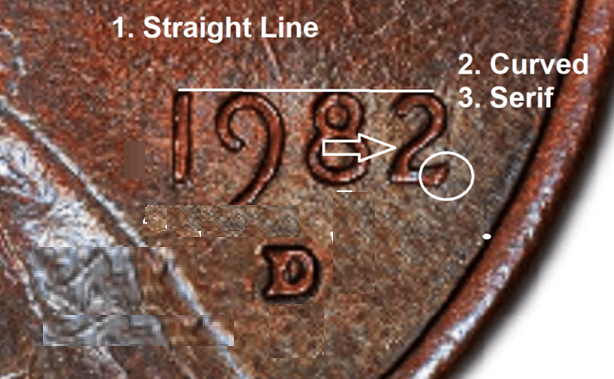
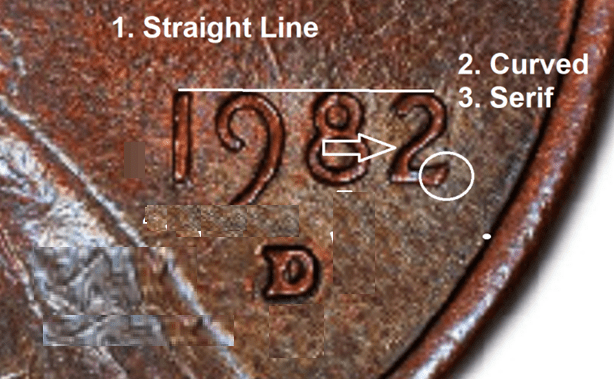
First, the “2” in the small date is a different font than the large date, whose “2” lacks a serif as in the small date. Also, as you can see from the red lines above, the “8” in the small type is the same size as the “1.” If you drew lines as I have, on a large date, you will see that the “8” is larger than the “1” and the “2.”

Note the shape of the “2” in addition to the difference in the serifs above. The 2 in the small date is curved whereas the large date is straight.


Now let’s use an original 1982-D Small Date copper from PCGS to see all 3 die markers:


Numismatic research indicates that the two known examples came from two different working dies because the two known examples have different mintmark placements.


You see in 1982, mintmarks were hand-punched. Because the mintmark in both examples have slightly different placements, we can conclude they came from two working dies.

But the critical difference is in the weight, so you have to have a scale.

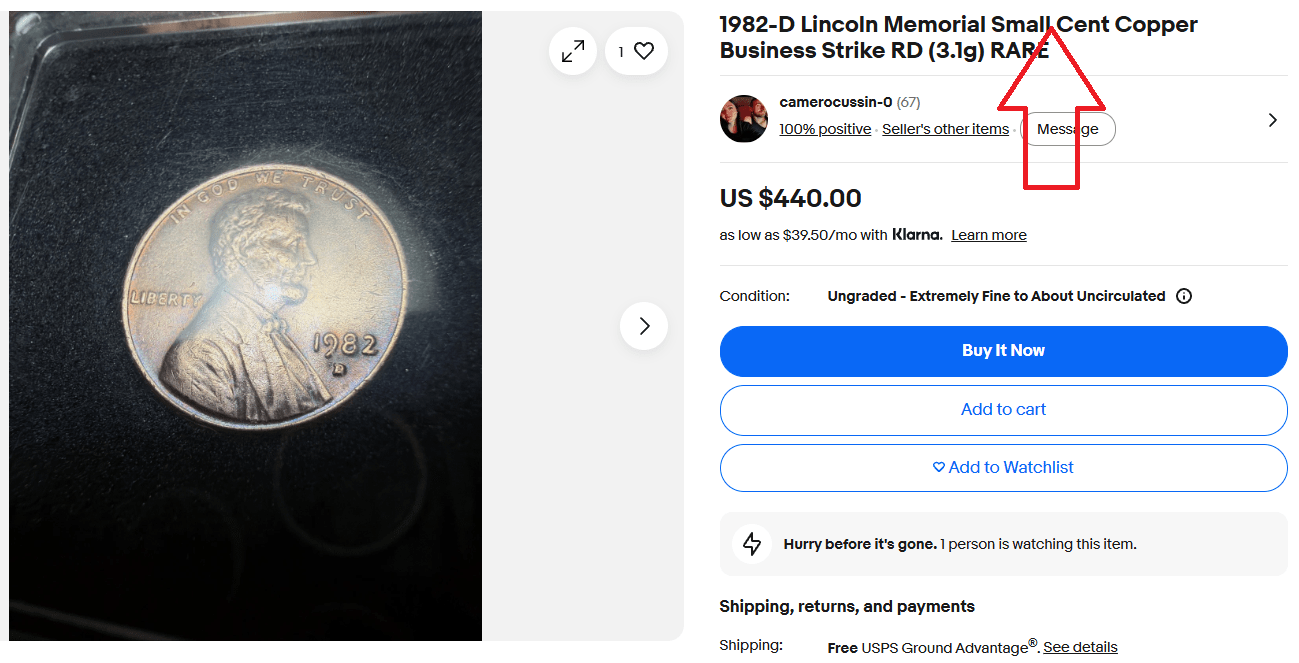
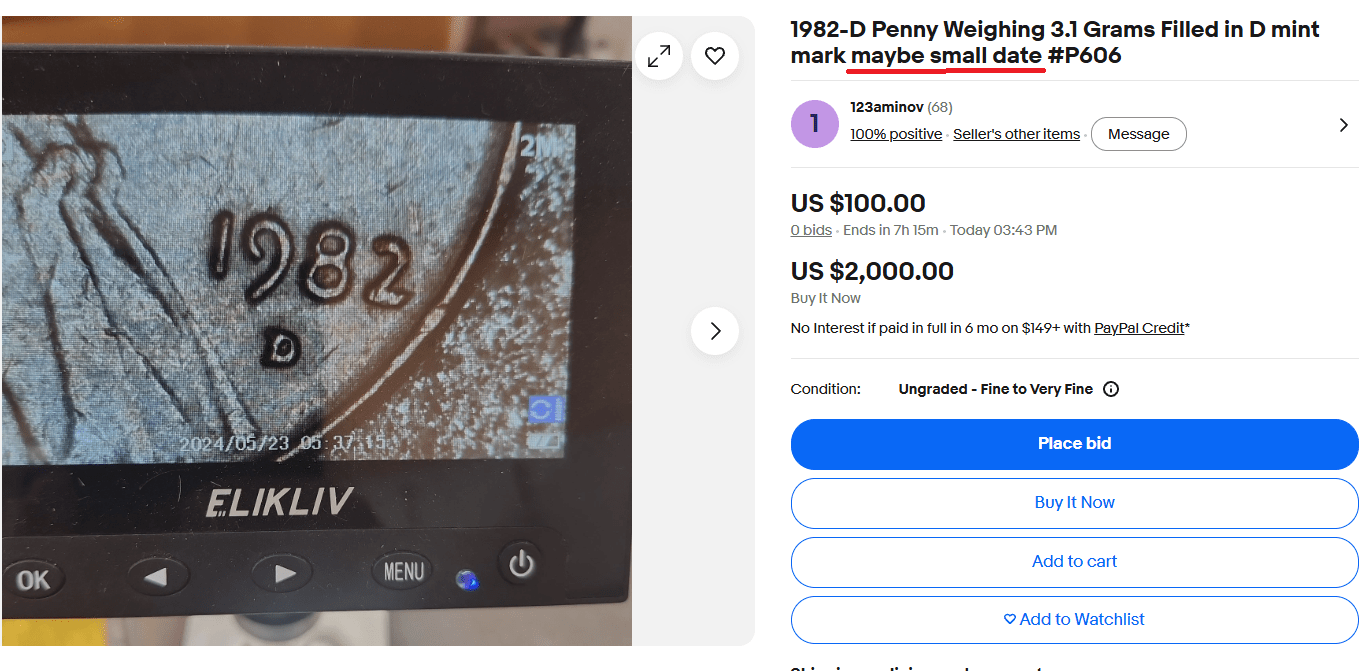
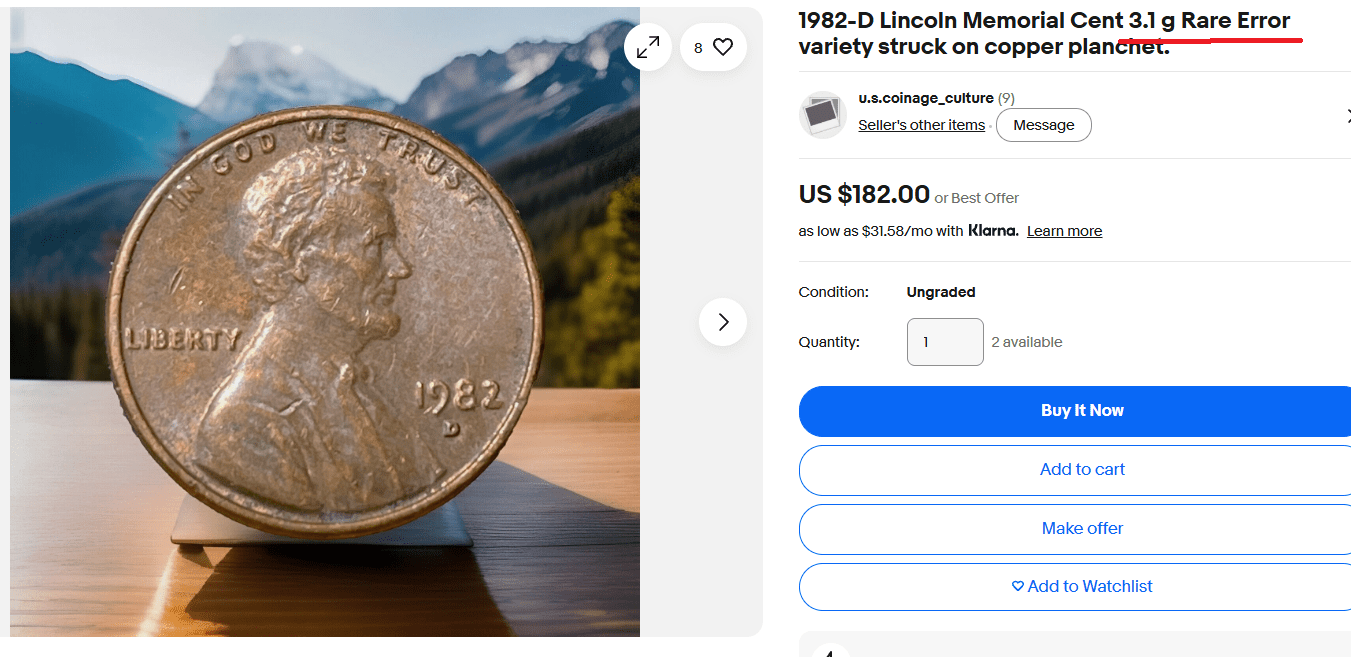
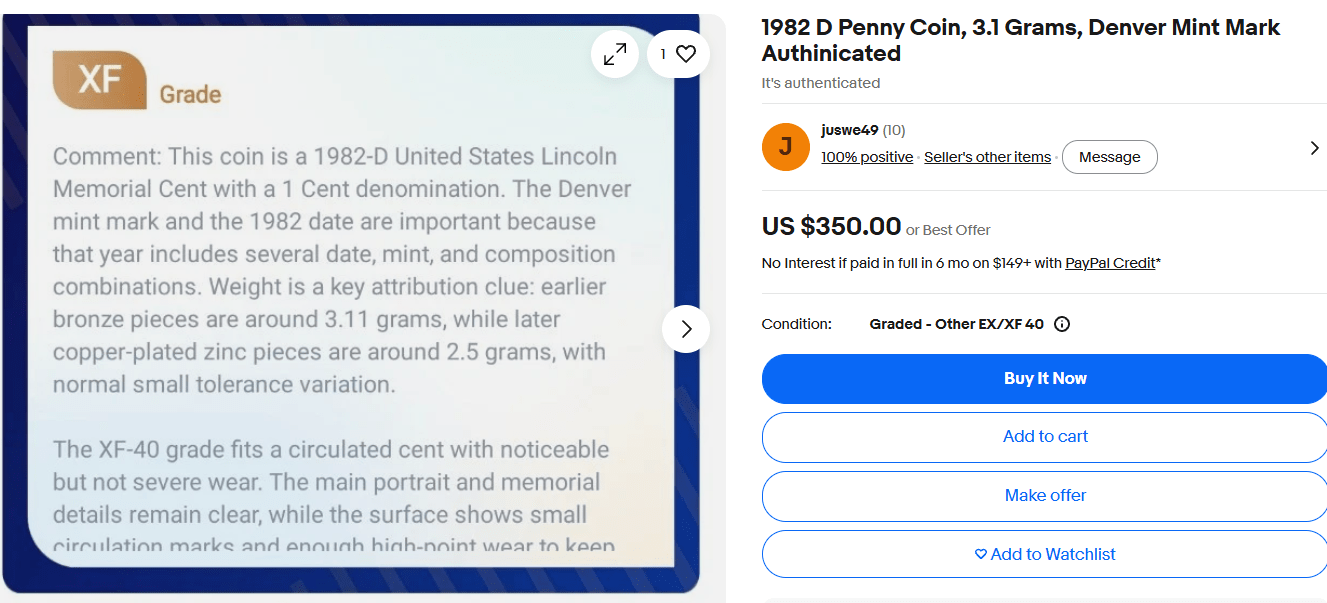
Here’s where the trouble begins. Unscrupulous or ignorant coin sleuths can trick you into buying a regular date variety masquerading as the error.

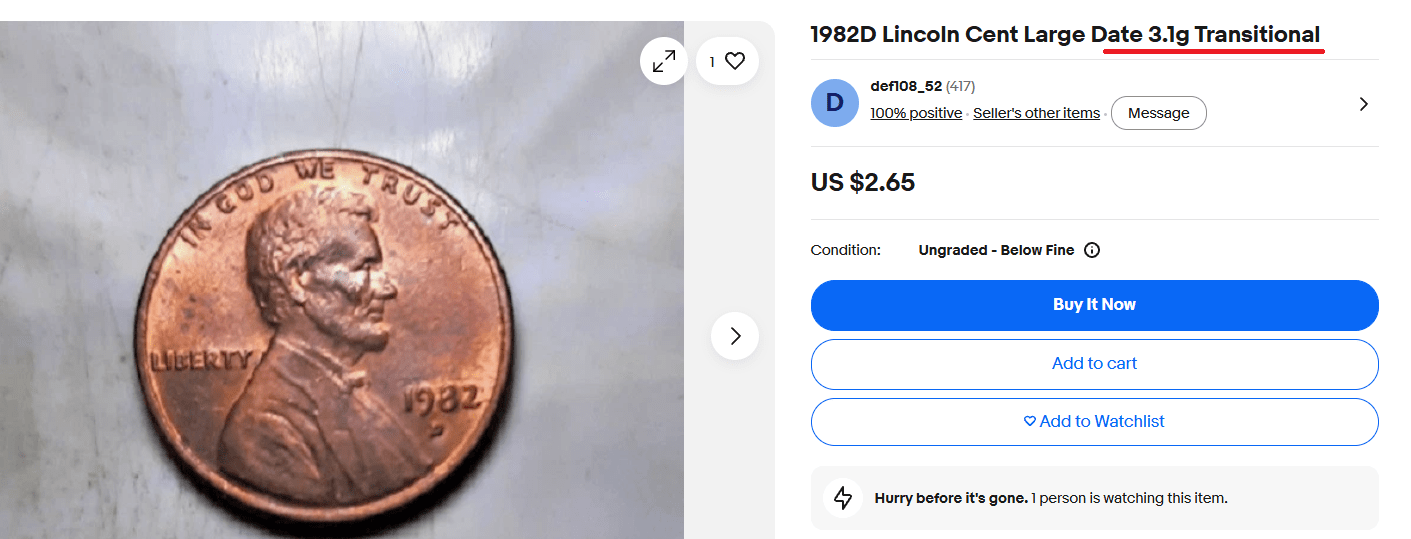
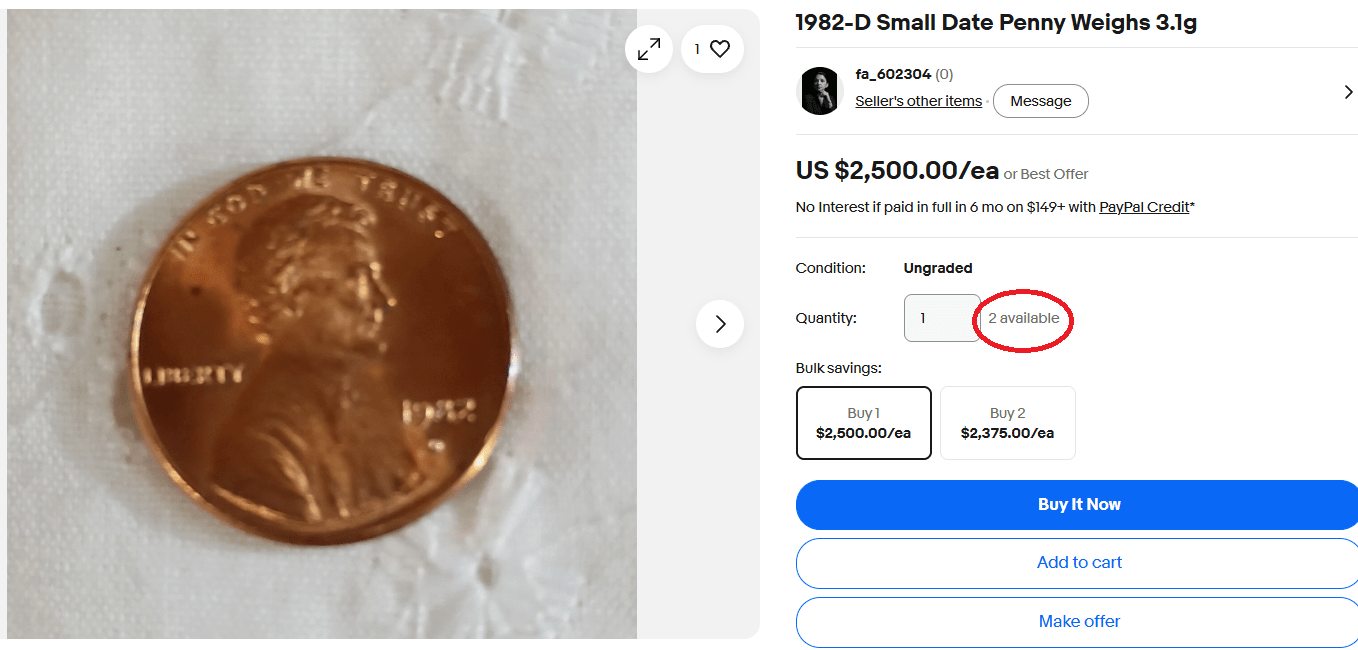
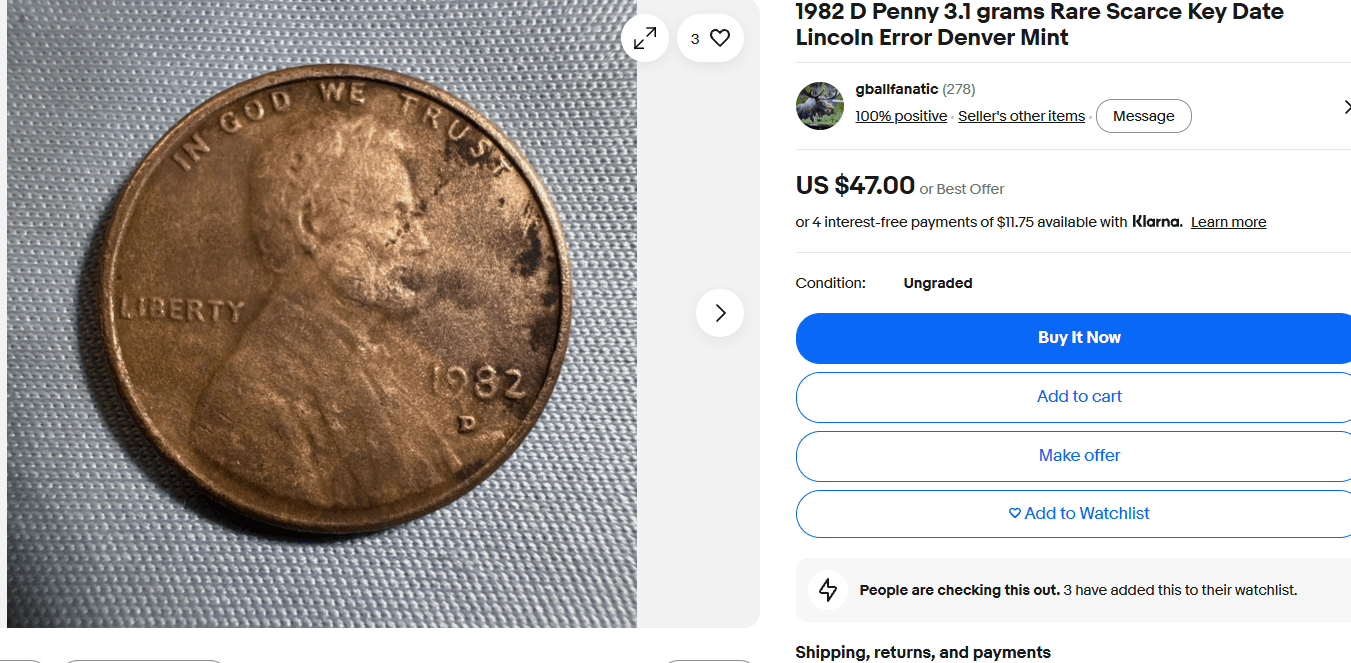
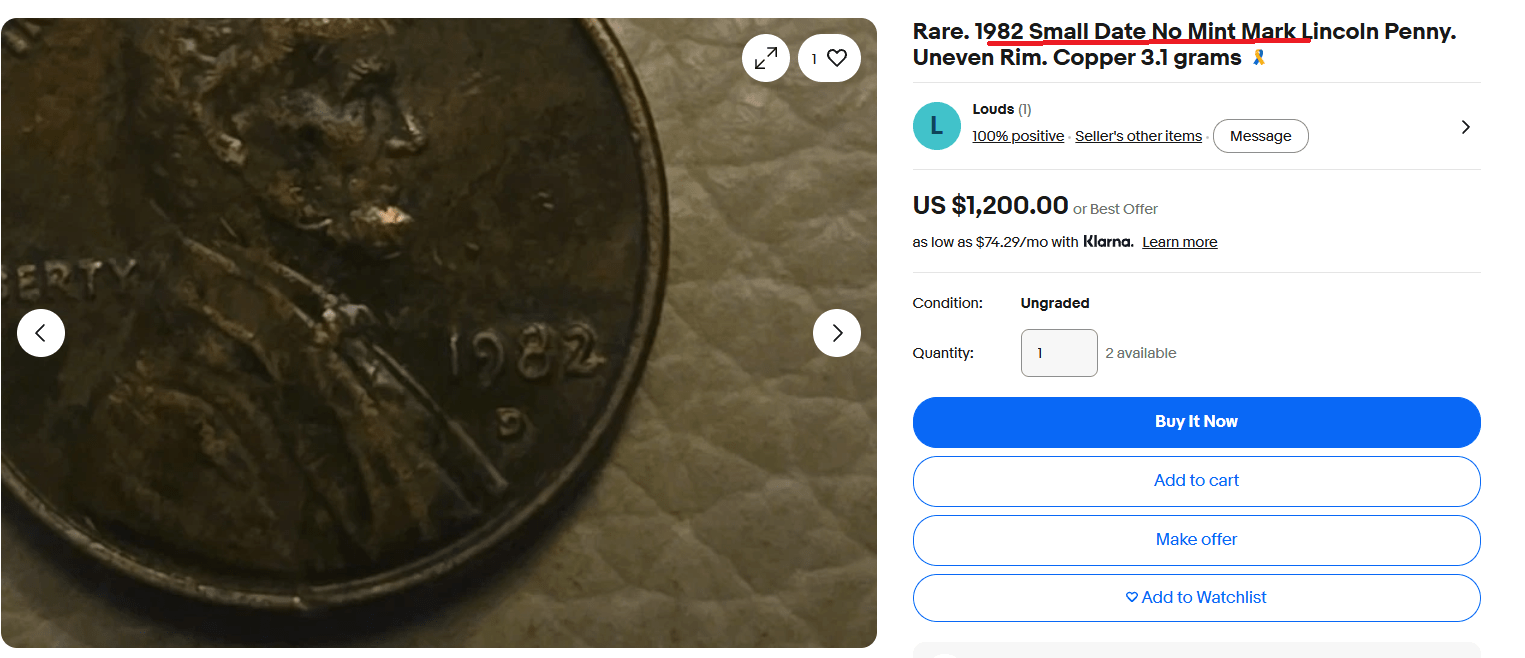
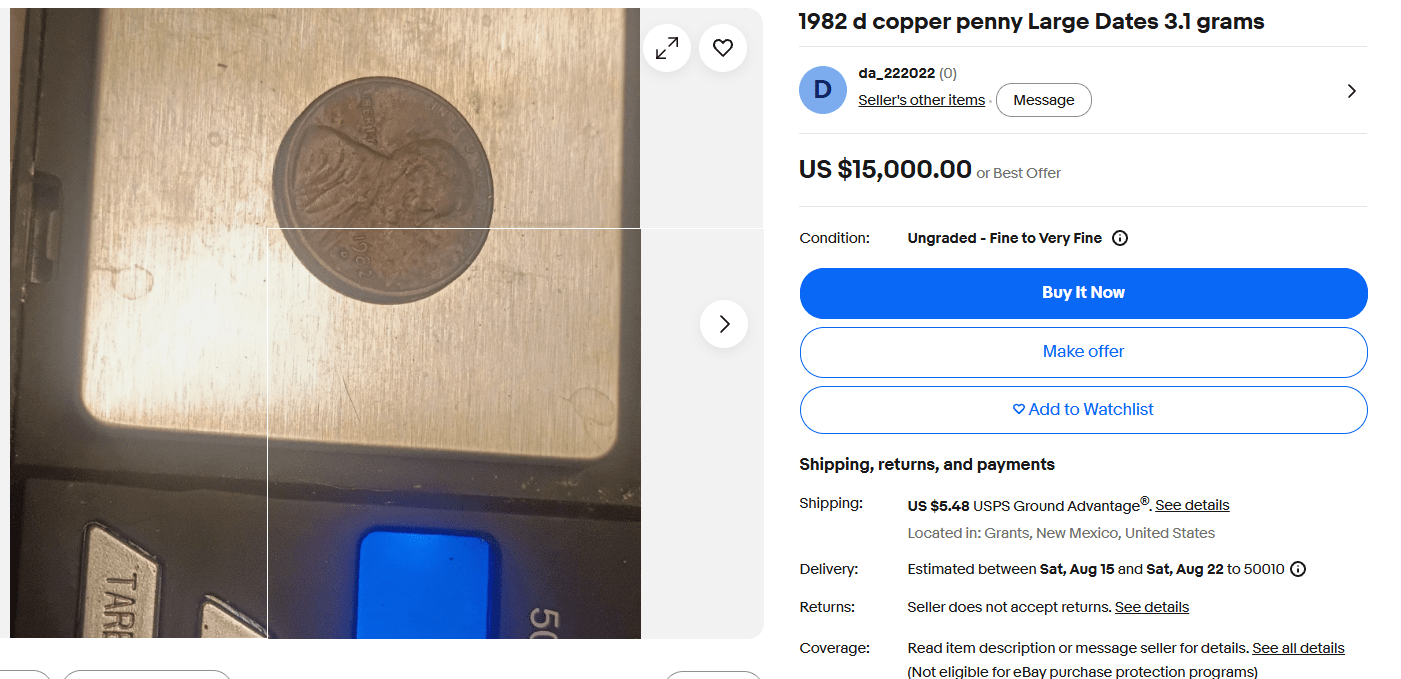
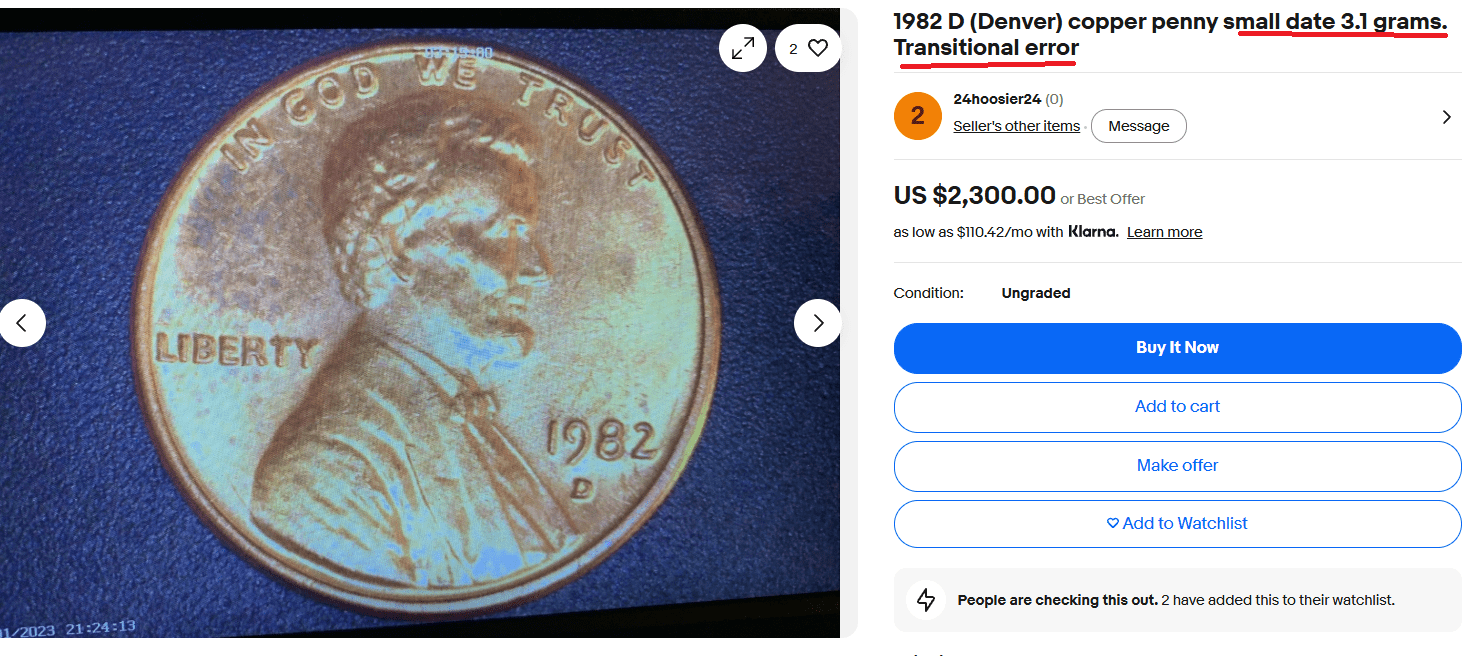
This eBay seller correctly identifies the small date variety and includes several photos, but not one on a scale showing 3.1 grams. Are you willing to believe the seller spending that high amount?


Worse, included in his photos is a PhotoShopped or different small date coin. Compare the photos:


This is a standard 2.5 zinc small date and that you won’t get your money back. And of course, this seller does not accept returns. And even seemingly bills you with the high shipping rate:

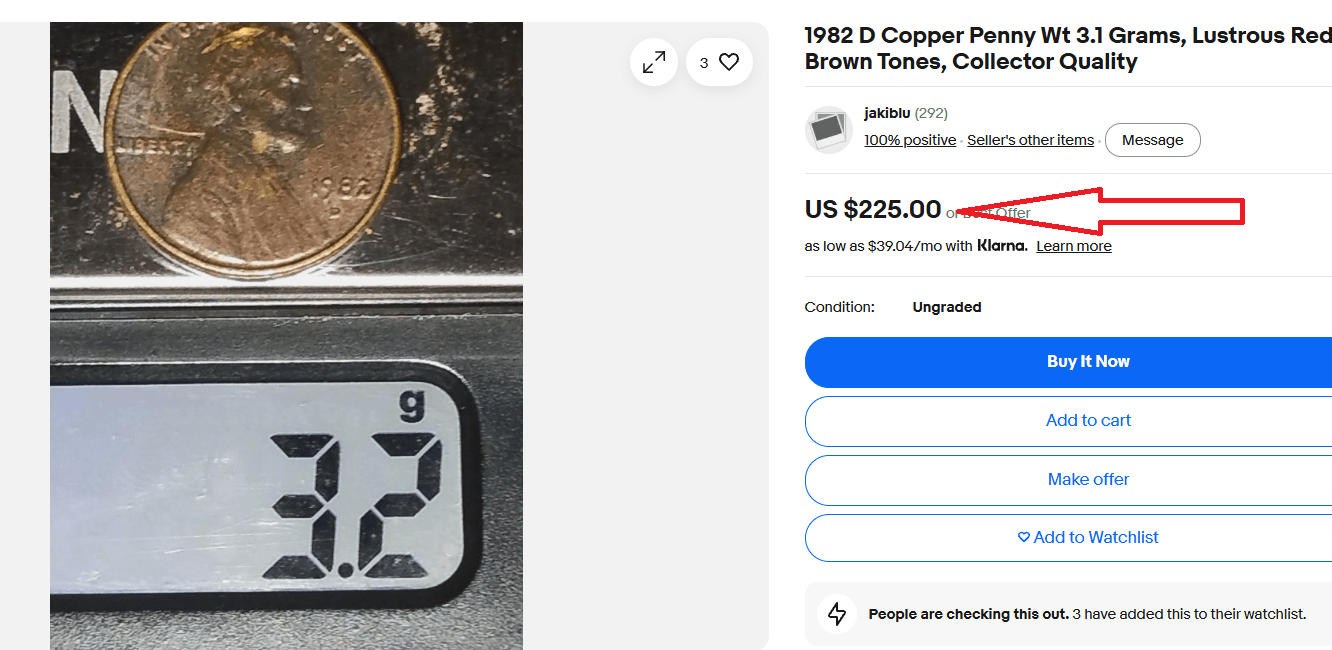
Good luck dealing with eBay on this coin not weighing the requisite 3.1 grams. Had he included the coin on a scale, you might be able to tell if this was the same coin as depicted in the sale price. But here again, you can manipulate coin scales to read what you want them to.

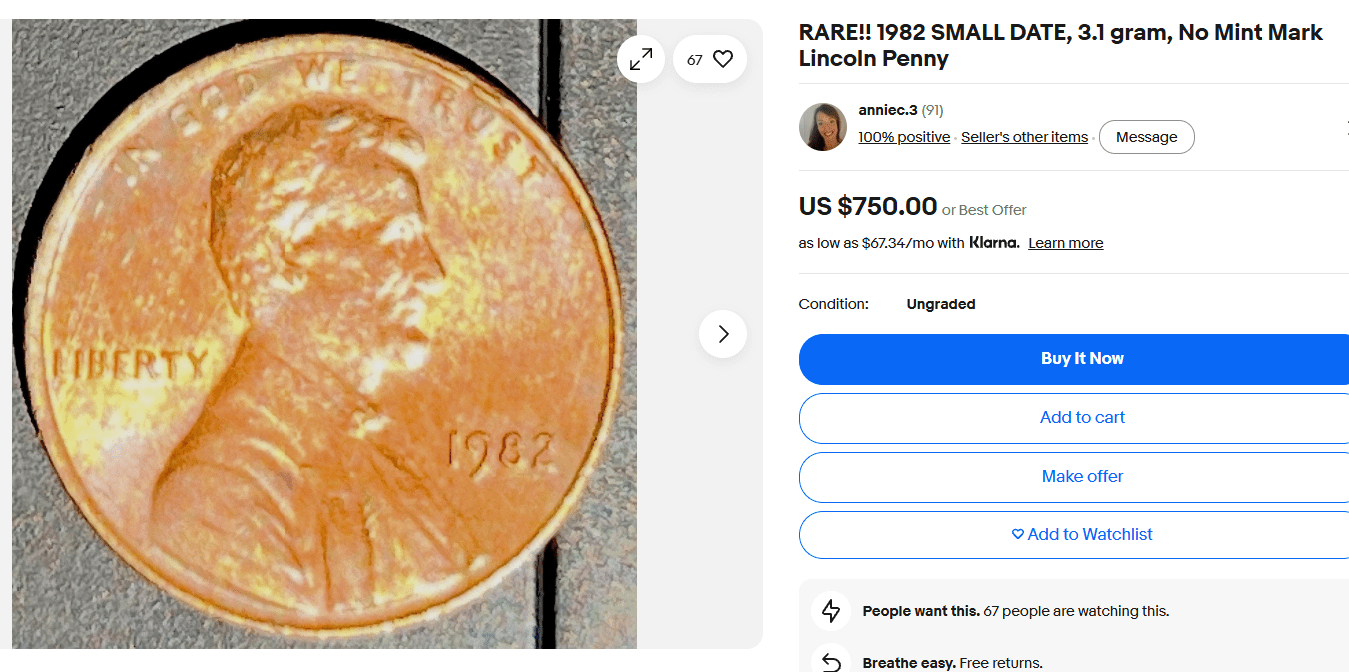
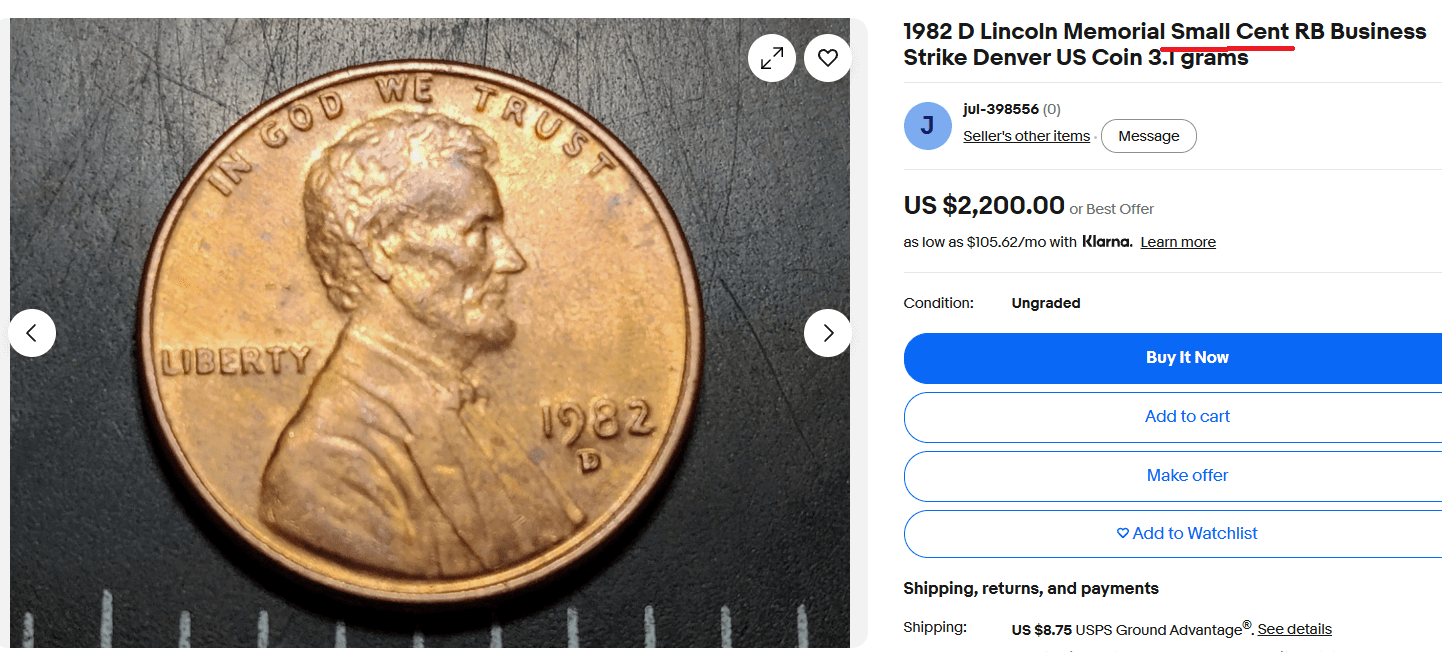
Again, consider the eBay listing below. Either the seller is a scammer or just plain numismatically ignorant. Yes. It is a small date. No. It is not the valuable copper one. But if you don’t know how to tell the difference, because you believe click-bait videos, you’ll be out $1,800 for a coin that is really just face value.

Once again, this seller does not accept returns but generously offers free shipping:

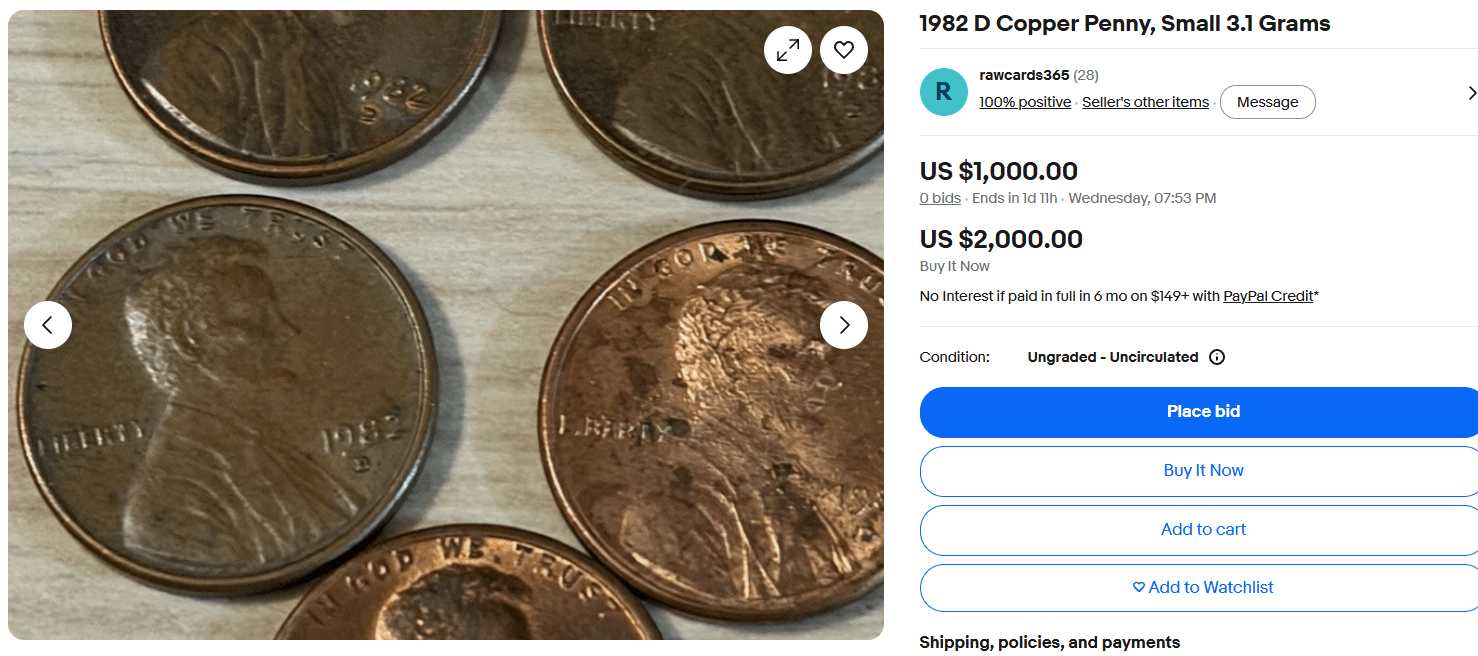
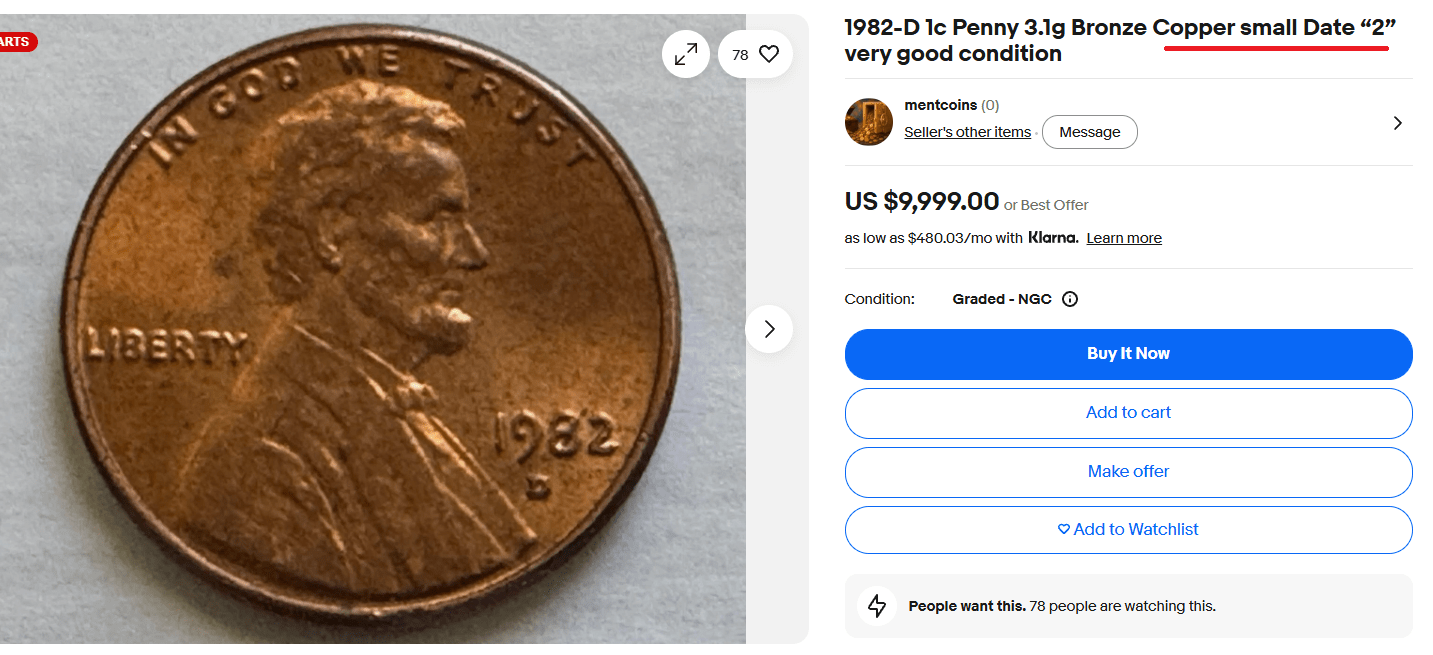
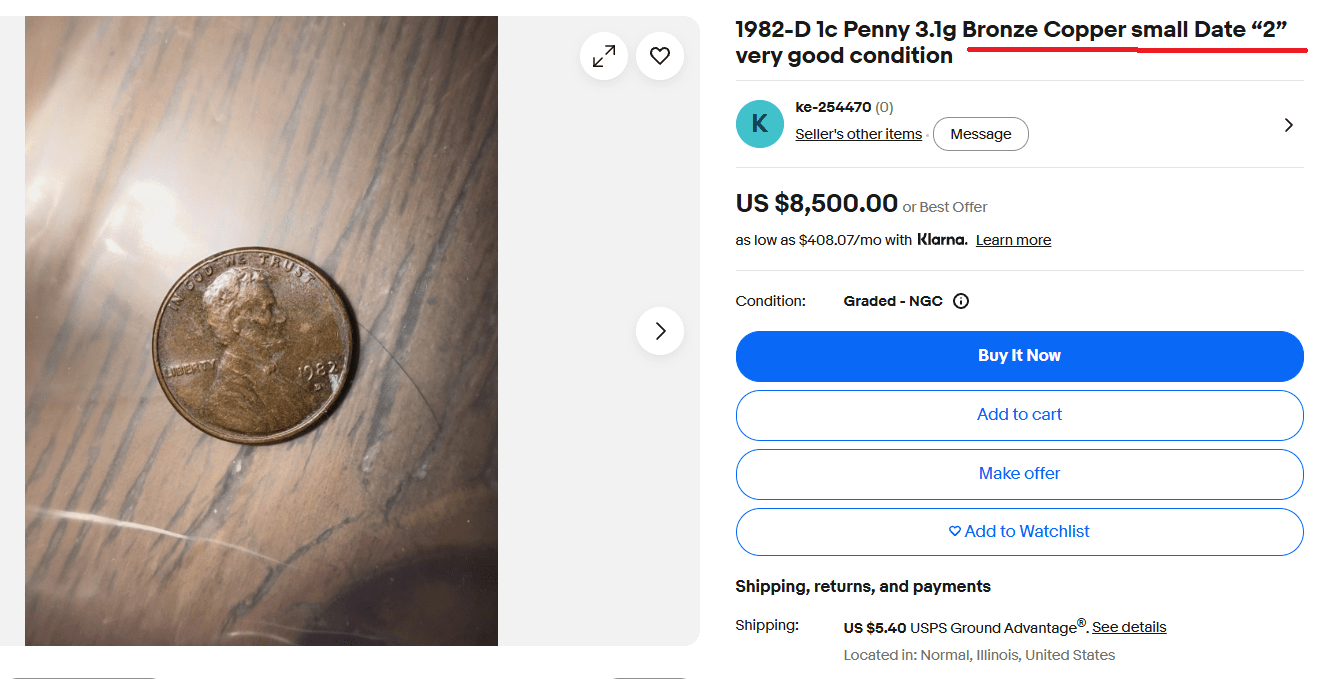
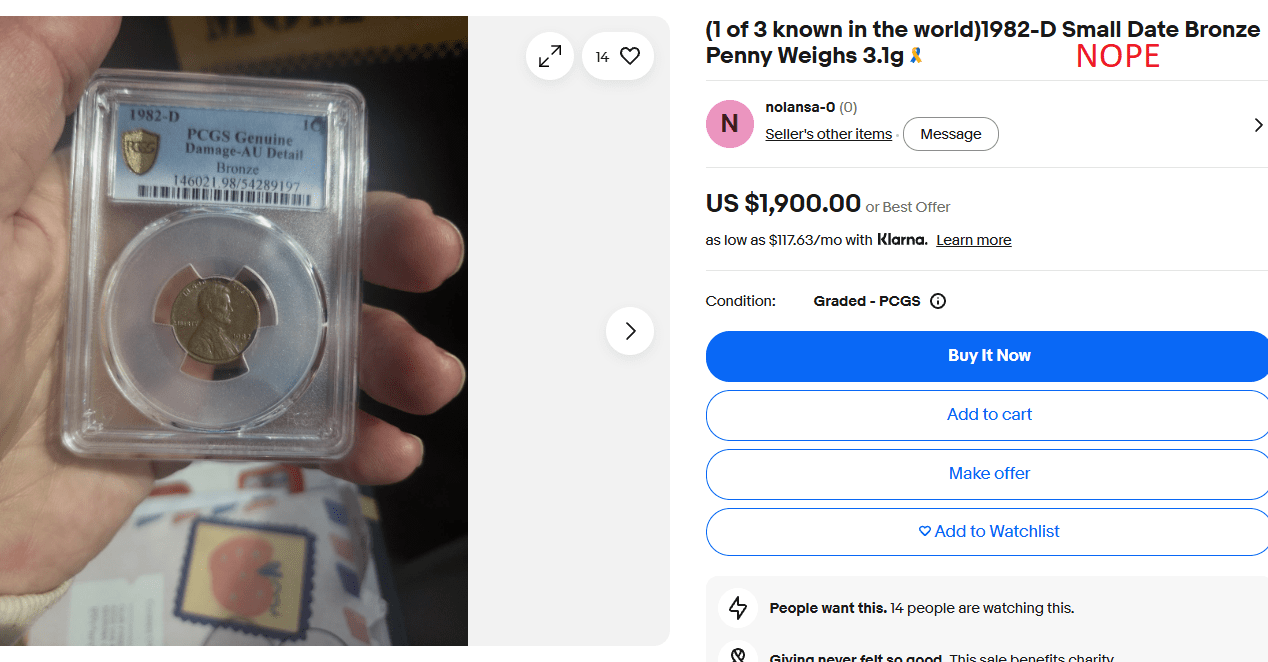
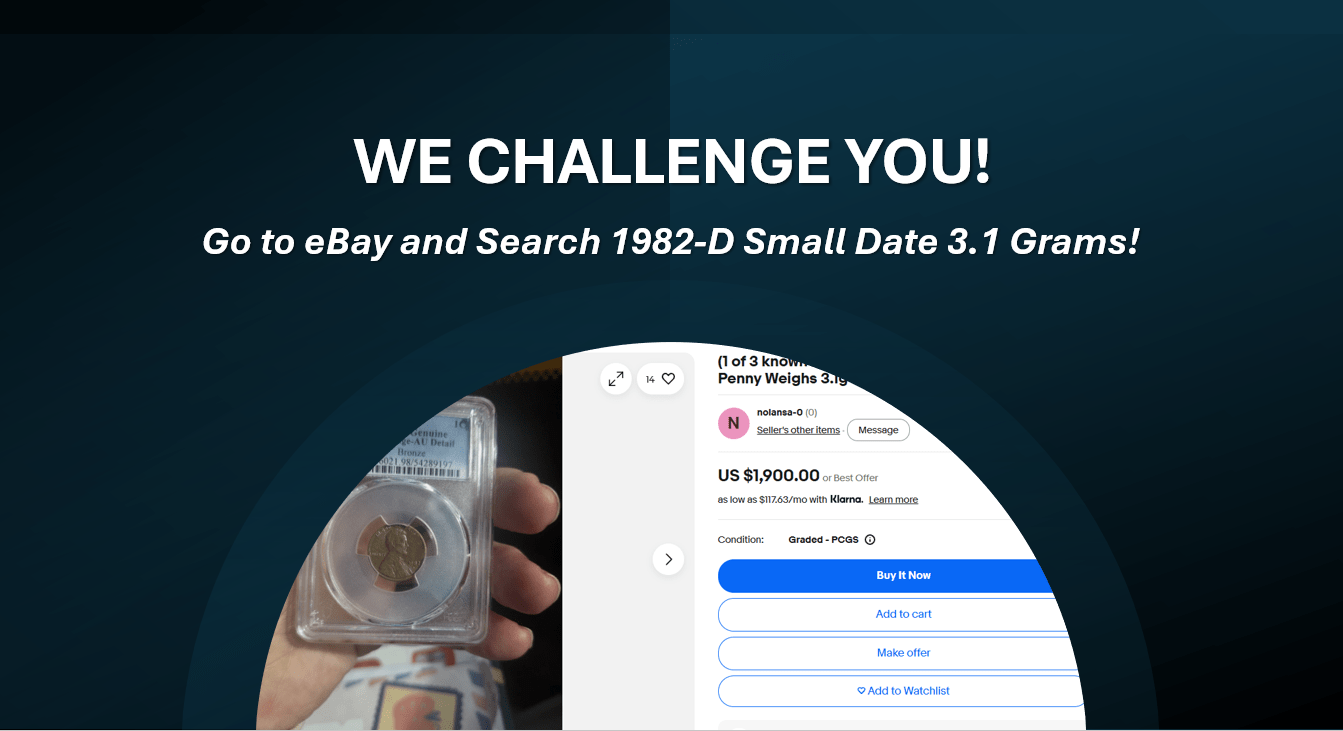
Then there are sellers who have holdered their coins with a leading company like PCGS but still claiming that their error coins (NOT!) weigh 3.1 grams.

There are so many things wrong with this eBay listing. First, the seller states that NGC slabbed the coin when PCGS did. But you can also go to the PCGS verification site to view the photo of this large date regular bronze common cent:


The seller posits that this is a very rare cent and, of course, does not accept returns:

Scammers also alter the “8” and “2” of a large date and then show it on a scale weighing 3.1 grams. Also note the larger lower circle of the “8” in the large date.

Here’s an example:


If you like posts like this, subscribe so you can be informed whenever there is a new article or column.

Proxiblog also has thousands of followers on Facebook Coin Groups, YouTube and other social media. To get the latest discussion and commentary, be sure to friend us by clicking here.

You can find more information about types, varieties, errors, grading, bidding and buying in Coin News Updated: The Essential Guide to Online Bidding. Please consider buying or gifting the work for a friend, as it underwrites this hobbyist blog. Thank you.