Counterfeit PCGS 1893-S Morgan


By Jack Riley

The 1893-S Morgan, a key date in the series, is the third most counterfeited coin after the 1909-S VDB Cent and the 1916-D Mercury dime. That is why numismatists scrutinize raw coins offered online where most fakes are offered for sale as genuine.

The 1893-S Morgan Dollar below was sent to PCGS and returned as counterfeit. This is cast and not die struck. Surely it was a new collector with a PCGS membership who sent it in, hoping to authenticate it.

Let’s investigate.


The suspect coin weighed 26.75 grams with a diameter of 37.7mm and a thickness of 2.8mm. The standard for Morgan dollars is 26.73 grams with a diameter of 38.1 millimeters and a thickness of 2.4mm.

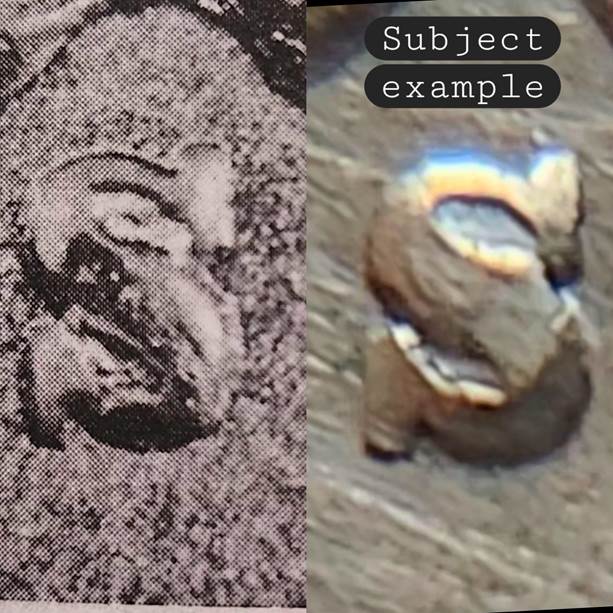
One would expect a cast to be thick if the weight is near that of a genuine coin. Some raised lumps show on the surface left of “i” and 3 raised lines in “A”.


I had previously logged this particular cast in my running doc sheet of “common cast Morgans.” I use this sheet as a reference point for new collectors of identifying various cast counterfeits via pictures. I’ve only seen this particular reverse on this 1893-S and one 1900-S.


These are still fooling collectors as evident regarding the fake coin sent to PCGS.

Always attribute your coins!

The 1893-S was produced using 1 obverse die and 2 reverse dies. The date position doesn’t change on any! All coins have a “far date” with the left of the 1 parallel to the right side of the 3rd denticle.


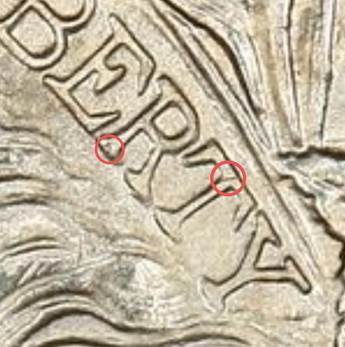
A few die markers on the obverse include a line through T and the “rabbits foot” on the R which may be difficult to see on lower grades so the T marker is the primary pickup point.

On to the reverse! Two reverses used with VAM-1 having a centered S and VAM-2 having a mint mark tilted right.

VAM stands for Van Allen and Mallis, referring to Leroy Van Allen and A. George Mallis, researchers who cataloged Morgan dollar and Peace dollar die varieties. The VAM system is a way to identify specific die variations on these coins. 


To identify counterfeit coins, you should understand the role that die markers and dimensions play.

Die markers are imperfections on the die transferred to the coin during striking. As documented earlier in this article, such markers can be die chips, die breaks and die polish marks.

Coin dimensions include weight, diameter and thickness, as we used in documenting this 1893-S fake.

If you like posts like this, please subscribe so you can be informed whenever there is a new article or column.

Proxiblog also has thousands of followers on Facebook Coin Groups, YouTube and social media. To get the latest discussion and commentaries, click here.

You can find more information about errors and varieties as well as buying and bidding on coins in Coin News Updated: The Essential Guide to Online Bidding. Please consider purchasing the work for yourself or a friend, as it underwrites this hobbyist website. Thank you.

In a “Pickle” with a TPG certified 1853 LC!


By Jack D. Young

I wonder how many Proxiblog readers have heard of the term “Pickle Barrel large cent”? Let’s check with AI about the definition:


These large cents, minted between 1793 and 1857, were significantly larger than regular pennies. Legend has it that people would throw these coins into pickle barrels to create a deeper green on their pickles. The acidic solution caused the coins to develop green and blue-green patina.

“Google” the term to learn more!

Now that we explained that, on to the star of this post, a TPG certified “mint error” 1853 Large Cent. And unlike many I document in this series, maybe not technically a counterfeit unless attempted to be sold as stated on the label.

Image from NGC’s on-line cert site

This was pedigreed from the “Mervis Collection,” a huge collection of US large cents. This particular coin is documented sold through the Heritage 2014 FUN “Signature Auction,” which included 879 lots with both PCGS and NGC certified coins. And the coin description according to Heritage:

Images courtesy HA on-line auction archives

A difference of opinion between the TPG and the Auction House isn’t unusual in my opinion.

NGC describes it as an 1853 obverse half of split planchet and a mint error, while HA states it is the resulting reverse half from when the coin split after striking and separated during circulation. HA also cites the weight as 13.48 grams–what, with the holder? (Actually that is the original weight of 1793 through 1795 thick planchet cents.)

Regardless they both see it as part of a split planchet; fortunately, NGC recorded the weight as “6.7 g”, with the standard weight of an 1853 cent at 10.89, so a little more than a half of a cent.

What is this article about then, apart from a disagreement between two experts? Remember the pickle barrel? I sent images of one as well as posted on a couple of forums, inquiring if the split planchet “theory” made sense.

A friend and early copper dealer (the one who owned this coin recently) described it as “just a pickled coin; it was let to sit in vinegar which caused the obverse and part of the reverse to corrode that way.”

Three other early copper experts all stated acid etched, acid and/ or a pickle jar coin.

My two error experts went on record. One stated that the coin shows no striation signs of a split planchet. “I’ve never known a split-after-strike error to leave a coin with radial striations,” he said. “It looks altered to me.”

My go-to early copper friend stated:

“This looks like a classic example of a ‘pickle’ cent. Sat obverse side down in a barrel of pickles. The vinegar acid etches the down side much more than the top side.  The radial lines are created by the bubbles that slowly move from the center of the bottom side (obverse in this case). Supposedly copper cents were used this way to create a bright green color on the pickles. Might be bullpucky but I wasn’t there when this was done.” 

Fact is, any prolonged mild acid bath will have a similar effect on a cent. I have seen dozens over the past 60 years. 

But to the point. I looked to other EAC Members to offer images of others so “processed.”

A friend offered the following image of his:


A friend’s image of his example appears above. (Guess which one!)

Now his comment: “I didn’t bother with photo of reverse but it’s about the same as obverse. Notice the ridges near the denticles, a sign of acid erosion.”

And while researching information for this article I ran across another apparent example in a forum I frequent.

Notice the obvious size difference compared to an 1852 example. AND, the radial lines emanating from the center!


So, what about an actual “split planchet”? Well, NGC wrote an article about them:

Images from the NGC on-line article

And from a prominent early copper dealer’s listing as a “split planchet”:

And one more off the Bay:

Current eBay listing as an “obverse split planchet error

And I do NOT see any of the radial striations on any of these actual split planchet examples!

So, with subject coin now in-hand, I would like to start with the specifications for a “normal” example from PCGS CoinFacts:

PCGS CoinFacts image of 1853 large cents

And again, 10.89 grams standard weight for the series and a diameter of 27.50 mm.

And the subject coin’s diameter? Well, I think the following image is visually pretty telling:


Subject example on the left, a “normal” 1851 NGC certified large cent on the right

The subject example scales at approx. 25 mm versus the standard of 27.50. As a friend stated, “shrunk,” NOT split…

I do wonder what the TPG was looking at during certification! Maybe the flip envelope accompanying the coin?


The TPG was notified of my findings on May 2, 2025. So far, no change to the on-line cert by their “error expert.”

Stay tuned.

If you like posts like this, please go to Jack Young’s page on Proxiblog. Also, please subscribe so you can be informed whenever there is a new article or column.

Proxiblog also has thousands of followers on Facebook Coin Groups, YouTube and social media. To get the latest discussion and commentary, be sure to friend us by clicking here.

You can find more information about errors and varieties as well as buying and bidding on coins in Coin News Updated: The Essential Guide to Online Bidding. Please consider purchasing the work for yourself or a friend, as it underwrites this hobbyist website. Thank you.

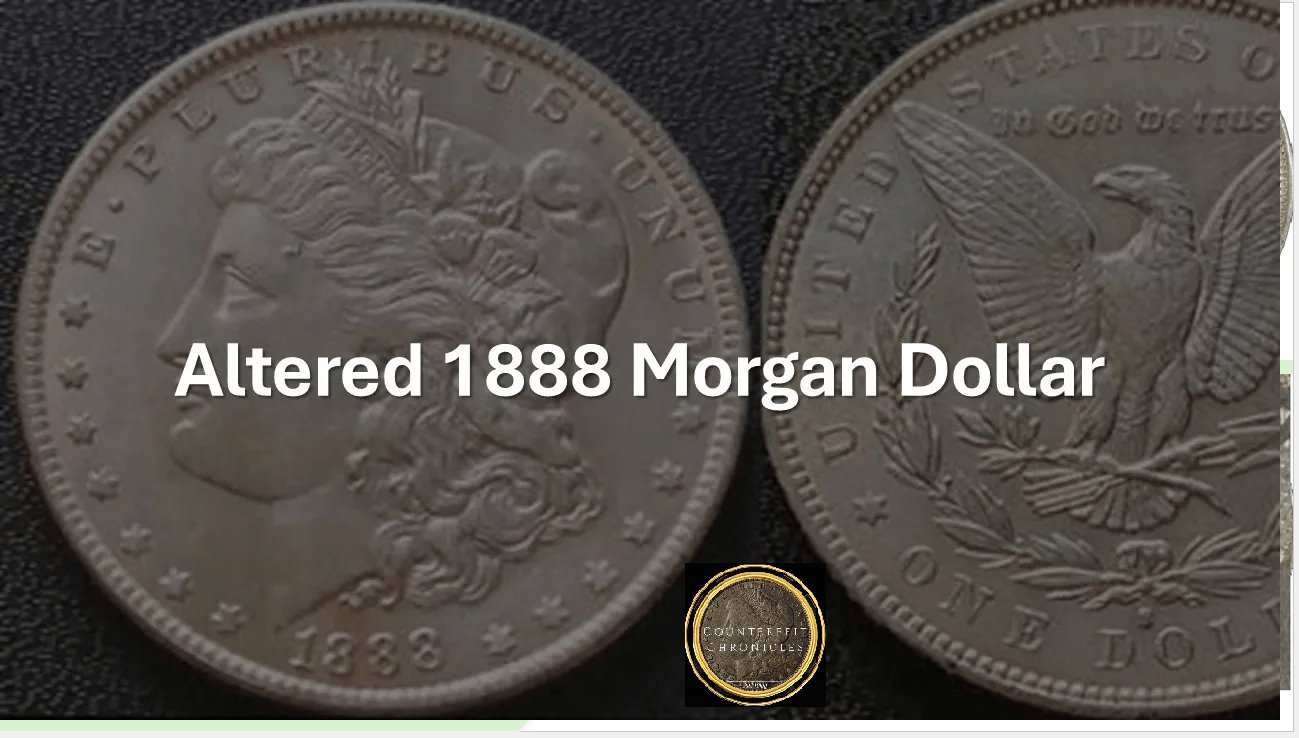
Altered 1888 Morgan Dollar


By Jack Riley

When it comes to raw coins it is very important to inspect them thoroughly. Start with learning how to grade coins and then learn more about counterfeits on Proxiblog. The coin featured here is altered and as such, a prime example of how learning the hobby saves time and expense. You will learn that everything isn’t always as it seems!

The coin pictured below looks like any other Morgan Dollar on the surface but there are many things hidden.


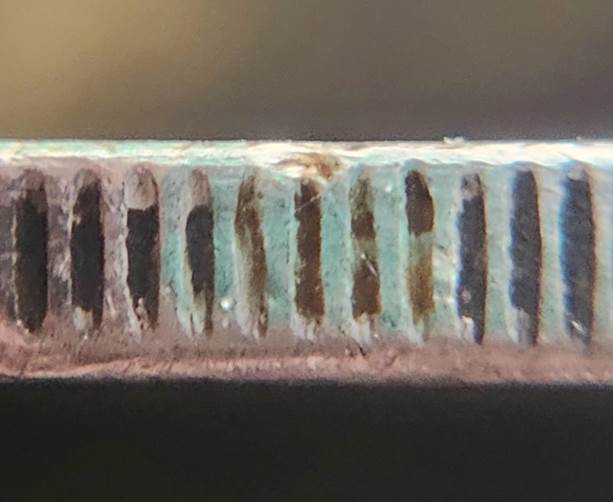
The edge view directly in line shows some “tampering.” The discoloration and infrequent width and grooves of the reeding is indicative for an “Embossed mintmark.”


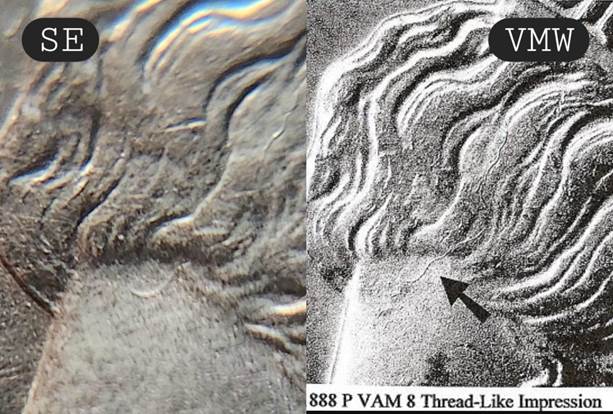
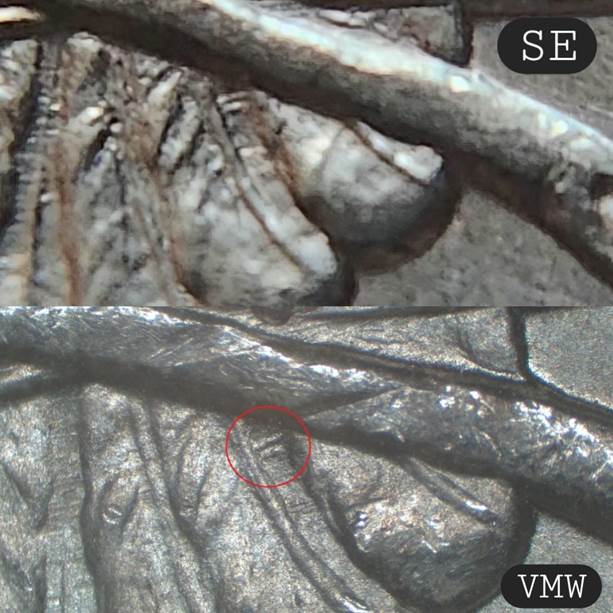
The obvious step here is to attribute this coin and what is found is rather surprising. The die marriage attributes to a Philadelphia struck 1888 VAM-8! The following photos compare the subject example (SE) compared to VAMworld plate photos of a genuine 1888P. The thread-like impression on the forehead and reverse marker between the tailfeathers stand out and prove this to be a Philadelphia strike NOT a San Francisco struck coin.


The correct type IV mintmark shape was used in making this as well! Making it even more convincing and difficult to discern. This style mintmark was used throughout the series from 1879 to 1900.


This was a fairly well executed added mintmark with attention to detail. Making it ever so important to attribute coins you plan to purchase or currently have in your collection.

As a regular contributor to Proxiblog, you can read more of my investigative work on the Counterfeit Category tab.

If you like posts like this, please subscribe so you can be informed whenever there is a new article or column.

Proxiblog also has hundreds of followers on Facebook Coin Groups. To get the latest discussion and commentary, be sure to friend us by clicking here.

You can find more information about errors and varieties as well as buying and bidding on coins in Coin News Updated: The Essential Guide to Online Bidding. Please consider purchasing the work for yourself or a friend, as it underwrites this hobbyist website. Thank you.

Family of Fake Standing Liberty Quarters


By Jack Riley

An intriguing counterfeit 1920 Standing Liberty Quarter was recently posted to eBay and sparked this article. Pictured below is the Bay example with highlighted repeating marks found on this “family.” The “speared wing,” if you will, is a major pickup for this as well as the lump above “C.”


This “family” shares a common reverse and mixes the obverse of various dates and types including Type 1 and Type 2 obverse designs as well as common and rare dates. Virtually every date of the series has been found linked to this family.

The reverse design of the Standing Liberty quarter changed in mid-1917. The initial design, minted in 1916 and part of 1917, featured Liberty with a bare breast and a low-flying eagle. The redesigned reverse, starting mid-1917, showed the eagle higher and more centered, with three stars below and five on each side. 


A 1921 example was previously shared in a Facebook group which reviewed mixed reviews on the coin. Once again 3 common markers show on the reverse.


While the first two examples could be deceiving to collectors, these next two should not be! A 1919 with a Type1 obverse and a poor attempt at a 1916 SLQ.


This is becoming detrimental as the counterfeits are pouring into the “constitutional silver” and can be much more difficult to discern than series that are cataloged by die marriages. This also serves as a good reminder to be diligent on any purchases online as you only have the photos provided and the words of the seller to go by.

Consider this seller showing a 1916 obverse with a latter 1917 reverse (three bottom stars):

Note that the seller is using “HeritCoin, an AI-powered app that helps users identify and value coins. So much for accuracy. But great for scammers.

If you like articles like these, please friend us on Facebook and subscribe to Proxiblog.

Proxiblog also has thousands of followers on Facebook Coin Groups, YouTube and social media. To get the latest discussion and commentaries, click here.

You can find more information about errors and varieties as well as buying and bidding on coins in Coin News Updated: The Essential Guide to Online Bidding. Please consider purchasing the work for yourself or a friend, as it underwrites this hobbyist website. Thank you.


Counterfeit Gobrecht Dollars


By Jack D. Young

A favorite counterfeit of mine, Gobrecht Dollars are among the most coveted coins by veteran collectors. For those unfamiliar with the series, these dollars were minted in the United States in 1836, 1838 and 1839. These coins were designed by Christian Gobrecht, the third Chief Engraver of the US Mint. 

I published one article in the LSCC’s Gobrecht Journal and two articles for Coin Week. I also included it in my recent Live Coin Q & A podcast on my Top 5 most deceptive counterfeits ( YouTube 5 counterfeits ).

Ironically the day after the podcast aired, I received a message from a friend attending the Georgia Numismatic Association’s Coin Show, where he saw a raw example in a dealer’s inventory listed for $12.5K! This example appears to be a dead ringer for mine with many (red) circled common marks. The black circled mark is a good identifier for this example.

A friend’s personal images of the subject example from GA

I am not mentioning the dealer’s name here, but I did see he is listed as having a table at this month’s Chicago Central States Coin Show, so I planned to take the opportunity to hopefully see this one “in-hand” and take some closer images.

The back story of this one is interesting. My friend actually owned the genuine repaired source coin and contacted me after seeing my initial article on these. He is drawn to Gobrechts and like me is on a budget, so the best examples are typically out of reach, but this one fit the bill for him initially. He is always on the lookout for another and spotted one at a coin show back in 2021. Comparing it to his and images from my article he explained to the dealer, I was convinced this was one of the bad ones. He was invited to the dealer’s shop after the show where they could perform a better review in that setting.

He shared the following cool images, having the source example next to a clone at the same time!

Documented genuine repaired source coin on the left, subject raw example on the right

As in images from my articles, you can clearly see the discolored/ repaired area above the head of his NGC certed example. Interestingly you can also see the dark identifier mark on the subject example as I showed to start this article!

And the NGC certification states: “FINE DETAILS PLUGGED”.

Reverse image comparison; there is another unique marker on the subject example, a large reverse scratch:

And a combination image of the subject example:

Subject example images from the same friend

Notice I am calling both the 1st set of images from one dealer and the 2nd from another THE subject example! They both share the common details of the struck clone counterfeits, but both have the 2 unique identifiers as noted…

And back to the “back story: the dealer in the 2021 discussion stated he intended to get his money back from the dealer he purchased it from, roughly $10K.

So, with both dealers listed at tables at this year’s Central States Coin Show, I always plan to attend for the past 3 or so years, I decided to wait for that opportunity.

My plan was to see both dealer’s there, but especially the one likely to currently own it. Going to his table the 1st day was disappointing as he just had coin boxes in his display cases and nothing to actually view.

So, I went to the dealer who reportedly had it in 2021. When he was free to talk I showed him my example, which currently is in a TPG holder as genuine.

Author’s example from China

My example is a virtual marked twin for the subject one, but after studying it a bit this dealer stated he had never seen an example with so many marks.

Passing past the other dealer’s table resulted in nothing, as he still had nothing displayed; so the show ended for the 1st day without spotting the counterfeit. I decided I would go to his table the next morning and if he still had nothing displayed, I would ask about the coin.

Back to the dealer in the morning and nothing new with his case, so I introduced myself and said I understood he may have an 1836 Gobrecht. He said he did and dug it out of a box. Listed for $12.5 K it is the same coin seen by my friend in Georgia a couple of weeks ago. In hand, I asked if I could take some images of it for better viewing and he said OK. Taking them, I thanked him and went to an open area to review the images, my example and images from my Coin Week article. No mistaking it, one of the clones. Now how to have to tell him.

I created the collage of the major counterfeit attribution marks and his coin for this article:

Attribution points image from my article
Subject counterfeit example at dealer’s table (my bad images!)

I loaded my article on my phone and went back to his table waiting for it to be clear of any customers. I then told him I didn’t want to be a pain, but wondered if anyone had ever suggested the Gobrecht is counterfeit. He said no, “especially with where it came from.” I then showed him his images I took, my coin and the clear repeating attribution marks of the fakes.

He then stated who he bought it from and that he knew who that dealer had purchased it from as well.

We shook hands and he put the coin away as I left.

So, these deceptive counterfeits keep surfacing, sometimes where you may least expect them. They are the gift that just keeps on giving…

I did send an email to the 1st dealer from 2021 on this one, but so far no response–stayed tuned!

Best as always, Jack for Proxiblog!


If you like posts like this, please go to Jack Young’s page on Proxiblog. Also, please subscribe so you can be informed whenever there is a new article or column.

Proxiblog also has thousands of followers on Facebook Coin Groups, YouTube and social media. To get the latest discussion and commentary, be sure to friend us by clicking here.

You can find more information about errors and varieties as well as buying and bidding on coins in Coin News Updated: The Essential Guide to Online Bidding. Please consider purchasing the work for yourself or a friend, as it underwrites this hobbyist website. Thank you.

Mismatched Counterfeit Trade Dollars


By Jack Riley

Today we explore the Trade Dollar’s common obverse matched with various (and improbable) reverses–an 1874-P, 1873-S and 1874-S–all sharing the same obverse.

The U.S. Mint began producing Trade Dollars in 1873 in the hope to boost trade, especially in East Asia, and to compete with the Mexican Peso. 

The Trade Dollar is heavier than the Morgan silver dollar, again to compete with the Mexican counterpart. The Peso weights 27.07 grams with 90.27% silver compared to the Morgan Dollar’s 26.73 grams, 90% silver content.


There are two Trade Dollar reverse types. The Type 2 Reverse was used on Trade dollars between 1875 and 1876 and on all Trade dollars beginning in 1877. The latter design is missing a berry under the eagle’s claw:


First fake up in this article is an 1874-P Trade Dollar with a Type 2 reverse! This reverse wasn’t used until 1875 at the Philadelphia mint. I like to call this the “Dented Denticles” as the obverse denticles are nearly missing below the date. A dent above the foot and on Liberty’s neck are common markers shared on these counterfeits (highlighted in red). Below the subject coin is a reference photo to identify Type1 and Type2 reverses.


Next up we have an 1873-S! Same obverse as the counterfeit 1874-P but with a different reverse, this time paired with the correct Type.

In my search for more of these mix matched dates I landed on the “CoinHelpU” forum. This time we see a counterfeit 1874S. Same obverse but yet another reverse!


It’s apparent that the counterfeiters will use anything at their disposal to create more. Swapping out the dates and changing the reverses to anything they can find. It’s never been more important to attribute a coin that you intend to purchase.

Attributing coins requires learning–the type of which you get when reading Proxiblog and other reputable coin sites. Concerning Trade Dollars, examine devices, weigh the metal and measure the diameter, comparing it to an authentic example. I recommend going online to find a PCGS-attributed coin with TrueView, which can be expanded on your screen.

Pay attention to the coin’s condition and grade, using PCGS Photograde.

So ends the latest journey of more “Fun with Fakes” (FwF) and Proxiblog. It is getting really hard to keep up with all the ways scammers and their ilk continue to challenge the hobby.

For more information about counterfeit trade dollars, see Jack D. Young’s article about fake trade dollars in counterfeit TPG holders, as these coins illustrate:


If you like articles like these, please friend us on Facebook and subscribe to Proxiblog.

Proxiblog also has thousands of followers on Facebook Coin Groups, YouTu.be and social media. To get the latest discussion and commentaries, click here.

You can find more information about errors and varieties as well as buying and bidding on coins in Coin News Updated: The Essential Guide to Online Bidding. Please consider purchasing the work for yourself or a friend, as it underwrites this hobbyist website. Thank you.

eBay Counterfeits Abound


By Jack D. Young

Is it me, or has eBay gotten worse recently with bad listings and counterfeits? Their “reporting” feature seems to just be a façade.

I use the Bay as a counterfeit research tool and post about fakes in several Face Book Groups. Recently I posted an obvious bad fake in a fake “PCGS” slab and asked folk to report it as such to eBay through their standard process.

I had a huge response, with NO ONE getting a favorable return; it seems no matter what, the resulting response was … ”We looked into your report and didn’t find the listing to be in violation of our policy.” These are noted as either by their “AI,” which I call the “BayBots,” or the unknown “customer service agent.” A real shame, as eBay did have a method for a select group to direct report bad listings, and I can confirm MANY listings were removed daily, but that channel has apparently dried up.

To illustrate the current state of the Bay, view the following image of listings found via a standard search for “1881-CC Morgan Dollars,” chosen due to proliferation of counterfeits with that date and mintmark:


A brief description of what is shown here:

#1 is a bad CN counterfeit in a fake PCGS holder; it clearly doesn’t match the genuine example shown on the PCGS site and uses the latest scam, a GreatCollections sticker from an actual auction. I reported this, but a second listing for the same fake showed up from a different seller. This, too, was reported as fake.

I previously wrote an article on this latest scam for Proxiblog and the same coin, different seller (now-counterfeit-greatcollections-labels); the counterfeit’s QR code takes one to the PCGS CN site for the cert, the GC QR takes one to their auction for the genuine example. Comparison image as follows:

Chinese counterfeit, left, and genuine “GC sold” example, right

And #’s 2 and 3, again examples shown shipping from China, these use stock images of genuine coins to sell their fakes.

I have direct experience with these type listings, having purchased a large cent with images of a genuine example in the listing only to receive a common current CN counterfeit. The seller offered a return with shipping costing more than I paid for the “coin.”

#4 is another of the bad CN counterfeit Morgans in a fake PCGS holder. I have written articles as well as participated in an on-line podcast discussing these as they proliferate eBay and other sites currently.

This particular example and listing was reported several times and repeatedly eBay responded it was OK; listing finally ended only to have the seller relist it unchecked for another round.

Relisted/ current Bay listing

The genuine PCGS coin is shown on their cert site with an image that this one isn’t even close to, but it was still active for sale on the Bay.

#’s 5 and 6 are more of a CN seller’s listings using genuine stock images of someone else’s coin and listing. I personally would pick #6 to purchase because it is 4 cents cheaper.

And #7! This seller has a whole boatload of fakes labeled as “Commemorative Coins”; give me a break eBay!

Multiple bad listings from the same Bay CN seller

And his description of his “1885-CC”:

Seller’s listing description

I reported the listing and the seller multiple times and apparently the Bay approves of both.

And so, #8, the real “star” of this group! Another of the “Morgan” Morgan fakes in a counterfeit PCGS holder. This one is currently posted on my personal Face Book page and is also being mass reported by my friends:

Current eBay listed bad “Morgan” Morgan

We have been notified that the listing is A-OK, evidenced by this response to my report:


This all does lead one to wonder if eBay has changed its “Coin Policy” without actually formally stating it, as ALL of these types of listings were previously considered violations? Good for the sellers, bad for the buyers? And what affect does it have on the Hobby at this time? I suppose one can only speculate.

One thing that is not speculation–at one time listings could be reported and REMOVED. And the following are images of fake coins identified in one day’s effort:


Is this a sign of the times for eBay or did someone just fall asleep at the wheel? We’ll continue to watch and report “more fun with fakes” for Proxiblog as we see them!

If you like posts like this, please go to Jack Young’s page on Proxiblog. Also, please subscribe so you can be informed whenever there is a new article or column.

Proxiblog also has thousands of followers on Facebook Coin Groups, YouTube and other social media. To get the latest discussion and commentary, be sure to friend us by clicking here.

You can find more information about errors and varieties as well as buying and bidding on coins in Coin News Updated: The Essential Guide to Online Bidding. Please consider purchasing the work for yourself or a friend, as it underwrites this hobbyist website. Thank you.

Another 1881-CC “Morgan” Morgan Story


By Jack D. Young

Today’s report is about a recent eBay interaction concerning a counterfeit 1881-CC “Morgan” Morgan dollar.

Recent eBay listing

When I checked, already there was a bid of $585.00 on a “fake in a fake”! And should you not know what I mean by that phrase, see my Live Coin Q&A podcast with numismatist Paula Schommer-Bluhm on this current CN family of fakes:


This particular coin cert has a PCGS TrueView image as well as images in the genuine slab available from a past listed auction as indicated on the PCGS website:


Obviously not a match; so I posted about it in a Facebook Group as Paula did as well, and we both reached out to the seller. My note, images and response as follows:


Counterfeit, left; genuine, right (image courtesy Heritage Auctions)

Paula sent him a link to our joint podcast, and as I didn’t hear back from him initially, I also went through the motions of “reporting’ it to eBay. Recent reports to eBay have been futile, but I tried anyway:


And I received a quick response:


So, the “BayBots” like it–pretty sad for an obvious fake in a fake!
But the silver lining was the seller did respond after reviewing the video and pulled both this and his bad 1883-CC Morgan listings.


So, my lesson here is forget eBay. Continuing with education is the best defense against these for buyers and sellers alike, which is why I do this, and forums like Proxiblog are gaining viewership as we try to continue to “get the word out”!

PS: After the fact, eBay removed the cancelled listing.

If you like posts like this, please go to Jack Young’s page on Proxiblog. Also, please subscribe so you can be informed whenever there is a new article or column.

Proxiblog also has thousands of followers on Facebook Coin Groups, YouTube and social media. To get the latest discussion and commentary, be sure to friend us by clicking here.

You can find more information about errors and varieties as well as buying and bidding on coins in Coin News Updated: The Essential Guide to Online Bidding. Please consider purchasing the work for yourself or a friend, as it underwrites this hobbyist website. Thank you.

Counterfeit 1851 C-1 Half Cent


By Jack Riley

New waves of counterfeit coins continue to show up routinely and can be a challenge to keep up with! A recent counterfeit 1851 half cent surfaced online and caught some attention. Pictured below is the counterfeit example (top image) compared to a genuine example (bottom image).

Genuine image courtesy of PCGS

With only one die pair being the C-1 to compare it to, something is clearly off. The reverse letters appear “bubbly” while the letters are not crisp. The obverse stars show similar features, combing that with minor surface issues tells the story. The rims also appear filed down.

Searching more photos led to identifying a total of 4 coins from this potential “family,” with two being offered on various online sites. One example was posted to an online forum in 2018. The subject example for this article was presented on Facebook.

As always in this situation, I search for “Sister Marks” as counterfeit expert Jack Young would call them, repeating circulation marks that are not identifiers for a genuine die pair. That search did not disappoint!

Two obverse depressions on the chin and neck are quick to notice, which led to me referring to this as “Dimple Chin”. The reverse markers include a major depression mark in the “i” of “America” and the “O” in “OF.” A damaged area on the left leg of “H” in “Half” and lump above “A.” The line through A may not be seen on examples with false circulation wear.

Below are the original example and from an online forum. All markers noted are highlighted in red.


Here we have two examples exhibiting false circulation wear. Note the A “Slash” may not be seen.


One may ask “Where do these come from?” You too can purchase one on eBay that ships directly from China!


I’ve personally only seen this on coins dated 1851. It’s very likely other Braided Hair Half Cents exist with both this counterfeit obverse and reverse. Stay diligent friends!

Visit Proxiblog for more articles about counterfeit coins by Michael Bugeja, Jack D. Young and Jack Riley.

Proxiblog also has thousands of followers on Facebook Coin Groups, YouTube and social media. To get the latest discussion and commentary, be sure to friend us by clicking here.

Subscribe so you can be informed whenever there is a new article.

You can find more information about errors and varieties as well as buying and bidding on coins in Coin News Updated: The Essential Guide to Online Bidding. Please consider purchasing the work for yourself or a friend, as it underwrites this hobbyist website. Thank you.

Notorious Henning Nickel


Beginning hobbyists use the term “no mint mark” because they heard it on social media, believing their Philadelphia coin is a rarity. For decades, the Philly mint was the sole US facility, so no mark was needed. That changed in 1942.

Nickel was needed for the war effort to harden the steel armor of tanks, ships and aircraft. The new variety 1942 “war nickel” was made with an alloy of 56% copper, 35% silver and 9% manganese.

To distinguish one 1942 nickel from the other, the US Mint added the letter “P” to the reverse atop the Monticello device, the first time that mintmark was used. Hobbyists started collecting so-called “war nickels (1942-45) because of the new design and precious metal.

Then, in 1954, people started finding 1944 nickels with missing mintmarks on the reverse. Collectors took note in hope of finding a rarity and did what they normally do, weighing the anomaly. To their surprise, the missing mintmark nickel weighed 5.4 grams rather than 5 grams.

The Secret Service was alerted about a possible counterfeiter. The agency knew reputed ones and scanned their files, leading to the arrest of this man, Francis Leroy Henning.


Henning had been incarcerated earlier because he counterfeited $5 bills, worth about $60 in today’s money. Perhaps he thought he could get away with faking a lower denomination, like a nickel. , Authorities discovered that he had faked nickels dated 1939, 1944, 1946, 1947 and 1953.

If you are interested in learning more about the Henning nickel, purchase or ask your library to acquire Joseph P. Cronin’s 2024 book, The Henning Nickel Collectors’ Guide. CoinWeek has a nifty article by Tyler Rossi.

You also can find detailed diagnostics about Henning nickels at Error-Rev.com.

The Proxiblog article simplifies the hunting process and warns against scammers on eBay.

So if you’re roll hunting or sifting through pocket change, the two things you need to remember to find Henning nickels are the missing mintmark on 1944 and the larger weights, 5.4 grams, on all nickels dated 1939, 1944, 1946, 1947 and 1953.

You won’t find uncirculated Henning nickels because he used circulated transfer dies.

ICG holders counterfeit Henning Nickels, as shown below:


Typically these retail anywhere from $250-600.

Be wary of raw coins on eBay claiming to be Henning nickels. You’ll find altered reverses in the 1944 nickel. If sellers do not reference weight, do not bid on or buy the raw coin. If they do mention weight, still make sure that they accept returns. Your scale is the one that matters.

Here’s a sketchy example on eBay:


The seller writes, “Coin weighs 4.4 grams. We believe it to be a Henning nickel and not minted by the US. Nickel is porus (sic), smaller and lighter than a regular Jefferson nickel. Is not graded and we do not guarantee it to be a US nickel or a Henning though we strongly suspect it to be the latter.”

If you read this far, you know from the above description that this is not a Henning nickel, as the seller put down 4.4 grams instead of 5.4 grams. And of course, the seller doesn’t accept returns.

If you like posts like this, please subscribe so you can be informed whenever there is a new article or column.

Proxiblog also has thousands of followers on Facebook Coin Groups, YouTube and social media. To get the latest discussion and commentary, be sure to friend us by clicking here.

You can find more information about errors and varieties as well as buying and bidding on coins in Coin News Updated: The Essential Guide to Online Bidding. Please consider purchasing the work for yourself or a friend, as it underwrites this hobbyist website. Thank you.