Numismatic posts about grading, identifying, buying, selling and bidding on coins
Category Archives: Counterfeit
These posts provide methods to detect Chinese and other fake coins and holders, bringing awareness to the thousands of counterfeit coins being sold on eBay and other platforms.
Key date coins are a target for counterfeiters with a large profit to be made, but what about common date coins? Well, nothing is safe!
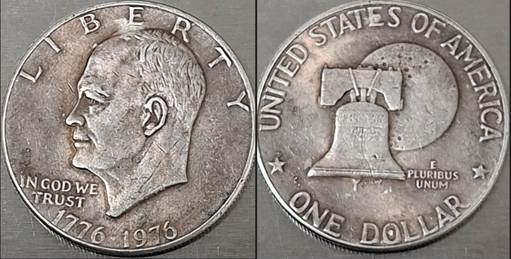
This article doesn’t focus on a connected “family,” rather a specific coin. This Bicentennial Eisenhower Dollar was previously shared in a Facebook group and many were shocked to learn that it is in fact counterfeit!
One may notice at a glance many raised “lumps” across the obverse fields and a large tell of the distended letters primary in “One Dollar”.
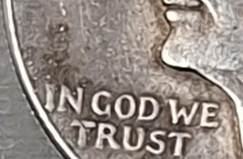
This surely isn’t a “one off” piece. I haven’t found a second example of one surface since this one so additional repeating marks are inconclusive. I suspect the diagonal notch through “trust” will be seen on all examples using this obverse.
Why would China counterfeit a common dollar like this?
Many hobbyists think that a high value of a coin makes it a candidate for counterfeiters. Counterfeiters take advantage of this false sense of security. The coin here probably was part of a complete set that someone purchased, realized the deception, and used or sold.
It costs about a dime to a quarter to make these dollars. Sell one, even for a dollar, and you have a substantial profit.
If you like posts like this, please go to our counterfeit archive with reports from Jack Riley, Jack D. Young, John Lorenzo and Michael Bugeja. Also, please subscribe so you be informed whenever there is a new article or column.
Proxiblog also has thousands of followers on Facebook Coin Groups, YouTube and social media. To get the latest discussion and commentary, be sure to friend us by clicking here.
You can find more information about errors and varieties as well as buying and bidding on coins in Coin News Updated: The Essential Guide to Online Bidding. Please consider purchasing the work for yourself or a friend, as it underwrites this hobbyist website. Thank you.
A couple of my current sayings–“Only on the Bay” and “You can’t make this stuff up”–certainly apply to this article.
A good friend and half cent expert sent me a PM with a current eBay half cent link and asked if I saw what he did–pure gibberish in the words and lettering, especially on the reverse.
Reverse 1811 listing image
Wow, is UNITED supposed to look like “EI-EI O”? Kind of reminds me of the recent “Liberty Biberty” insurance commercials!
So, digging further I found the seller had multiple similar imaged listings including this 1884-S Morgan Dollar.
I noticed with this one that the barcode on this “enhanced” image doesn’t scan, and STATES is actually spelled “STATEA”…
Looking up the actual cert number pulled up PCGS TrueView images of the actual coin for this cert.
Subject image on the left, TrueView image on the right
So, not only are the letters misrepresented but some of the nicks and marks of the genuine coin are also smoothed out. Even the “4” is now different!
So I sent a message to the seller, and we had a back and forth that abruptly ended:
And he let the auctions run… I then sent a note to my eBay contacts:
During this research Michael Bugeja and I discussed this situation and the possible implications. He asked AI about AI and received this response:
Sounds like what we are seeing in this seller’s images! And another of his listing’s images:
And Michael’s conversation with the seller and the bottom-line concern. (Read text from bottom up.)
So, crickets from the seller after these exchanges and the listings stayed active. BUT reviewing again after a few days May ALL of the listings were suddenly ended. Maybe eBay actually had a hand in this; it will be interesting to see any relists by this seller in the future!
And a little different spin on the topic: When reviewing eBay listings in my spare time I do see some where a “bad” listing uses exactly the same description as a “good” one.
I assumed the seller just conveniently grabbed the genuine description for use in his listing, but that may not always be the case.
I actually questioned the following seller about his (joke) listing and he responded as follows; I was glad to hear it “passed the ice test” !
I actually wasn’t negative. Then he suddenly ended the listing. Go figure.
It is rather ironic in my opinion his listing was noted as “sponsored” by the Bay. No doubt the sponsorship was via algorithm, maybe a prelude to just how bad that venue can get.
So maybe AI has its place, but I vote to keep it out of my hobby.
If you like posts like this, you can read more articles on counterfeit coins by Jack D. Young, Jack Riley and Michael Bugeja at this URL. Also, please subscribe so you can be informed whenever there is a new article or column.
Proxiblog also has thousands of followers on Facebook Coin Groups and across social media. To get the latest discussion and commentary, be sure to friend us by clicking here.
You can find more information about errors and varieties as well as buying and bidding on coins in Coin News Updated: The Essential Guide to Online Bidding. Please consider purchasing the work for yourself or a friend, as it underwrites this hobbyist website. Thank you.
Several friends notified me of an obvious scam on eBay recently involving a PCGS certified 1882-CC image used by multiple sellers (showing the same origin location) listed for sale at a bargain price.
Past auction listing- I added seller’s reverse image to this
I have written previous articles on these “bait and switch” tactics by MANY eBay sellers using genuine coin images (to help fool artificial intelligence, which needs little help to do currently) to sell counterfeit coins. I have actually purchased a couple in the past just to see what a buyer would get and reported them and received my purchase price back.
So, a couple of bad signs with this listing:
Image of a genuine PCGGS certed example; PCGS shows a value of $450.00.
Listed price $39.99 with 2 sold and more than 10 available.
And the seller’s feedback notes:
Well, at least they show eBay “Verified purchases”!
And while I was reviewing this one 5 other listings with the same stock images but different sellers popped up; I started saving images and organizing my files:
From this I put a note together and sent a message to eBay alerting them about this scam and reported the subject listing.
Note to eBay
I reported them all through the feeble AI reporting process with all coming back as no policy violations including the subject example.
And so I decided to buy this one and see what I would receive.
And I received a typical CN counterfeit CC Morgan with the slashed eagle reverse!
I emailed the seller with no response; looks like he packed up his “shop,” and nothing now listed.
And going back to check the listing and follow-up I find eBay now removed the listing! It did allow me to request a return and leave appropriate feedback for the seller.
Now 3 negative feedbacks for the counterfeit bait and switch!
So we’ll see where this goes from here, as eBay stated they will step in if requested May 1. Pretty sure I won’t hear back from the seller by then.
And he apparently sold MANY of these through several different seller IDs right under eBay’s nose.
And continued reviewing turned up the genuine example and seller the scammers used for their listings:
So, come on eBay! You can do better than this.
We can do better, too, as hobbyists by learning how to identify fakes.
If you like posts like this, please go to our counterfeit archive with reports from Jack Riley, Jack D. Young, John Lorenzo and Michael Bugeja. Also, please subscribe so you can be informed whenever there is a new article or column.
Proxiblog also has thousands of followers on Facebook Coin Groups, YouTube and social media. To get the latest discussion and commentary, be sure to friend us by clicking here.
You can find more information about errors and varieties as well as buying and bidding on coins in Coin News Updated: The Essential Guide to Online Bidding. Please consider purchasing the work for yourself or a friend, as it underwrites this hobbyist website. Thank you.
A recent surface of counterfeit Franklin Half Dollars has hit the numismatic community. The subject coin was shared in a large open Facebook group and was quickly identified as a modern counterfeit.
Comparing this example to others I have saved shows three dates sharing a common obverse (and reverse). Reverse markers aren’t indicated due to the obverse being interchanged with various mints including Denver and San Francisco.
Repeated markers highlighted in red include:
Missing FS initials
Reacting circulation marks on the lower bust
High “19” in the date
Consider this last photo and aforementioned summary. That’s how closely you have to inspect raw coins being sold online. China is flooding the market with fakes and fakes within fakes (counterfeit coins in counterfeit PCGS holders).
Proxiblog is proud to be at the forefront of exposing these scammers.
If you like posts like this, please subscribe so you can be informed whenever there is a new article or column.
Proxiblog also has thousands of followers on Facebook Coin Groups, YouTube and social media. To get the latest discussion and commentaries, click here.
You can find more information about errors and varieties as well as buying and bidding on coins in Coin News Updated: The Essential Guide to Online Bidding. Please consider purchasing the work for yourself or a friend, as it underwrites this hobbyist website. Thank you.
So, how bad has it been on the Bay? I asked that question in a Facebook group and the majority stated it has become worse for counterfeits. This article demonstrates how.
And a recent painful experience follows. As a counterfeit researcher and article writer I review many different sites and forums for new examples. One is AliExpress and the many offerings of fake coins in fake “PCGS” holders such as the following:
I just added this one to my files and waited. … And then this recent eBay listing popped up in my daily review:
OK, so the seller actually used the Ali images for his listing!
He also included images of what I assume he actually had in-hand, and both are bad.
Interestingly, both sets of images have the same bad obverse label and no-read barcode, but the reverse QR codes were different.
The Ali one and images used have a reverse QR code that takes one to the Chinese (CN) PCGS site as typical for that generation of fake in a fake, but his one in-hand leads to the Europe PCGS site as I disclosed in a recent article on these–a latest development!
And another surprise, the listing was reported to eBay and was removed. Seller was also notified that his coin was bad. He responded but allowed his listing to continue:
eBay seller’s response to my message
Instead, he relisted, this time without the Ali images.
Sellers relist after 1st was removed
Again multiple reports apparently resulted in the listing being removed.
So, then a 3rd try by this determined seller.
2nd relist
An entirely different set of images and setting, but same bad coin and not-PCGS slab and cert number. And the same nonsense obverse barcode with the reverse QR code taking us to France!
Revised images of the same counterfeit and 3rd seller Bay listing
And the “coin” itself? Not the same as the certified genuine example:
eBay subject example on the left, genuine PCGS example for the cert # on the right
And the disappointing twist–eBay would NOT remove this 3rd attempt after multiple reports.
And I guess I got a little testy after it showed sold:
Interestingly after this report the listing was removed, but no way to know if it saved the buyer. I suppose we just need to wait until the seller relists.
If you like posts like this, please subscribe so you can be informed whenever there is a new article or column.
Proxiblog also has thousands of followers on Facebook Coin Groups, YouTube and social media. To get the latest discussion and commentaries, click here.
You can find more information about errors and varieties as well as buying and bidding on coins in Coin News Updated: The Essential Guide to Online Bidding. Please consider purchasing the work for yourself or a friend, as it underwrites this hobbyist website. Thank you.
That same seller also sold 2 mixed rolls of small cents faced with an apparent 1857 Flying Eagle cent to a Face Book friend; it turned out the FE is a known counterfeit, and the new owner posted them and the link to my Coin Week article about them!
The OP noted the counterfeit “tells” for this style counterfeit on his example (circled in red) referencing the Coin Week article attributions.
Bottom image of the OP’s FB post on the subject
Image from the referenced Coin Week article showing other examples with the matching marks:
While reviewing the article for images (I often go back to my own published article for reference while researcher subject “coins”!) I noticed the OP had posted a comment which I responded to.
So, purchased in 2023 and now aware as a result of the article! Ironically the article was published in 2023 as well…
Comments from the subject Coin Week article
2023 and the seller is still “at large” ! I immediately found another listing from him for a similar roll, documented his images and then worked to “win” the auction.
Recent identical eBay roll listing- I won!
So all I had to do was wait for this to be delivered. I was already planning how to document what it is once in-hand, taking images as I worked to uncover the detail I thought would match my friends, but that turned to be too easy a thought…
I was initially pretty confident I would see the “Bad T” in UNITED, but that documented attribution point wasn’t there!
Image from my microscope of my FE in the roll
OK, so what, did the seller actually slip a genuine example in the roll? My plan was failing so I just carefully unwrapped the whole roll and then imaged the contents:
And the FE? 1st thing of note is he is using repeated stock images; mine was positioned differently relative to the roll:
Listing image of the roll on the left, received on the right- date not apparent
And once removed from the roll I immediately recognized it after digging through my article:
Coin received is actually the 2nd counterfeit documented in the article, as noted:
Additional article images
So, now again confident he slipped a counterfeit into the roll I decided to send him a message. My previous attempts on the 1893-O Morgan failed because he doesn’t accept messages but apparently does when a current purchased item is linked.
Yeah, right. … But he did immediately refund my purchase price without involving eBay- a surprise for sure given all of his past responses to negative feedback given.
And he then listed another one, but I found I am now banned by him for any future listings.
Keeping it real, Jack.
If you like posts like this, please subscribe so you can be informed whenever there is a new article or column.
Proxiblog also has thousands of followers on Facebook Coin Groups, YouTube and social media. To get the latest discussion and commentaries, click here.
You can find more information about errors and varieties as well as buying and bidding on coins in Coin News Updated: The Essential Guide to Online Bidding. Please consider purchasing the work for yourself or a friend, as it underwrites this hobbyist website. Thank you.
This is a roundup article with markers. Several of these altered coins are profiled in Proxiblog articles. Read the summary and then, for more knowledge, access the article.
1909-S V.D.B. Lincoln Cent
The “S” is added to common 1909 Philadelphia cents. This is the No. 1 faked coin.
We need some background on why this coin is valuable and how decisions by the US Mint created opportunities for counterfeiters.
Secretary of the Treasury Franklin MacVeagh disliked the prominence of Victor David Brenner’s initials on the reverse and stopped production in August of that year, removing initials entirely on the remaining 1909 and 1909-S cents. That is why you only find the initials on some 1909 and 1909-S examples. In fact, those initials did not appear again until 1918 when the VDB appears below Lincoln’s shoulders. That’s how angry MacVeagh was. But he wasn’t thinking about counterfeits at the time even though his actions inadvertently made altered dates easy.
Scammers realized they stood to make big profits merely by adding:
An “S” to a 1909 VDB cent. VDB to a 1909-S cent. An “S” and “V.D.B” to a 1909 cent.
Now compare mintmarks with a genuine, added mintmark and cast replica mintmark:
1914-D Lincoln Cent
Scammers alter 1944-D cents, shaving down the first “4” to make it look like a “1.”
The most counterfeited coin is the 1909-S VDB; but the 1914-D Lincoln Cent actually has a smaller surviving population. This makes the 1914-D a prime target for counterfeiters.
Look for a large gap between the “9” and the second “1” in date. 1944-D cents are commonly altered to appear as 1914-D cents, but this leaves too much space between the first two digits and the last two digits.
See this example from NGC:
1922 Plain Cent
The Denver Mint was the only facility to produce pennies in 1922, so technically, every legitimate 1922 cent should have a “D” mintmark. A mint employee screwed that up, however, polishing the die and accidentally erasing the “D” on a very small number of cents.
The difference in value for a low grade 1922-D, worth about $5, and 1922 Plain No D Strong Reverse, $500, is significant. High mint state of “Strong Reverse” go for thousands of dollars.
The 1922 Cents are thus categorized:
Standard 1922-D (Normal mint mark)
1922 “Weak D” (Faint, blurry, or partially filled mint mark)
1922 “No D” / Plain (Mint mark completely missing)
In addition, value is assessed by die pairs:
Die Pair #1 (Weak D / No D – Weak Reverse). Mushy or missing lines on wheat stalks. Die Pair #2 (“No D” Strong Reverse). Clear lines on wheat stalks. Die Pair #3 (Weak D / No D – Weak Reverse). The final “2” in the date is notably weaker than the first “2”. Die Pair #4 (Weak D / No D – Weak Reverse): Very similar to pairs 1 and 3 but typically even mushier.
You can read more about this rarity, including differences between die pairs, by clicking here.
Scammers find it easy to erase the “D” on a well-defined 1922-D normal mintmark coin. They do so by tooling or filling the area where the mintmark should be. Do not bid or buy this coin unless you can distinguish die pairs.
1916-D Mercury Dime
Scammers add a “D” mint mark to a 1916 Philadelphia dime. It is one of the second frequently faked coins, after the 1909-S VDB. You can also find them in fake PCGS and NGC holders. There are replicas, too. And more.
Learn about all the ways scammers are altering or faking this rarity. See: “Deceptive 1916-D Dimes” by counterfeit expert Jack D. Young.
Excerpt:
As Jack always says when reviewing a subject coin, ATTRIBUTION is the key! And with help from a few friends he pulled this template together of the 4 known reverses/mint-mark positions and shapes for use in evaluation of the 1916-D. He also has added this fake example in the middle of the template for a good comparison of good versus bad.
Template of four good mintmark positions and bad one in the middle.
Jack is one of the top counterfeit detectives in the country. Read the aforementioned article to become familiar with his methods.
You can also find telltale markers on genuine coins in the aforementioned article.
1932-D and 1932-S Washington Quarters
Common 1932 quarters are altered with an added “D” or “S” mintmark.
The 1932-D Quarter (436,800 minted) and 1932-S Quarter (408,000, lowest mintage in the series) are a coveted pair for collectors. The 1932 Philadelphia Quarter has a mintage of 5,404,000 with no mintmark, of course, on the reverse, making it a target for added mintmark fakes.
You can see how scammers add the mintmark as well as become familiar with die markers.
Except:
The most obvious die marker for a genuine coin concerns the filled mint mark (“D”) with visible serifs and bloated appearance, even in uncirculated grade.
Here’s how the mintmark looks in more common circulated grades (note you can see still serifs).
You should also look for die cracks on the reverse, especially near the eagle’s left wing or the motto “PLURIBUS.” Many but not all display this.
Go to the article to see the 1932-S die markers.
1943 P/D/S Copper Cent
Steel cents from this year are often copper-plated or the date is altered on a 1948 or 1949 cent.
You’ll also find replicas on Temu and Etsy shopping sites.
Approximately 40 copper-alloy cents were accidentally minted across all three U.S. Mints (Philadelphia, Denver, San Francisco) in 1943. The 1943-D is the rarest (1 known), while 1943-S (San Francisco) is exceptionally rare (fewer than 5 known). Some 20+ 1943 cents are said to exist.
A magnet. If the coin sticks to it, it isn’t copper.
A coin scale to see if your specimen weighs 3.1 grams. (Steel cents weigh 2.7 grams.)
A lupe to view the date and to detect if it has been altered.
Here’s an example of a 1948 cent altered to look like a 1943 copper cent weighing 3.1 grams and passes the magnet test:
Go the article to see the die markers of each copper cent. You’ll also learn to identify replicas.
1989-CC Morgan
Fortunately, the 1889-CC Morgan dollar has only three known major die varieties (VAMs), each with specific die markers. This makes it easier than other dates with more markers when identifying counterfeits.
The most common practice is to add a CC to the common 1889 Philadelphia Morgan. That is why knowing the die markers for authentic coins is so important.
A mere 350,000 coins in 1889 were struck at the Carson City Mint, and hundreds of thousands of those were melted after 1918 due to the Pittman Act. This makes it a nifty target for criminals. Moreover, the common date 1889 Philadelphia is used for an added mintmark. Here is an example from NGC:
Right off the bat, veteran hobbyists know that the mintmark used in the above example is the wrong one for an 1889-CC dollar. Scammers typically take the “CC” from a lesser value 1878-CC dollar.
Let’s start there by showing the mintmark of an 1878-CC and 1889-CC Morgan:
The aforementioned article also discusses the VAMs of genuine 1889-CC Morgans. You will want to know those, too.
If you like posts like this, please subscribe so you can be informed whenever there is a new article or column.
Proxiblog also has thousands of followers on Facebook Coin Groups, YouTube and social media. To get the latest discussion and commentaries, click here.
You can find more information about errors and varieties as well as buying and bidding on coins in Coin News Updated: The Essential Guide to Online Bidding. Please consider purchasing the work for yourself or a friend, as it underwrites this hobbyist website. Thank you.
Key date coins are commonly counterfeited and should be viewed with scrutiny. This subject example of a 1916-D Mercury Dime surfaced and what many would call a “one glance” counterfeit.
The mintmark punch for the 1916-D is easily recognizable, along with 4 mintmark positions for genuine coins. This clearly isn’t a genuine mintmark and as one can tell by the surface quality the coin itself is a counterfeit.
This is one seen routinely through various Facebook groups, you would be hard pressed not to see one of these shared weekly. It isn’t just the key dates targeted (although that is the primary targets). Image comparison of a 1916-D, 1921-D, and 1939-D pictured below. A common reverse with a “bad” mintmark and small surface lump to the right of E.
Common markers in Red:
Surface lump to the right of E of ONE
Deformed mintmark shape and placement
Markers In Green indicate features not present on all examples. In this case two cracks running though U in “UNITED” and the A in “STATES”.
If you would like to know more about 1916-D markers, click here.
If you like posts like this, please go to our counterfeit archive with reports from Jack Riley, Jack D. Young, John Lorenzo and Michael Bugeja. Also, please subscribe so you be informed whenever there is a new article or column.
Proxiblog also has thousands of followers on Facebook Coin Groups, YouTube and social media. To get the latest discussion and commentary, be sure to friend us by clicking here.
You can find more information about errors and varieties as well as buying and bidding on coins in Coin News Updated: The Essential Guide to Online Bidding. Please consider purchasing the work for yourself or a friend, as it underwrites this hobbyist website. Thank you.
Proxiblog asked me to consider doing an article on “how eBay sellers react when we report their coins as fake? I know some take down the lots. Others don’t.” I was intrigued by the thought and decided to write the following!
When I explain a Bay listing is counterfeit sellers can react a number of ways–in disbelieve, argumentatively (Grandpa owned it), accepting and thankful, combative (I’ll meet you in a parking lot dude…) or just “crickets.”. In my experience the larger the seller the higher the probability of crickets.
So, moving on I will not lower our standards here and report the combative ones but several of recent experiences I have had of the other types of reactions.
Let’s start with an interesting Trade dollar. This example just caught my eye, and the images led me to believe the coin was not genuine. The images in the listing were not definitive, and I asked the seller for better ones. He agreed and that was all it took! The common reverse used for a family of fakes I nicknamed the “notched R.” I wrote an article on these published in a recent LSCC Gobrecht Journal. I actually own one returned to a seller by NGC as counterfeit, so well versed on these:
eBay recent listing
So, I asked the seller about the coin and that I had concerns about its authenticity. He responded that he looked up the cert and the “PCGS verification”.
I responded there were no images on the on-line cert, so no help there. I included images from my coin and article and that I was sure it was counterfeit.
And he responded with a thank you and that he would remove the listing immediately, which he did!
So, a win, except who knows were the coin ends up, as he responded he is taking it back to the previous seller… And then another listing and another message:
Seller actually had two bad Morgans in fake PCGS slabs listed:
As he stated in his message, he ended both!
So, two with likely the best results we could hope for. And then this one:
Another counterfeit coin in a counterfeit slab, this one gets a little complicated if you really evaluate this one properly.
First, the obverse barcode scans as a 1989 $10 gold eagle. Then, the images of the genuine example for the cert# on the PCGS site are a completely different coin. And third, the interesting twist for this one is fakes of this type typically have a reverse QR code that scans to the genuine PCGS cert site in CHINA (cnpcgs), BUT this one scans to pcgseurope! A separate article on this one in the works.
So, I notified the owner, but he is in denial, and his response and then silence:
Silent until this:
So, good luck to all eBayer’s with that one!
And now the crickets; my friend Jack Riley posted the next example in our Face Book group:
Pretty bad counterfeit in a counterfeit slab again, the surprise was it is a large well respected Bay coin seller. Several of us sent messages to the seller with no response, so I took a risk and purchased it with the intention of asking for a return for it being a counterfeit.
Refund granted, never heard from the seller…
And eBay removed the listing:
Shortly thereafter my eBay account was permanently suspended.
If you like posts like this, you can read more articles on counterfeit coins by Jack D. Young, Jack Riley and Michael Bugeja at this URL. Also, please subscribe so you can be informed whenever there is a new article or column.
Proxiblog also has thousands of followers on Facebook Coin Groups, YouTube and other venues. To get the latest discussion and commentary, be sure to friend us by clicking here.
You can find more information about errors and varieties as well as buying and bidding on coins in Coin News Updated: The Essential Guide to Online Bidding. Please consider purchasing the work for yourself or a friend, as it underwrites this hobbyist website. Thank you.
As most collectors know, Chinese counterfeits have flooded the market. Often many buyers are “burned” on key date and semi key date coins of many series. We have stressed that nothing is safe and that includes Eisenhower Dollars! These are readily available at banks for face value and yet here we have counterfeits.
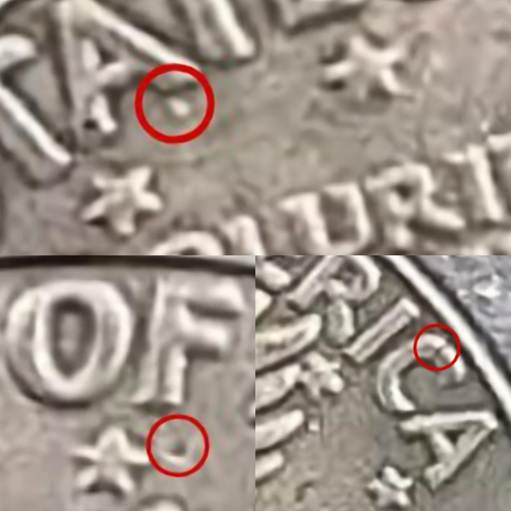
Diving straight into repeating markers of these two “coins,” a 1971-P and 1977-P show commonalities between the two. Both share matching obverses and reverses indicated in Red.
Obverse markers:
Diagonal depression of L
Depression in front of the eye
Reverse markers:
Raised lump below A1
Indent below OF
Line through C
China produces counterfeits of common coins like the Eisenhower dollar if a small profit can be made. These scammers may not be expert numismatists; but they are professional marketers who know about profit margins. Their profits expand with bulk production, flooding eBay and Facebook with fakes. China knows the coin collectors will just assume that low-value common coins like Ike dollars are genuine.
They are polluting the hobby.
If you suspect that one of your coins might be fake, see “Detecting Counterfeits” for methods.
If you like posts like this, you can read more articles on counterfeit coins by Jack D. Young, Jack Riley and Michael Bugeja at this URL. Also, please subscribe so you can get our weekly newsletter and be informed whenever there is a new article or column.
Proxiblog also has thousands of followers on Facebook Coin Groups, YouTube and other venues. To get the latest discussion and commentary, be sure to friend us by clicking here.
You can find more information about errors and varieties as well as buying and bidding on coins in Coin News Updated: The Essential Guide to Online Bidding. Please consider purchasing the work for yourself or a friend, as it underwrites this hobbyist website. Thank you.