
By Jack Riley
Counterfeiters aren’t numismatists. They often use incorrect design types that are impossible for a given coin and do not understand how third party grading services holder the coins they certify. This example may take the cake! A counterfeit 1892-CC $20 Gold piece in a fake PCGS holder. Not just any holder, a holder pedigreed to D.L. Hansen!
Let’s view the counterfeit example compared to the genuine one below that from Hansen’s collection.
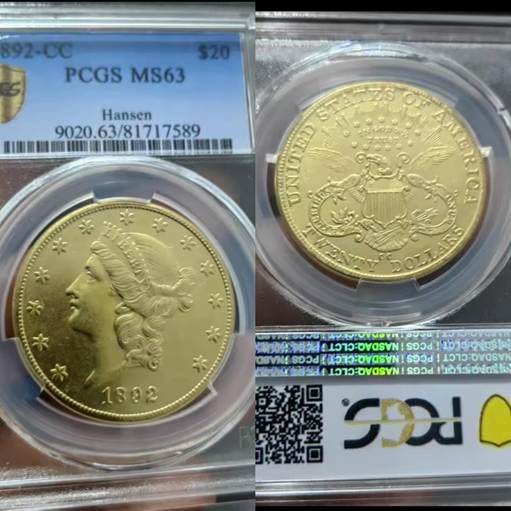
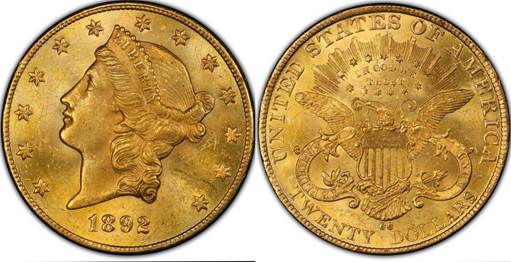
When you compare the two, it is very clear that they are not the same coin. One can see the CC position is incorrect along with a large lump on the ribbon.
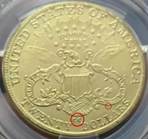
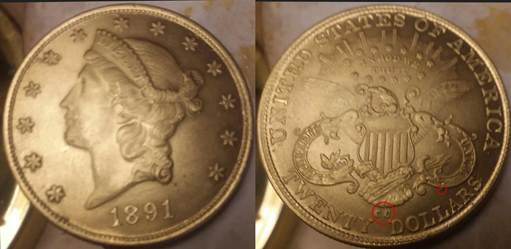
The “Family” is likely very extensive and many dates have been noted sharing this common reverse. Additional images shared below are from an 1891-CC coin as well as an 1893-CC. These were recently shared to a large Facebook group where they got mixed reviews.
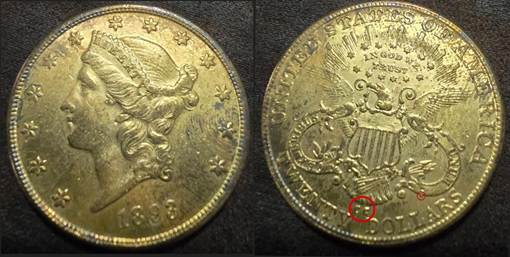
Now to the connection between the common reverses. This 1882-CC shares the “common reverse.” The obverse is very distinct as well for this date. The 1882 date was interchanged with both P and CC mint reverses. Noteworthy: the surface lump above Liberty’s head, spike protruding from the bridge of the nose, and a raised line under the date.
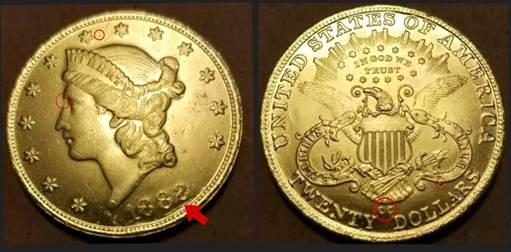
Interesting occurrence with the Philadelphia reverse is that it was later tooled to repair the denticles. The first two images show a depression along with the deformation of the denticles at approximately K12.
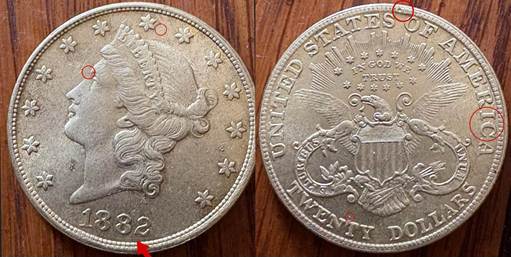
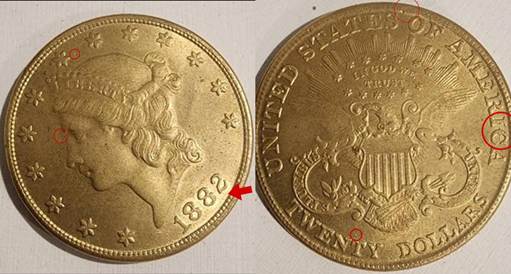
The next two images show the deformed denticles but no indentation within them.
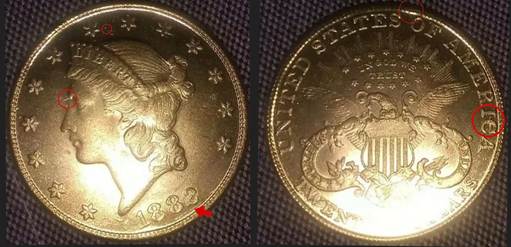
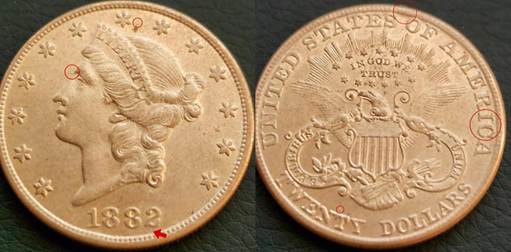
“Common” P reverse
Closeup images of markers include:
- Deformed Denticles with a depression, later was repaired
- Spike through “C”
- Small field dot above “T”
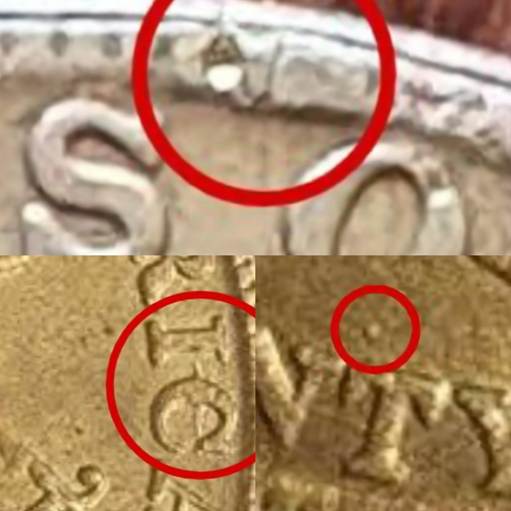
“Common” CC reverse
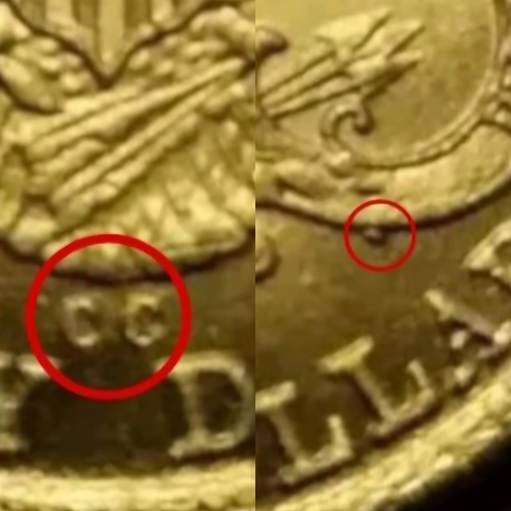
Closeup image of repeating marks include:
- CC centered above denomination
- Small chip above “DOLLARS”
If you purchase a counterfeit coin, especially one as expensive as a $20 gold one, contact the seller for a refund. If the seller refuses to accept a return for a counterfeit coin, immediately initiate a dispute with the payment platform (eBay, PayPal, or credit card company) for an “item not as described,” as counterfeit items are illegal to sell. Document the fraud with professional authentication, and if necessary, report the seller to the U.S. Secret Service or local law enforcement.
If a dispute cannot be resolved, and you report the fraud to the U.S. Secret Service, you may be required to turn the coin over to authorities. In any case, never attempt to re-sell the coin, even if you disclose that it is a counterfeit.
If you like posts like this, you can read more articles on counterfeit coins by Jack D. Young, Jack Riley, John Lorenzo and Michael Bugeja at this URL. Also, please subscribe so you can get our weekly newsletter and be informed whenever there is a new article or column.
Proxiblog also has thousands of followers on Facebook Coin Groups, YouTube and other venues. To get the latest discussion and commentary, be sure to friend us by clicking here.
You can find more information about errors and varieties as well as buying and bidding on coins in Coin News Updated: The Essential Guide to Online Bidding. Please consider purchasing the work for yourself or a friend, as it underwrites this hobbyist website. Thank you.
