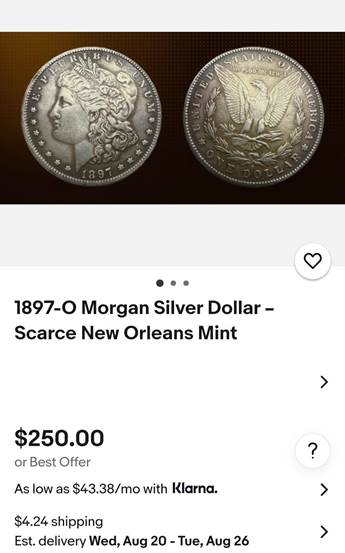
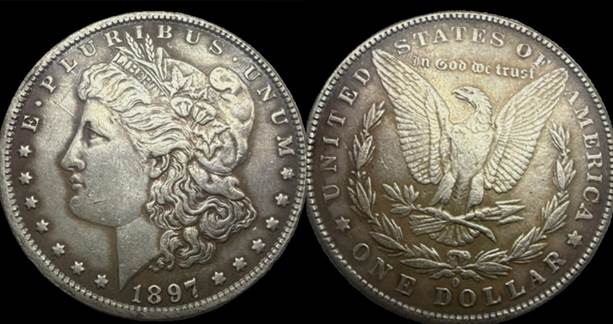
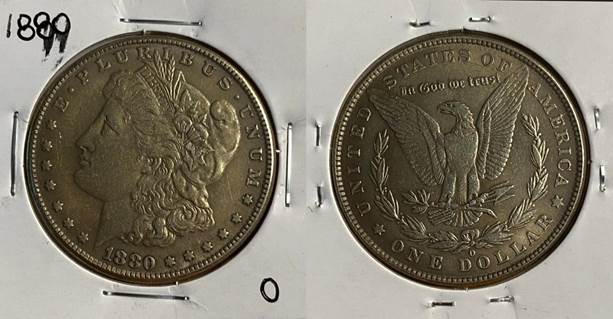
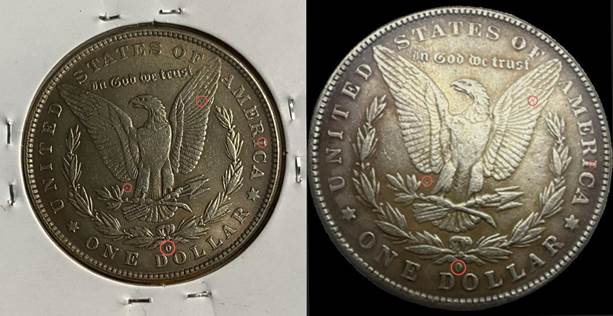
Buying Coins: “How’d I do?”


Increasingly on social media, coin buyers display their recent purchases and ask, “How did I do?” If you ask this question, you probably should not be buying expensive coins. Then again, you can learn how you did by reading this article, which takes you step by step in the buying and bidding process.

For starters, if the coin is in a top-tier slab (PCGS, NGC, ANACS, CAC, ICG), you don’t need to ask that question. Just go to the cert of the holdering company, and you will see retail, wholesale and auction prices. See this article for details.

In the past, new collectors used to learn about coin value from brick-and-mortar shop owners who also belonged to the Professional Numismatist Guild. Now the number of coin shops have declined steadily due to high overhead (rent, security, insurance, inventory) and risk of robbery. Meanwhile coin magazine subscriptions plummeted. For instance, Coin World‘s readership declined from 33.4 million in 2015 to 21.5 million in 2019. Now the magazine measures its audience digitally, with some 65,000 collectors on its social media platforms and 40,000 on its marketplace page.

As a result, collectors prefer the convenience of buying online but often are misinformed by clickbait social media.

In the past, people had buyer’s remorse when they were hoodwinked. Now many collectors do not even realize they have been scammed.

Given these risks, how should they go about buying coins?

  1. Learn how to grade if buying raw or unholdered coins.
  2. Buy from reputable third-party graders, especially if you don’t know how to grade.
  3. Identify counterfeit coins masquerading in fake holders.
  4. Know common flaws that buyers often miss.
  5. Visit PCGS Photograde and compare your coin to grades listed there.
  6. Before you bid on or purchase a coin, visit PCGS CoinFacts to see both retail, wholesale and auction values.
  7. Only patronize online sellers who accept returns.

Let’s go through the above list with a coin being sold on eBay at this writing. Great Southern Coins is a reputable seller that also accepts returns:


This seller states that the coin is semi-prooflike and gem brilliant uncirculated. If you know how to grade, you might have a different opinion. It looks almost uncirculated or low mint state with flaws (scrapes, bag marks, rim dings and a pin scratch):


Now let’s go to Photograde and see what condition may match the raw coin above:


So we’re looking at an MS61 1879 Morgan. Now let’s consult PCGS CoinFacts for possible value:

Here we read about mintage and specifications:


Time to see retail and auction prices. An 1879 without flaws retails for $90 with 516 graded by PCGS at that level selling roughly at auction for about $70-100 with values seemingly rising over the years from about $50 in 2014.


But this 1879 from Great Southern Coins has flaws. What does one in a similar condition go for? CoinFacts again supplies the answer: $65.


Great Southern Coins ships inexpensively for $3.25 so I don’t have to worry about additional buyer’s fees and mailing. A good maximum bid for this coin would be $50.

If this coin were featured on HiBid or Live Auctioneers you would place a different maximum bid because sellers on those platforms often charge 15-25 percent buyer fees and $10-15 mailing. So if bidding here, your maximum would be $30 ($6 buyer fee at 20% and $14 mailing).

Here’s an example from a seller who already knows the value of the coin based on his starting $35 bid. But here you also pay $15 for shipping in addition to 15% buyer’s fee. So if you won the coin with a $35 bid, you would pay $5.25 plus $15 for a total: $55.25.


Now that you know the process, practice on eBay or HiBid/Live Auctioneers–not by bidding–but by following bidding and final sale and see if your estimate would have lost or won the coin. Do this repeatedly until you are confident in your purchasing skills.

If you like posts like this, you can read more articles on buying, selling and collecting at Proxiblog.org. Also, please subscribe so you can be informed whenever there is a new article or column.

Proxiblog also has thousands of followers on Facebook Coin Groups, YouTube and social media. To get the latest discussion and commentary, be sure to friend us by clicking here.

You can find more information about errors and varieties as well as buying and bidding on coins in Coin News Updated: The Essential Guide to Online Bidding. Please consider purchasing the work for yourself or a friend, as it underwrites this hobbyist website. Thank you.

Native American Dollar Varieties


Known by its distinctive golden surface and edge lettering, the Native American dollar, introduced in 2009, is a continuation of the Sacagawea dollar series, featuring her on the obverse and a different reverse design each year. There are several major varieties, featured here, and several weak/partial/missing edge and position varieties.

Let’s cover the latter first:

  • Position A: The edge lettering is upside down when the obverse (Sacagawea’s portrait side) is facing up.
  • Position B: The edge lettering is right-side up when the obverse is facing up. 

Here’s an illustration:


Edge lettering is applied after the coin is struck with both positions considered normal, typically without any rarity or substantial value. However, weak/partial, missing and double edge lettering are highly desirable.

Here are illustrations:


Here are main years you want to search for along with values for gem MS65:

  • 2009-P Native American – Pos. B Partial, $200
  • 2009-P Native American – Pos. B Weak, $75
  • 2009 Native American Missing Edge Lettering, $35
  • 2010-P Native American Missing Edge Lettering, $75
  • 2011-P Dbld Edge Let., Overlap, Pos. A, $85
  • 2012-P Native American, Pos. A Weak Lettering, $90
  • 2012-P Native American, Pos. B Weak Lettering, $40
  • 2013-P Native American, Pos. B Dbld Edge Overlap, $350

If you like posts like this, please subscribe so you can be informed whenever there is a new article or column.

Proxiblog also has thousands of followers on Facebook Coin Groups, YouTube and social media. To get the latest discussion and commentaries, click here.

You can find more information about errors and varieties as well as buying and bidding on coins in Coin News Updated: The Essential Guide to Online Bidding. Please consider purchasing the work for yourself or a friend, as it underwrites this hobbyist website. Thank you.
“NOT PCGS” Draped Bust $


By Jack D. Young

During a normal internet dumpster dive for counterfeits I spotted this listing on AliExpress–an obvious “Red Book Counterfeit”–due to the off-center bust design only used on a 1795 dated variety.

A “Red Book Counterfeit” refers to a fake coin that resembles a genuine U.S. coin as illustrated in the reference guide, “A Guide Book of United States Coins.” The Red Book serves as a comprehensive, annually updated price guide that provides detailed information on genuine U.S. coins. But counterfeiters, especially in China, use the volume as a design guide in manufacturing fakes.

As you might expect, AliExpress is owned by the Chinese company Alibaba Group, a multinational technology company that focuses on e-commerce, retail, internet, and technology (seemingly without a care about counterfeit coins).

Here is the AliExpress fake:

Past Ali listed 1796 PCGS draped bust dollar

Checking the PCGS cert number pulled this info up from their website:

PCGS on-line info for the labeled cert #

Not even close to the genuine one!

Comparison images to the genuine PCGS example for the cert #

So, considering a purchase I decided to message a question to the seller, “Lucy Coins Store,” which has been on Ali for several years. I was the first to report that this seller houses counterfeits in fake PCGS slabs!

And I sent the following note and received the following answer:


And another side note: I have purchased “coins” from the other sellers listed there and received refunds due to their being “not as described” and reported counterfeits.

I decided to purchase it and see what I would receive; and the fake did in fact look like the listed example.

Counterfeit received

Once in-hand, I started the return/ refund process through Ali; having talked with customer service there before they feign no tolerance for selling counterfeits on their venue. I was almost instantly informed my request was denied! So, I submitted another request:


A solution of “no refund” again. They called it “a new proposal.” So, I uploaded more in as much as they noted that I “rejected the solution of AliExpress”; well, yeah. …


And another rejection and so-called “solution”:


Actually, they do have a repeal process which I initiated and sent additional info:

In addition to the 2 side-by-side comparison images I sent this one trying to explain the issue!

Combination image of why this one is wrong!

And again, I was rejected; they did allow me to appeal again.

Appealed through their process

And rejected…


Best I can tell, they really didn’t care the coin is a counterfeit but that it was properly imaged in the listing.

Next step, take it to PayPal! There you can select that you received a counterfeit item and I sent all of the documents I had generated for the Ali report. Unfortunately, I received a pretty quick response that I hadn’t made my case adequately and had 3 days to add information or they would side with the seller.

So, I added some information about counterfeits, including how this bust design was only used for 1795 AND an image I had reported it through the Anti-Counterfeit Education Foundation.


And from there I waited, wondering if I would even get another response. And then:


And so, it ends with this one; it is interesting that when you click on the old sales link you get this, a similar but different counterfeit. But I am not willing to test me luck this time😎!


Latest Ali listing at same seller/ listing location as mine.

I realize that identifying this counterfeit took years of skill compounded by dogged persistence. Some collectors might not know how to identify fakes with die markers. But as Proxiblog’s Michael Bugeja often notes, the Chinese just can’t get the font right (nor understand how and when to use a hyphen [as in “off-center”].)


If you like posts like this, you can read more articles on counterfeit coins by Jack D. Young, Jack Riley and Michael Bugeja at this URL. Also, please subscribe so you can be informed whenever there is a new article or column.

Proxiblog also has thousands of followers on Facebook Coin Groups, YouTube and social media. To get the latest discussion and commentary, be sure to friend us by clicking here.

You can find more information about errors and varieties as well as buying and bidding on coins in Coin News Updated: The Essential Guide to Online Bidding. Please consider purchasing the work for yourself or a friend, as it underwrites this hobbyist website. Thank you.
How to Sell Coins in 7 Steps

You may have inherited a coin collection or decided to sell some or all of your coins. It is essential to know how to sell your coins; otherwise, you could be low-balled or scammed. Follow these 7 steps, and you reduce the odds of being taken advantage of. And be sure to visit Proxiblog.org, one of the top coin sites on the internet. Subscribe so you get our latest posts each week.


To view a comprehensive article about selling, see: https://proxiblog.org/2024/12/02/how-to-sell-coins/

If you like posts like this, please subscribe so you can be informed whenever there is a new article or column.

Proxiblog also has thousands of followers on Facebook Coin Groups, YouTube and social media. To get the latest discussion and commentaries, click here.

You can find more information about errors and varieties as well as buying and bidding on coins in Coin News Updated: The Essential Guide to Online Bidding. Please consider purchasing the work for yourself or a friend, as it underwrites this hobbyist website. Thank you.
Walking Liberty Varieties and Doubled Die


There are four varieties and one popular error in the Walking Liberty Half Dollar series with different mintmark placements for the 1917 Denver and San Francisco coins and one 1946 doubled die reverse.

We’ll begin with the mintmark placements. The 1917 Philadelphia half, of course, had no mintmark. But initially, the halves from the Denver and San Francisco mints had the same placements as 1916 D and S. Production began in January. In February, Mint Director F. J. H. von Engelken thought the mintmark under the motto looked like a die defect; so he ordered the mintmark moved to the reverse, thus creating four varieties.

Here is a visual of the four half dollars:


Because production was halted, we know the mintage of each variety: 1917-D Obverse, 765,400; 1917-D Reverse, 1,940,000; 1917-S Obverse, 952,000; and 1917-S Reverse, 5,554,000. Any of the four in uncirculated condition retails in the thousands. Typically, if you’re a bank roll hunter, you will find worn examples. Values for VF30 are 1917-D Obverse, $250; 1917-D Reverse, $285; 1917-S Obverse, $650; and 1917-S Reverse, $150.

The reverse mintmark remained on Walking Liberty Halves coins through 1947, the last year in the series.

A year earlier, the Mint at Philadelphia, a die contained doubled letters on the reverse. PCGS estimates some 3,000 were released into circulation. Here is an illustration:


The doubling here is easy to spot on the “L,” “U” and “R.” An example in Good 4 is worth $50, rising to $110 in VF30 and in the hundreds and thousands in almost uncirculated and mint state.

The popularity of these varieties and doubled die is based on their often turning up in worn condition in bank rolls. Happy Hunting!

If you like posts like this, please subscribe so you can be informed whenever there is a new article or column.

Proxiblog also has thousands of followers on Facebook Coin Groups, YouTube and social media. To get the latest discussion and commentaries, click here.

You can find more information about errors and varieties as well as buying and bidding on coins in Coin News Updated: The Essential Guide to Online Bidding. Please consider purchasing the work for yourself or a friend, as it underwrites this hobbyist website. Thank you.
New Counterfeit Discovery on 1921 Peace Dollar


By Jack Riley

In a previous article I discussed a large “family” of counterfeit Type A reverse Peace Dollars. The majority of the coins encountered were dated 1921. This article is about a counterfeit 1921 Peace Dollar with a B2 reverse! This reverse type wasn’t used until 1922.

Before diving into the specifics, let’s have a short review:

Let’s look at the two reverse for 1921 and 1922 Peace Dollars:

On the 1921 Type A reverse, 4 rays appear below “ONE” and on the Type B reverse, three.

There is one more distinction on Type B reverses, which we label B1 and B2. As illustrated below, B1 reverses show two mountain peaks while the B2 reverse has 3.

Image below Courtesy of VAMworld showing the 3rd peak, B2

So now we progress to that 1921 counterfeit with a B2 reverse! See below.


This is the only example of this counterfeit I have seen as of now. The coin is a cast counterfeit evident by the images and the weight of 23 grams. You can see grainy surfaces and many “lumps” throughout the fields. I make note of two possible markers if this is identified on various dates.

There is a prominent dot about the A of “DOLLAR” on the reverse that may be a helpful indicator and a small crack running through the eagles mouth/head.

While this particular coin shouldn’t fool a veteran hobbyist, it is very possible this is interchanged with various dates and an unknown “family of fakes” is out there. Variety attribution on Peace Dollars can be tricky even for experienced collectors.

But this article provides the basics from which all of us can learn.

If you like posts like this, you can read more articles on counterfeit coins by Jack Riley, Jack D. Young and Michael Bugeja at this URL. Also, please subscribe so you can be informed whenever there is a new article or column.

Proxiblog also has thousands of followers on Facebook Coin Groups, YouTube and social media. To get the latest discussion and commentary, be sure to friend us by clicking here.

You can find more information about errors and varieties as well as buying and bidding on coins in Coin News Updated: The Essential Guide to Online Bidding. Please consider purchasing the work for yourself or a friend, as it underwrites this hobbyist website. Thank you.
1880-CC Morgan Varieties


The 1880-CC Morgan Dollars have several varieties that occurred to save the Mint money. Dies for these coins were made at the Philadelphia mint. The Carson City Mint, like other mints at the time, frequently reused dies by repolishing and re-engraving them. This process led to overdates and different reverses.

This is a basic article without naming other VAM varieties (cataloging different die markers). Visit here if you want to learn about VAMs.

1878 and 79 Reverses

Let’s start with the two reverses, compliments PCGS CoinFacts, so that we can understand the role they play in the varieties.


Now let’s proceed to the varieties and overdates.

1880-CC Regular Strike

The 1880-CC, regular strike, has the rounded breast of 1879:


1880-CC Rev. 78 (Regular Strike)

The first variety, then, is the 1880-CC Rev. 78:


Now that we know how to distinguish which reverse, we move on them to the various overdates.

1880-CC “8 over Low 7” and “8 over High 7”

Below find markers for the 1880-CC 8 over Low 7 (Regular Strike [aka Reverse of 79]) and 8 over High 7 (Regular Strike).


If the coin is worn, you might not be able to identify what you have without a microscope, and even then you might not be able to see the low/high 7. Fortunately, many 1880-CC varieties are uncirculated from bags released by the Mint as well as GSA dollars (more on those later).

Here is a blow-up so you can tell:


Two distinctions. The 8 over Low 7 has a remnant of the 7 in the middle of the top loop of the 8 and what looks like a die chip with some space between it and the bottom of the 8; the 8 over High 7 has the remnant close to the top of the 8 and the remnant close and almost touching the bottom of the 8.

1880-CC 8/7 Rev. 78

As you now might have guessed, another variety is the 1880-CC 8 over 7 with the 78 reverse. Look for the remnant of the 7 in the top loop of the 8:


Here’s the obverse and reverse of the above coin to give you an idea of how faint the remnant is and why you might not see it in a worn version. (There are other die markers to identify which variety you have but are omitted from this article, focusing on the basics.)


1880/79-CC $1 Reverse of 1878 (Regular Strike)

Yet another variety. How did this one happen?

Dies originally intended for 1879 dated coins were repurposed for 1880 production by overpunching the date with “1880,” resulting in the visible “80/79” overdate. This practice of repurposing dies helped conserve resources at the time. The reverse die used was the “Reverse of 1878,” characterized by a flat eagle breast and parallel top arrow feather.


Values

Values for each of the varieties differ so you might want to focus on the rarer ones, especially if you have acquired GSA Dollars, which do not distinguish between the various varieties in their holders:


Here is a table with each variety’s retail worth at MS63 from CoinFacts:

VARIETY VALUE AT MS63

1880-CC Regular Strike$875
1880-CC Rev. of 78$1450
1880-CC 8 over High 7$950
1880-CC 8 over Low 7$900
1880-CC 8 over 7 Rev. 78$1350
1880/79-CC Rev. of 78$1450

Proxiblog also has thousands of followers on Facebook Coin Groups, YouTube and social media. To get the latest discussion and commentaries, click here.


Micro Morgan Dollars


Micro mintmarks are valuable and relatively easy to identify if you know how to compare them with their regular counterparts. In this post we will describe two desired ones in the Morgan Dollar series along with counterfeits that hobbyists may not immediately detect.

1899-O Micro O

The 1899-O Micro O’s mintmark is noticeably smaller than regular size mintmarks normally seen on Morgan dollars. Its size would fit well on a Quarter Dollar. Here is a comparison from PCGS CoinFacts:


The normal mintmark is oval shaped and the micro, circle shaped. The micro mintmark is closer to the ribbon of the laurel wreath and farther from the “D” and “O” of “Dollar.” The 1899-O Micro O is not rare, as thousands were released into circulation; however, because of the popularity of the Morgan series, is coveted and also included in registry sets.

If you are interested in VAM designations, which many collectors are, you can find this micro mintmark under several varieties, with popular ones being 4,5,6 and 31. (VAM stands for Van Allen-Mallis, the surnames of the two numismatists, who cataloged die varieties of Morgan and Peace silver dollars.)

Values of the 1899-O Micro O are in the thousands for mint state examples. Almost uncirculated examples retail in the high hundreds. But worn examples, which often are found in auctions and estate sales, sell for a few hundred dollars or less, depending on condition.

1903-S Micro S

The 1903-S Micro S Silver Dollar also has a noticeably tiny mintmark, again, what might be used on a Quarter Dollar. Speculation is the engraver at the Mint used the wrong punch and didn’t realize the error.

Again, the variety is easy to identify as the mintmark (similar font) is roughly about half size of a normal mintmark.


As with the 1899-O Micro O, this variety is relatively plentiful with hundreds slabbed by top third-party grading companies. The VAM 2 variety is especially desired.

Values, even in worn condition, are much higher than the 1899-O Micro O. The 1899-O had a mintage of 12,290,000; the 1903-S, 1,241,000. As such, even at G4, the retail for the 1903-S variety is about $100. Values rise substantially thereafter reaching a $1,000 at VF35 and soaring into tens of thousands in AU58 and higher.

Counterfeit Micro Mintmarks

Micro mintmarks 1896-O, 1900-O and 1902-O are not modern but counterfeited during the time that Morgan dollars were still being minted, making them difficult to detect for the novice collector.

PCGS has a brilliant article about these, which you can access by clicking here. Here is an illustration from that article, compliments PCGS:

PCGS notes that these contain identical linear marks, or lumps, created during the transfer process. A genuine coin would be used to create a working die, leaving lumps and other telltale signs.

Perhaps the most famous counterfeit micro O is the 1901-O Micro O, which many hobbyists actually collect. Like the 1896-O, 1900-O, and 1902-O varieties, these are high-quality fakes. PCGS states, “These fakes are notable for their deceptive similarity to genuine coins, being made of good silver and exhibiting sharp details, especially in higher-grade examples.”

If you like posts like this, please subscribe so you can be informed whenever there is a new article or column.

Proxiblog also has thousdans of followers on Facebook Coin Groups, YouTube and social media. To get the latest discussion and commentaries, click here.

You can find more information about errors and varieties as well as buying and bidding on coins in Coin News Updated: The Essential Guide to Online Bidding. Please consider purchasing the work for yourself or a friend, as it underwrites this hobbyist website. Thank you.

Online Bidding Basics


By Michael Bugeja

Every now and then we need to monitor the major online coin portals and share bidding basics.

Some general rules:

  1. Never bid on raw coins unless you are an expert grader, trust the seller, can view excellent photos, and can return the coin if unsatisfied.
  2. Never bid on coins in bottom-tier slabs unless you spot a mistake like a rare error or variation that isn’t listed on the label.
  3. Do not bid on raw coins on Live Auctioneers, HiBid or Proxibid unless (a) you are an expert grader, (b) have read the terms of service, and (c) can afford the buyer’s fee and shipping.
  4. If bidding on eBay, consider not wasting time on “Buy It Now” offers unless you need the coin or currency for your collection. (Note: If you find yourself in this situation on eBay, you may want to simply “watch” the coin [hit the “watch” tab] until the seller relists it and finally comes to his or her senses, dropping the price or going to “Make Offer” status.) You can always contact the seller and ask for a lower buy price.

Let’s focus now on eBay. Here’s why: eBay is a global commerce leader with a vast user base and a massive overall gross merchandise volume (GMV), including a substantial market for coins and collectibles, which drives a much higher sales volume than other venues. Live Auctioneers, HiBid and Proxibid are small in comparison, especially when it comes to coin sales. eBay has 134 million active buyers worldwide. Coin and collectible buyers account for $10 billion in annual sales.

We’ll begin with an example of “Buy It Now” on eBay concerning a common Morgan Dollar, 1878, 7 Tail Feathers, Reverse of 78. By the look of the coin, I give it a generous MS-63 grade (assuming there are no hidden flaws the photo doesn’t reveal). That means the retail price should be around $145. Instead, the seller is asking for the ridiculous price of $1,995.


If you know how to grade (I mean, really know how to grade) and want a coin or currency note for your collection, always check auction values rather than retail values. You can do that online via PCGS CoinFacts or Paper Money Values, which are free. Find the low and high auction prices for the coin or note and bid the low first.

You can bid as you like, of course, but my general rule for “Buy It Now / Make Offer” is to bid only on slabbed coins by top holdering companies (PCGS, NGC, ANACS, CAC and ICG).

You can score good values on eBay “Make Offer” lots if you know how to negotiate. Go through the same process as above, knowing retail and auction prices, and start with a low auction bid if you really want the coin or note. I only do this with lots that I need for my collection. To pay for them, I retrieve coins from my bank box so that I can afford the pricier items as illustrated here. For instance, I sold most of my Lincoln Wheat cents slabbed by PCGS to afford these two desired lots.

The first was a 1901 Buffalo note that is becoming increasingly difficult to acquire at lower than retail rates. Just as in coins with top holdering companies, I bid only on PCGS and PMG notes. Here is the lot that caught my interest, because it had good color and came with a “Make Offer” designation:


You’ll note that eBay states this lot sold for $1,199. It did NOT. That was the asking price. I bid $890, slightly below retail of $900, and wrote that I could buy the note in question at the same grade from my hometown coin shop, Chester’s Coins and Gifts, for $950. (And I usually get a discount because, well, I know the shop owner!) I also noted that all those other PMG 25 Buffalos were not selling at $950 but were being relisted.

I won the lot:


I had been looking for three years for a “round” $1 California fractional gold PCGS coin in an old green PCGS holder, as the “round” rather than “octagonal” $1 coins are difficult to find. Finally one appeared. But the asking price was way above retail:


Here’s the $2,000 retail price from PCGS at the time of purchase, 2017, for the coin in question:


In my offer of $1,625, I told the seller that the latest auction price was around $1,600. “Seems fair enough,” the seller stated, and I won the coin.


Once again, eBay’s record states the coin sold for the initial asking price. As in the 1901 Buffalo note, it decidedly did not.


If you like posts like this, subscribe to Proxiblog so you can be informed whenever there is a new article or column.

Proxiblog also has thousands of followers on Facebook Coin Groups, YouTube and other social media. To get the latest discussion and commentary, be sure to friend us by clicking here.

You can find more information about types, varieties, errors, grading, bidding and buying in Coin News Updated: The Essential Guide to Online Bidding. Please consider buying or gifting the work for a friend, as it underwrites this hobbyist blog. Thank you.

Family of Fake Indian Cents


By Jack D. Young

A recent counterfeit Indian Head Cent listed on eBay from a larger seller sparked my interest–to the extent that I decided to investigate it, especially since the coin was shared to several Facebook groups.

I discovered a rather large “Family” sharing a common obverse. A “Family” is code for counterfeits with common markers among various dates. Most notably, I viewed the deformed denticles at 12 o’clock on the obverse and a raised lump left of “M-E.” The 1867 pictured below is from that larger seller.


The above example also shared a depression in the neck. I recalled seeing this in an NGC article published about 2013 or thereabouts. That article didn’t include these “common marks” rather more of a description of the surfaces.


After browsing online for sometime it was clear this was a very large “Family” and not limited to a few dates. Most examples were either key or semi-key dates but it would be expected this could be seen on common date Indian Cents.

This listing includes the Key date 1877! Along with another 1908s and two semi-key dates including 1866 and 1870. All images highlight the lump on the field between the feathers as well as the deformed denticles.


Some pieces aren’t as deceptive as others but many of these were already in collections! Stay diligent when looking for new coins to add to your collection and research extensively.

If you like posts like this, you can read more articles on counterfeit coins by Jack D. Young, Jack Riley and Michael Bugeja at this URL. Also, please subscribe so you can get our weekly newsletter and be informed whenever there is a new article or column.

Proxiblog also has thousands of followers on Facebook Coin Groups, YouTube and social media. To get the latest discussion and commentaries, click here.

You can find more information about errors and varieties as well as buying and bidding on coins in Coin News Updated: The Essential Guide to Online Bidding. Please consider purchasing the work for yourself or a friend, as it underwrites this hobbyist website. Thank you.