Doubled dies are valuable because you can usually readily see the spread without a coin microscope. The naked eye or loupe is all you need.
You can easily go down the rabbit hole checking Wexler or Variety Vista, both of which are dedicated to die markers and varieties, along with hub doubling. There are just too many entries with obtuse markers for the beginning collector. Focus on these first so you can see what hub doubling actually looks like.
1972 Lincoln Cent (DDO-001):Another famous modern cent variety with a huge spread. NOTE: Go to the link to see other 1972 doubled dies. You might need a microscope to see them.
1995 Lincoln Cent (DDO-001): A popular modern find heavily distributed into regular circulation with easily seen doubling on “LIBERTY.”
1909 VDB Lincoln Cent (DDO-001): The first year of the Lincoln cent with doubling on the date and obverse text.
1917 Lincoln Cent (DDO-001): This cent features very strong, distinctive doubling on the date and the motto.
1936 Lincoln Cent (DDO-001): Philadelphia produced three separate DDOs this year, but Type 1 is famous for its wide, bold spread on the date and legends.
1970-S Lincoln Cent “Large Date” (DDO-001): A rare San Francisco variety with strong doubling on the mottoes and date.
1916 Buffalo Nickel (DDO-001): Heavily doubled and easy to see, one of the most coveted.
Veteran hobbyists forget that beginning collectors typically do not know VAMs for Morgan and Peace dollars and also for minor doubled dies–Wexler and Variety Vista is full of them.
Veteran hobbyists, especially on Facebook and social media, should remember that beginners do not know how to navigate those rabbit holds and think everything is a valuable doubled die. Few beginners and even long-time hobbyists may not know VAMs, obscure types of doubled dies (Classes I-IX), and common mint errors.
Keep it simple, as this article does.
If you are a collector of varieties and doubled dies, be sure to see our directory that features denominations that carry unique PCGS numbers. Articles there, too.
If you like posts like this, subscribe so you can be informed whenever there is a new article or column.
Proxiblog also has thousands of followers on Facebook Coin Groups, YouTube and other social media. To get the latest discussion and commentary, be sure to friend us by clicking here.
You can find more information about types, varieties, errors, grading, bidding and buying in Coin News Updated: The Essential Guide to Online Bidding. Please consider buying or gifting the work for a friend, as it underwrites this hobbyist blog. Thank you.
The 2017 Lincoln cent carried the “P” mint mark to celebrate the U.S. Mint’s 225th anniversary. The Mint released the coins into circulation in January 2017 without any announcement, gaining publicity as collectors began noticing the change.
While unique, these cents are common. More than 4 billion of them were struck. Examples grading MS67+ retail for $80 but typically sell for about $30 in PCGS slabs. At MS68, graded by top companies, the price skyrockets to $500; but these are ultra rarities in such a high grade. Nevertheless, it is still fun to find the 2017-P cent in pocket change.
The “P” mint mark has never been used on a cent before or after 2017.
Hobbyists know that the Philadelphia Mint used no mintmark on coins because initially there were no branch mints. However, when other mints opened in Denver and San Francisco, for instance, they started using the “D” and “S” mintmarks on coins.
Beware of scammers claiming some 2017 cents are missing the “P” mintmark. That can only happen on grease strikes. Why? Because the “P” mintmark was etched on the master die for 2017 cents. You have to know how coins are made to realize why there is no missing “P” errors on 2017 cents.
In 2018, the Philadelphia Mint returned to the convention of no mintmark.
Other denominations have used the P mintmark. The nickel used the mintmark from 1942 to 1945 on 35% Silver “War Nickels” and then was removed. The “P” returned to nickels in 1980. Also in that year, dimes, quarters, half dollars started using the P mintmark. In 1979 the P mintmark appeared on the Susan B. Anthony dollar and henceforth was used on all Philly dollar coins, including the Sacagawea, Presidential, and American Innovation dollars.
Social media has hyped “missing mintmarks” as ultra rarities. Here’s a chart of them with odds of finding any.
If you would like to know more about these missing mintmarks, click here.
If you like posts like this, please subscribe so you can be informed whenever there is a new article or column.
Proxiblog also has thousands of followers on Facebook Coin Groups, YouTube and social media. To get the latest discussion and commentaries, click here.
You can find more information about errors and varieties as well as buying and bidding on coins in Coin News Updated: The Essential Guide to Online Bidding. Please consider purchasing the work for yourself or a friend, as it underwrites this hobbyist website. Thank you.
The “Flared FG” is a transitional variety found on some 1988 and 1988-D Lincoln cents. It occurred when U.S. Mint employees mistakenly used a redesigned die for 1989 cents.
The initials, “FG,” to the right of the Lincoln Memorial building, refer to designer Frank Gasparro.
This variety requires magnification to identify.
As you can see in this expanded photo above, the “flared” initial is the “G.” It has a noticeable serif. The regular lacks that. Now notice the thickness, or higher relief, of the flared “FG.” The revision was meant to make the initials clearer and distinct.
That’s how you tell.
Again, though, because the variety requires close inspection, have handy a regular 1988/88-D cent so you can compare.
These are easy to find because of the huge mintage: 6,092,810,000 for 1988; 5,253,740,443, 1988-D.
Then compare initials, as below.
The variety designation is FS-901 “Reverse of 1989.” Worn examples sell for a few dollars to $25; mint state, about $150. Several at MS68 have sold for hundreds of dollars.
If you intend to purchase or bid on an example from eBay or Facebook, make sure that the photos are clear enough and magnified so that you can identify the variety. Here’s a typical photo; you can try expanding it with your own photo app. But in general, avoid these.
If you like posts like this, subscribe so you can be informed whenever there is a new article or column.
Proxiblog also has thousands of followers on Facebook Coin Groups, YouTube and social media. To get the latest discussion and commentary, be sure to friend us by clicking here.
You can find more information about types, varieties, errors, grading, bidding and buying in Coin News Updated: The Essential Guide to Online Bidding. Please consider buying or gifting the work for a friend, as it underwrites this hobbyist blog. Thank you.
While new hobbyists typically search for the unicorns–1992/92-D Close AM cents–veteran collectors know that chances are infinitely better looking for the 1998, 1999 and 2000 Wide AM varieties.
If you are interested in the 1992/92-D Close AM cents, click here. This post is about the 1998, 1999, and 2000 Wide AM varieties, all from the Philadelphia Mint.
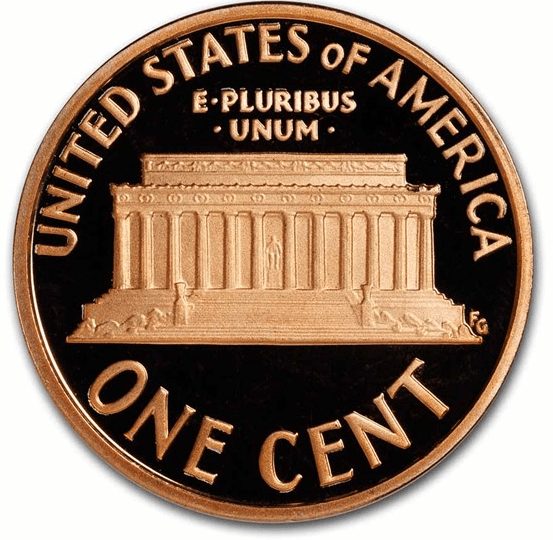
In 1994, the U.S. Mint developed rules for Lincoln Memorial Cents. Business strikes were supposed to use a “Close AM” reverse die. Proof coins would use the “Wide AM” reverse die.
Between 1998-200, two US Mints produced business strikes for cents, Philadelphia and Denver. At the Philly facility, coin operators mistakenly used a “Wide AM” reverse die on some of the production runs.
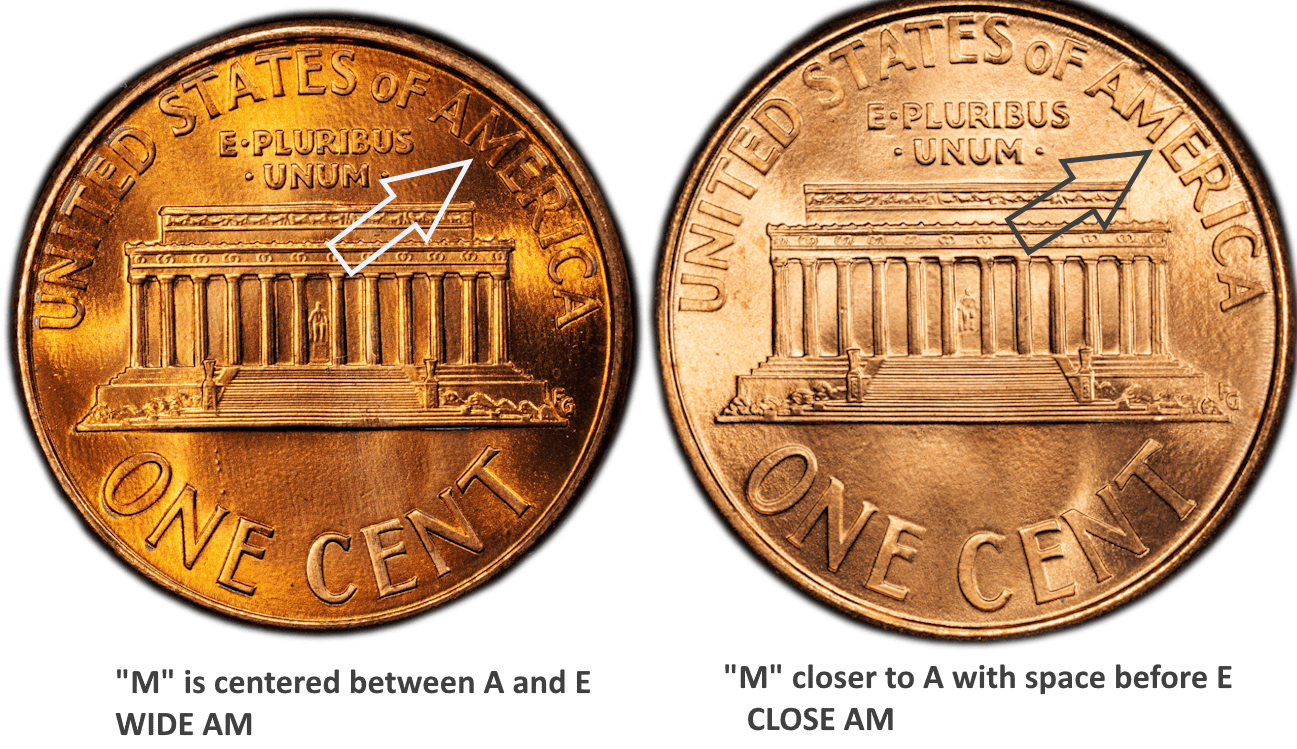
There are three markers to discern what you have.
Let’s dissect each of these.
Now let’s compare with the regular correct business strikes:
An easy way to determine wide v. close is to look at the position of the “M” in “America.” If that letter is centered between the “A” and the “E,” it is wide. If the “M” is close to the “A” than the “E,” it is close.
Let’s compare.
Other markers:
Values for these varieties depend on the coin’s condition and color (Brown, Red-Brown, or Red).
Here are mintage estimates and values for each year:
YEAR
ESTIMATED VARIETY MINTAGE
RANGE OF VALUES
1998
100,000
$25 to $150, Lower Mint State
1999
2,000
$400 to $1,000+, Lower Mint State
2000
200,000+
$15 to $35, Lower Mint State
Do not purchase raw Wide AM 1998-2000 cents unless you know the markers. Almost every raw example on eBay has the wrong markers (Close AM) for the rare 1999 cent. Examples:
One more point. Lincoln proof cents from 1998 through 2000 are supposed to have a Wide AM.
Finally, there are true “unicorn” coins, theorized but never found, including the 1964 Morgan Dollar and the 1965 Kennedy Half on a 1964 90% Silver Planchet. You can add the 1998-D Wide AM, 1999-D Wide AM and 2000-D Wide AM to that list.
ALL of the several 1998-D, 1999-D and 2000-D Cents on eBay listed as “Wide AM” are just regular “Close AM” cents. Example:
If you like posts like this, subscribe so you can be informed whenever there is a new article or column.
Proxiblog also has thousands of followers on Facebook Coin Groups, YouTube and social media. To get the latest discussion and commentary, be sure to friend us by clicking here.
You can find more information about types, varieties, errors, grading, bidding and buying in Coin News Updated: The Essential Guide to Online Bidding. Please consider buying or gifting the work for a friend, as it underwrites this hobbyist blog. Thank you.
When the US Mint makes a transition from one type of planchet to another, as we have seen with the popular 1982-D Small Date brass cent, unused planchets are sure to be stuck somewhere in the coinage bins, which is precisely what happened with 1965 dimes and quarters.
To get your hands on one or both, you need to be rich … or lucky with rolls and pocket change. Nevertheless, you’ll have better odds with these than the 1982-D Small Date transitional error, of which only two have been found.
1965 Dime on 90% Silver Planchet
1965 dimes were supposed to be copper-nickel. The price of silver was responsible for common denominations to transition to clad. A small number of silver blanks got into feeder bins. Between 20-100 of the rarity may have escaped into circulation.
Value is between $3,000 and $13,000 and higher, depending on condition and certification grade by a top-tier holdering company.
To determine if you found the rarity, look at the edge. If you see a copper stripe, you have the clad dime. If you can’t see the stripe, weigh it. A clad dime weighs 2.27 grams; the silver dime, 2.5 grams.
1965 Quarter on 90% Silver Planchet
The same thing happened with quarters as with the dime above. Some leftover 1964 silver planchets got into 1965 clad hoppers. Fewer than 20 are believed to have left the Mint.
An authentic 1965 Washington quarter accidentally struck on a 90% silver planchet is valued between $4,000 and $17,000+, depending on its condition and professional grade and certification. Again, look at the edge. If you see a copper stripe, you have the common clad quarter. If not, weigh it. A clad quarter weighs 5.67 grams whereas a silver one weighs 6.25 grams.
The 1965 Half Dollar “Unicorn”
Hobbyists searching for the “Unicorn”–a coin so rare as to be mythic–continue to look for a 1965 Half Dollar struck on a 1964 90% silver planchet. Hey, if the same thing happened with the dime and quarter, why not the JFK Half?
Good luck with that. None have been found.
If you think you found the unicorn, it should weigh 12.5 grams whereas a 40% regular strike should weigh 11.5 grams.
It goes without saying, beware of replicas and alterations and false claims on eBay and Facebook.
If you like posts like this, subscribe so you can be informed whenever there is a new article or column.
Proxiblog also has thousands of followers on Facebook Coin Groups, YouTube and other social media. To get the latest discussion and commentary, be sure to friend us by clicking here.
You can find more information about types, varieties, errors, grading, bidding and buying in Coin News Updated: The Essential Guide to Online Bidding. Please consider buying or gifting the work for a friend, as it underwrites this hobbyist blog. Thank you.
1944 steel cents from all three US Mints are extremely rare transitional errors occurring when leftover 1943 zinc-coated steel planchets became stuck in annealing furnaces, tote bins or coining presses. Because of their rarity, however–a few dozen have been actually found and authenticated–there are thousands of counterfeits, altered dates and copies flooding online coin venues.
The most common of these ultra rarities came from the Philadelphia Mint, which was using steel planchets to produce foreign coins. Some of those planchets got into the Lincoln cent bin. Fewer than 10 1944-D steel cents have been authenticated. These steel planchets were left over when the Mint started making copper cents that year. Steel planchets were mixed in totes mistakenly and were struck as 1944-S cents.
Step-by-Step Method
To test if you have one of these ultra rarities, use a magnet. If it sticks, you can continue to check if real.
Weigh the coin. If it weighs more than 2.7 grams, typically 3.1 grams, you have a fake.
If not, look at the second “4” in the date. If you spot anything suspicious, such as a scratch or tool mark–or weird spacing between numbers–you have an altered date.
Look for plating bubbles–tiny bumps–in the fields especially. You also might find pitting in these.
Check for strike. Zinc-plated counterfeits have mushy devices and dates. Authentic ones have sharper devices.
A key diagnostic is the word “Liberty.” Again, if mushy, you probably have a fake. In authentic examples, the word not only is sharp but also close to the edge. Striking copper differs from striking steel. The later has more hardness, pushing the “L” close to the rim.
Comparison of “Liberty”
Examples of Fakes
Online sellers on Temu and Etsy have flooded the market with all manner of fakes and replicas.
REPLICAS
CASTING BUBBLES
ZINC PLATED
It goes without saying that you should never bid on or buy a raw 1944 P/D/S steel cent that isn’t certified by a major holding company such as PCGS, NGC, ANACS and CAC. Even then, look up the certification number and check to make sure you are looking at the same coin because China also packages fake coins in fake holders. The best way is to wait for one of these rarities featured on a major auction house such as GreatCollections, Heritage or Stacks Bowers.
f you like posts like this, please go to our counterfeit archive with reports from Jack Riley, Jack D. Young, John Lorenzo and Michael Bugeja. Also, please subscribe so you can be informed whenever there is a new article or column.
Proxiblog also has thousands of followers on Facebook Coin Groups, YouTube and social media. To get the latest discussion and commentary, be sure to friend us by clicking here.
You can find more information about errors and varieties as well as buying and bidding on coins in Coin News Updated: The Essential Guide to Online Bidding. Please consider purchasing the work for yourself or a friend, as it underwrites this hobbyist website. Thank you.
A woody–woodgrain marks on a coin–is caused by an improper alloy mix whereas similar marks are caused by dirty rollers at the Mint. Woodies are collectible. Roller marks are not.
A woody has irregular, streaky, wood-like toning, usually red brown often mixed with lighter brass-like colors. The lines are uneven, splotchy and on both sides of the coin. They often appear on older Wheat and Indian Head Cents.
Roller marks are easy to identify. They are straight and parallel. They usually appear on both sides of a coin, especially ones minted between 1978-1984.
Here is a handy chart:
Feature
Woody (Improper Alloy)
Roller Marks (Damage)
Appearance
Irregular, splotchy, wood grain texture
Straight, uniform, parallel lines
Color
Varies (Red/Brown/Brass)
Same as the rest of the coin
Depth
Surface toning, usually flush with metal
Shallow, incuse lines (cut into the metal)
Texture
Usually smooth
Scratched, feels textured
Consistency
Random streaking
Uniform, consistent width
Woodies are collectible but values depend on the condition and mintage/rarity of the coin. Most Wheat cents sell for $5-50; Indian cents, $10-75. Uncirculated ones can command high prices–basically, what one is willing to pay. Example:
If you are bidding on or buying a coin, make sure you can tell the difference. Roller mark coins are often mislabeled as woodies. Examples:
If you like posts like this, subscribe so you can be informed whenever there is a new article or column.
Proxiblog also has thousands of followers on Facebook Coin Groups, YouTube and other social media. To get the latest discussion and commentary, be sure to friend us by clicking here.
You can find more information about types, varieties, errors, grading, bidding and buying in Coin News Updated: The Essential Guide to Online Bidding. Please consider buying or gifting the work for a friend, as it underwrites this hobbyist blog. Thank you.
Special issue coins typically are made for collectors and have their own designations, devices and mintmarks. Ones featured here are readily available. Some hobbyists collect all of them.
1996-W Roosevelt Dime
One of the most popular special issues is the 1996-W Roosevelt dime, marking the half-century of the design. This was the first base metal coin struck at the West Point mint.
The 1996-W Roosevelt dime is the lowest-mintage business-strike coin in the series (1,457,949). The next lowest was the 1955 dime (12,450,000).
Unlike other business strikes, the coin was not released into circulation. It was a bonus coin included in that year’s U.S. Mint Uncirculated Coin Sets.
It is the only business strike dime carry the W mint mark for West Point.
PCGS recounts the trouble that the Mint had in adding the W mintmark. For the occasion, engraver John Mercanti was asked to hand-punch the mintmark into the die directly. But the steel die was not properly prepared (heated) so the force of the punch made it mushroom. It could not be used. Another engraver had to create an entire new dime model, carving the mintmark directly into the master plaster. This is why the mintmark looks different than on ones used for other W mintmark issues.
If you want to buy or bid on this dime, make sure that it has full bands. PCGS estimates it has holdered some 6,700 dimes that are not full bands compared with 4,500 that have them.
An MS68FB retails for about $60; in MS69FB, about $260.
2019-W Lincoln Cent
The 2019-W cent was produced to celebrate the 110th anniversary of the Lincoln cent. PCGS lists three finishes for the dime, released as a bonus in these sets:
Proof finish: Included with the standard 2019 Proof Set.
Reverse Proof finish: Included with the 2019 Silver Proof Set.
Uncirculated finish: Included with the 2019 Uncirculated Mint Set.
As with all coins manufactured for collectors, the overwhelming number of coins will be uncirculated still and not worth much unless in extremely high grades. Examples of the business strike in MS69 are worth about $30 whereas an MS70 retails for about $350.
2020-W Jefferson Nickel
This was the first U.S. nickel to bear a “W” mintmark. The regular nickel came inside the 2020 Mint Proof Set. A 2020-W Jefferson Nickel in a Reverse Proof format came inside the 2020 Silver Proof Set.
The Mint planned to make a 2020-W nickel with an uncirculated finish to be included in the 2020 Uncirculated Coin Set. The COVID-19 illness limited production, however, and the issue was canceled.
The 2020-W Proof Nickel had a mintage of 464,039; the 2020-W Reverse Proof Nickel, 313,185. These typically retail online for $35 in PR69 and $80 in PR70.
2015-W March of Dimes
The 2015-W March of Dimes Proof Silver Dime and the 2015-P March of Dimes Reverse Proof Silver Dime also were special release issues. They were available only when collectors bought the 2015 March of Dimes Special Silver Set.
2015-W Proof Silver Dime was the first ever silver proof Roosevelt dime to carry the “W” mint mark and also the first non-dollar denomination coin to ever be produced with a reverse proof finish.
The set was limited to 75,000 units. As such, both silver dimes are some of the scarcest in the Roosevelt series.
Depending on the price of silver, the 3-Coin Set typically sells for about $200.
If you like posts like this, please subscribe so you can be informed whenever there is a new article or column.
Proxiblog also has thousands of followers on Facebook Coin Groups, YouTube and other venues. To get the latest discussion and commentary, be sure to friend us by clicking here.
You can find more information about errors and varieties as well as buying and bidding on coins in Coin News Updated: The Essential Guide to Online Bidding. Please consider purchasing the work for yourself or a friend, as it underwrites this hobbyist website. Thank you.
Several friends notified me of an obvious scam on eBay recently involving a PCGS certified 1882-CC image used by multiple sellers (showing the same origin location) listed for sale at a bargain price.
Past auction listing- I added seller’s reverse image to this
I have written previous articles on these “bait and switch” tactics by MANY eBay sellers using genuine coin images (to help fool artificial intelligence, which needs little help to do currently) to sell counterfeit coins. I have actually purchased a couple in the past just to see what a buyer would get and reported them and received my purchase price back.
So, a couple of bad signs with this listing:
Image of a genuine PCGGS certed example; PCGS shows a value of $450.00.
Listed price $39.99 with 2 sold and more than 10 available.
And the seller’s feedback notes:
Well, at least they show eBay “Verified purchases”!
And while I was reviewing this one 5 other listings with the same stock images but different sellers popped up; I started saving images and organizing my files:
From this I put a note together and sent a message to eBay alerting them about this scam and reported the subject listing.
Note to eBay
I reported them all through the feeble AI reporting process with all coming back as no policy violations including the subject example.
And so I decided to buy this one and see what I would receive.
And I received a typical CN counterfeit CC Morgan with the slashed eagle reverse!
I emailed the seller with no response; looks like he packed up his “shop,” and nothing now listed.
And going back to check the listing and follow-up I find eBay now removed the listing! It did allow me to request a return and leave appropriate feedback for the seller.
Now 3 negative feedbacks for the counterfeit bait and switch!
So we’ll see where this goes from here, as eBay stated they will step in if requested May 1. Pretty sure I won’t hear back from the seller by then.
And he apparently sold MANY of these through several different seller IDs right under eBay’s nose.
And continued reviewing turned up the genuine example and seller the scammers used for their listings:
So, come on eBay! You can do better than this.
We can do better, too, as hobbyists by learning how to identify fakes.
If you like posts like this, please go to our counterfeit archive with reports from Jack Riley, Jack D. Young, John Lorenzo and Michael Bugeja. Also, please subscribe so you can be informed whenever there is a new article or column.
Proxiblog also has thousands of followers on Facebook Coin Groups, YouTube and social media. To get the latest discussion and commentary, be sure to friend us by clicking here.
You can find more information about errors and varieties as well as buying and bidding on coins in Coin News Updated: The Essential Guide to Online Bidding. Please consider purchasing the work for yourself or a friend, as it underwrites this hobbyist website. Thank you.
When looking through my great grandfather’s coin collection I discovered several medals. For those who are not familiar with me or my previous articles, my great grandfather was a bartender in Brooklyn, NY, around 1900. At that time, Ellis Island was admitting people from all over the world, and thus, he took payment of different currencies. I’m sure he also traded and perhaps purchased items that led to a vast collection containing hundreds of coins and medals which hold stories of the past.
First, let’s address what is a medal. We know from winning a contest in school or watching the Olympics that medals can show achievement. We understand today that a gold medal is the most important, then silver and bronze (due to metal value). We know medals have been made throughout history as recognition, often depicting a person or event and can be minted for one person or for the masses. We see this today in the US mint where medals are sold to commemorate the 250th Anniversary of the United States of America.
Medals belong to the genre Exonumia, with medals serving as a major category of this classification. Medals fall into these subcategories: military medals, commemorative medals, souvenir medallions, and, at times, challenge coins.
They can also be contemporary and express social concerns. One of the top medal artists is sculptor Heidi Wastweet who also has served in the Citizens Coinage Advisory Committee of the U.S. Mint. Here is one of her popular medals, “Abbreviated Liberty,” about the power of free speech and the muzzling thereof. Proxiblog publisher Michael Bugeja has the 1st of 40 strikes.
But what about historic medals? Why are they so special? First, expert engravers were needed to work by hand, and perfection was necessary. Second, as Betts notes “medals are original documents in metal.” They are story tellers and tangible connections to the past. They are art, but unlike a historic painting or sculpture in its original form, medals can be reproduced, although die deterioration (having been struck several times) will cause the quality of later medals to diminish. Some medals were only struck once, or a few times, so let’s talk about mine.
I came across this large 67mm, well struck bronze medal that captivated me with its beautiful details and size. After finding out (through the internet) that this was from the Netherlands, I found information was scarce. That is until I found a picture of my medal in gold on the website of Massachusetts Historical Society located in Boston. The website states “This gold medal was presented by the States-General of the United Provinces of Holland to John Adams upon his departure as minister on 6 March 1788. Adams was the first envoy to Holland from the United States. This medal is believed to be the only known 18th century diplomatic medal presented to a United States minister.”
As I examined the pictures, I could see the same engravers mark on my medal.
John Adams’ Gold Medal
Collection of The Massachusetts Historical Society
I eagerly contacted the Historical Society by phone and explained what I had. To my surprise, Susanna from MHS Library Reader Services, said they were interested in the history of mine, as they were identical apart from the metal. I was asked to send an email the details of my medal with pictures. I was delighted to get a response within a week from the Curator of Art & Artifacts, Anne, with information on the engraver and manufacturer, as well as other interesting articles and John Quincy Adams journal entries.
Details and Engraver
The medal’s engraver, Nicolaas van Swinderen, was born in November 1705 in The Hague. His work began in 1720 as a prominent engraver and medalist. He lived on The Lutherse Burgwal (Lutheran Canal/Street) in The Hague, specializing in engraving and cutting dies. His works were often struck in the workshops of other medalists.
Over one hundred of his medals are on display in the Rijksmusum, the Teylers museum, and in the Metropolitan Museum of Art. Although there are several medals like mine (and Adams), I could not find another identical. It is unknown when and who this medal was originally made for, however, you will see that his medal dies remained active even after his death in 1760. The Commemorative Medal given to John Adams was struck using dies from van Swinderen in 1788 by Willen de Koning, a manufacturing jeweler, as Swinderen had passed away 28 years earlier.
Details:
Size: 67 mm
The obverse shows the arms and supporters of the United Provinces (lion wild with sword in shield, surmounted by crown) with the motto, “CONCORDIA RES PARVÆ CRESCUNT”. This translates: “By concord small things increase” and signed “N VS” above PARVÆ.
The reverse depicts the arms of the House of Orange-Nassau, surrounded by seven provinces, entwined with leaves and orange fruit. The motto, “DISCORDIA MAXIMÆ DILABUNTUR” translates to “By discord great things are destroyed”.
Edge: Plain, raised with integral suspension loop. Assay stamp on loop (Betts)
John Adams
(americanacorner.com)
John Adams retired from 2nd Continental Congress in November 1777 and soon went overseas. After spending time in Britain and France, Adams sought American Diplomacy in the Netherlands to secure recognition of American independence. Adams also had the job of obtaining a loan which would provide much needed assistance to the financially strapped colonies and help establish credit for the young nation.
During the 1700’s the Dutch Republic had internal political stress, but it maintained peace. The Stadholder (Dutch: Hoog-Mogenden) referred to the States-General of the United Netherlands. The Princes of Orange held this office and were referred to as “their Mighty Mightiness”. The Hague served as administrative seat of government for the Dutch Republic. Until 1810, when Amsterdam officially became capital. (Britanica)
On October 8, 1782, Adams and Dutch representatives successfully concluded the Dutch American Treaty of Amity and Commerce, primarily dealing with trade, shipping, and other commercial ventures. Adams had also made a successful application for a three-million-guilder (Dutch currency) loan. This would help fund the American Revolution.
In 1787 Adams requested to close his commission and return to America. The president of the assembly (De Wassenaar Caywyke) brought this to their High Mightiness (William V) who granted this resolution. The following is an excerpt from an account regarding the medal:
Whereupon, it having been considered, it seemed good, and was hereby ordered, that leave be taken of the said Mr. Adams, at the same time declaring that his person and conduct have been agreeable to their High Mightiness, and that the usual present of a chain and medal of gold, of the value of thirteen hundred florins, be transmitted to him; the jeweler de Koning having it in charge to prepare the same forthwith.
Passing Down Adams Medal – John Quincy Adams Diary Entries
John Quincy Adams, the son of John Adams, had quite an extensive collection of diaries. The following are excerpts regarding John Adams passing his medal down to his grandson:
27 Sept. 1819: [My father (President John Adams) called me and my son John, who was going away, into his bedchamber,] and gave him a gold medal and chain, which at the close of his Mission to the Netherlands was presented to him by the then existing States-General. My father told my son John, and directed me to remember and witness that he gave him this, rather than his gold-watch, which was a trinket, for the sake of his name; because it was John Adams; and that it should be disposed of for his benefit according to my directions.
Oct. 1819: I told John what I proposed to do with the medal and chain given him by his grandfather. Which is to keep the medal as a memorial of the giver, and to send the chain to the Mint, and have its proceeds vested in Stocks yielding interest, till he shall come of age: with this arrangement, John said he should be satisfied.
In Conclusion
Historical coins, tokens, and medals are fascinating in the history they hold and stories they tell. Although I will never know for whom my bronze medal was struck or where it came from, it led me down a path to history. I certainty did not expect that my research would lead to John Adams and his family, who had a tremendous impact on Early America. I found working with The Massachusetts Historical Society to be a wonderful experience. I will continue to dig further into this medal because I would love to know the origin.
References
“#7 Johnny Goes Dutch.” Hollandsociety.org, 2024, hollandsociety.org/2024/01/7-johnny-goes-dutch/.
“Adams Papers Digital Edition – Massachusetts Historical Society.” Masshist.org, www.masshist.org/publications/adamspapers/index.php/volume/PJA16/pageid/PJA16p265.
Betts, Charles Wyllys. American Colonial History Illustrated by Contemporary Medals. New York: Scott Stamp and Coin, 1894, pp. 275–276.
C.F.A.; Ed. The Works of John Adams. Vol. VIII, Boston, Mass, Little Brown and Co., 1853, pp. 482–483.