Protecting the good name of PCGS from eBay Counterfeits


Everyone knows that Chinese counterfeits have flooded the coin market with some production estimates exporting between 100,000 to 500,000 counterfeit coins per month. The majority of these are offered as raw coins on eBay, Etsy and Temu, among others. But now a new threat has emerged: sellers offering counterfeits in fake PCGS holders with phony “Not PCGS” certification sites.

This is a much-overlooked consequence because it attacks the fundamental priority of top holdering companies: authentication.

These fakes pop up when you try to access PCGS. To show how frequent, I now will access the site and report the results in 10 minutes of searching.


These are from different sellers. I could have published a dozen or more.

When viewing counterfeit “Not PCGS” coins on eBay, you’ll see that sellers have few sales. Never bid or buy from such sellers. Nevertheless, that is not the lesson here. It is the erosion of the reputation of the top holdering companies in the hobby.

While we cannot do anything about Chinese fakes, we can ask eBay to listen more closely to our messages and reports about counterfeits and perhaps fix their algorithm and provide more education for their customer service employees.

To be fair, eBay has honored many of our complaints about counterfeit coins. It has forced sellers to reimburse buyers of counterfeit coins. We know that.

That is why counterfeiters are using fake PCGS holders, playing off of PCGS’s good name. They also play off the good name of top auction houses like GreatCollections with fake stickers.

Every hobbyist needs to know counterfeit detection. Click here for that. Here is a visual primer on how you, too, can identify counterfeit coins in fake PCGS holders:


You can also visit the Ant-Counterfeiting Educational Foundation for comprehensive information about all manner of fake coins.

Our concern here focuses on the hobby and the ramifications of using fake PCGS holders to fool hobbyists into thinking they have a genuine coin.

While many hobbyists have complained about counterfeits, the conventional wisdom is disappointing: nothing can be done because the Chinese government allows this as part of its economy.

That thinking results in defeatism. If nothing can be done, then the hobby is at risk. But that risk is becoming greater each day. If eBay in particular does little when informed about counterfeits, because (a) its algorithm cannot detect a fake based on die markers and (b) its customer service may not be schooled enough to know those markers, seeing only a slabbed PCGS coin; then (c) the corporate reputation of PCGS is at issue.

This is an article about that premise. eBay can argue that it has invested $X amount of dollars in counterfeit detection and even has customer service employees check listings when multiple complaints have been lodged; but if both are proving at many occasions ineffective, that is not a strong defense when it comes to PCGS. It only means that eBay’s methods need enhancement.

These are matters beyond the scope of this article.

Stephanie Sabin, president of PCGS, is aware of the ongoing issue.


She provided Proxiblog with this statement:


In recent years, Chinese counterfeiters have upped the ante, targeting PCGS, often cited as the most reliable and top holdering company. Not only are the coins fake; the holders are too. And the certs open to a fake PCGS authentication site.

Proxiblog’s Jack Young, Jack Riley and Michael Bugeja have been monitoring the proliferation of “Not PCGS” counterfeit coins.

In January, Jack Young wrote, “As if the Chinese counterfeit coins in fake PCGS slabs isn’t bad enough, now there appears to be a fake Chinese PCGS website to verify them.”

Young identified this counterfeit:


Of course he checked the cert and found no similar or other coin. His next step was to try to read the reverse label QR code. He got this:


A fake coin. A fake holder. A fake site. (If you are interested in the complete article about this fake coin and site, click here.) Jack Young has found that this trifecta is happening again.

He has found two more sellers that offer fake coins in fake PCGS holders with certs going to a fake PCGS site.


Jack Young says “Michael and I have been discussing what I have termed the ‘proliferation’ of counterfeit coins using stolen PCGS Intellectual Property, fake ‘PCGS’ holders on eBay. I see all of the listings ‘allowed’ there as a huge failing of eBay. And their AI reporting process is also an apparent failure to many collectors and hobbyists as well.

“So, going forward I use eBay for new material to write counterfeit articles on, and today’s usual browse of ‘US Coins’ on the Bay resulted in 44 counterfeit coins in fake PCGS slabs listed on just the 1st page. I screen-printed a number but quite frankly got tired of the effort after documenting these below.”

Snippet of the 44 listings available on 1-page of eBay US Coin listings 6-11-26

The frustration with eBay stems from counterfeit experts using the eBay reporting system only to be told that the fraudulent listing is fine and nothing will be done. Example:


But it gets worse. Jack Young has been warned about reporting counterfeit coins on eBay, further damaging its supposed defense that it vets all reports of fake offerings on the platform. Example:


Because of the proliferation of “Not PCGS” counterfeits, Jack Young and Proxiblog have received or seen requests on Facebook coin groups to check if an actual authentic PCGS coin is, well, authentic!

In sum, scam sellers acting in effect as agents of Chinese counterfeiters are eroding the very heart of what top holdering companies do: authenticate.

The question now, of course, is what can be done collectively.

Jack Young and I have contacts at PCGS, which has encouraged us to report fake offerings and to do one more thing: inform the company if eBay refuses to take action. But that will hardly fix the problem. The issue at hand is what can be done when popular platforms like eBay get it wrong at the expense of its bidders and holdering companies.

That will have to be decided by others.

Proxiblog can help by continuing to grow our subscriber base and influence on Facebook. Jack Young and Jack Riley also have large spheres of influence. But we need the American Numismatic Association, the U.S. Mint and the National Coin and Bullion Association to understand this new threat of corporate reputation and to break the defeatism that nothing can be done.

Let’s review legalities:

Counterfeiting or knowingly passing fake coins is a federal crime punishable by up to 15 years in prison and severe fines. The U.S. Secret Service investigates all suspected counterfeit coins.

The creation, sale and distribution (pertinent here) of fake coins can be prosecuted under United States Codes:

  • Manufacturing and Forging (18 U.S. Code § 485): Falsely making, forging, or counterfeiting any coin (valued higher than 5 cents) or any gold or silver bar is punishable by up to 15 years in prison and substantial fines.
  • Passing or Possessing (18 U.S. Code § 485): Passing, selling or bringing counterfeit coins into the United States with the intent to defraud carries a penalty of up to 5 years in prison.

There is also the Hobby Protection Act, which states, it is illegal to buy, sell or possess counterfeit coins. Moreover, all replica, copy or imitation numismatic items must be plainly and permanently marked with the word “COPY”.

If you have been bought a counterfeit coin, you should turn it over to your area United States Secret Service Field Office.

Jack Young, Michael Bugeja and Proxiblog subscribers have encountered sellers who bought a counterfeit coin, are reselling it as genuine and refuse to take it down.

We present one example here, but we encounter this regularly.

Here are exchanges by Bugeja and subscriber Tim Scott, trying fruitlessly with eBay to take down this obvious fake. Our complaints were ignored by eBay.


Despite our concerns, shared across Facebook coin groups, the fake coin in a fake PCGS holder sold for $607.33. You can see it had 24 bids.


We thank Stephanie Sabin and PCGS for helping us safeguard their reputation and our hobby.

If you like posts like this, please go to our counterfeit archive with reports from Jack Riley, Jack D. Young, John Lorenzo and Michael Bugeja. Also, please subscribe so you be informed whenever there is a new article or column.

Proxiblog also has thousands of followers on Facebook Coin Groups, YouTube and social media. To get the latest discussion and commentary, be sure to friend us by clicking here.

You can find more information about errors and varieties as well as buying and bidding on coins in Coin News Updated: The Essential Guide to Online Bidding. Please consider purchasing the work for yourself or a friend, as it underwrites this hobbyist website. Thank you.

1988/88-D Cents: Flared “FG” Variety


The “Flared FG” is a transitional variety found on some 1988 and 1988-D Lincoln cents. It occurred when U.S. Mint employees mistakenly used a redesigned die for 1989 cents.

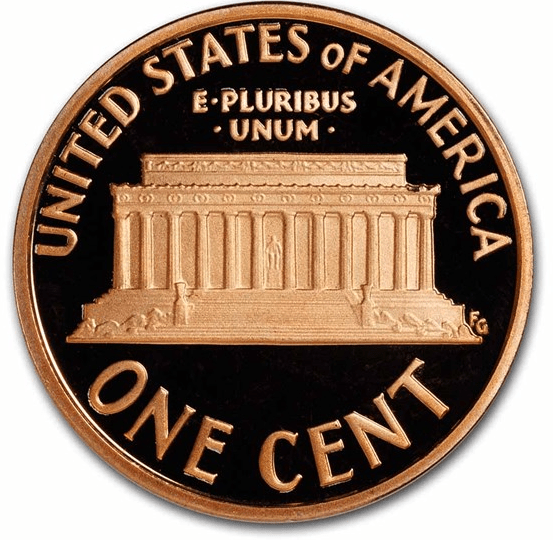
The initials, “FG,” to the right of the Lincoln Memorial building, refer to designer Frank Gasparro.

This variety requires magnification to identify.


As you can see in this expanded photo above, the “flared” initial is the “G.” It has a noticeable serif. The regular lacks that. Now notice the thickness, or higher relief, of the flared “FG.” The revision was meant to make the initials clearer and distinct.

That’s how you tell.

Again, though, because the variety requires close inspection, have handy a regular 1988/88-D cent so you can compare.

These are easy to find because of the huge mintage: 6,092,810,000 for 1988; 5,253,740,443, 1988-D.

Then compare initials, as below.


The variety designation is FS-901 “Reverse of 1989.” Worn examples sell for a few dollars to $25; mint state, about $150. Several at MS68 have sold for hundreds of dollars.


If you intend to purchase or bid on an example from eBay or Facebook, make sure that the photos are clear enough and magnified so that you can identify the variety. Here’s a typical photo; you can try expanding it with your own photo app. But in general, avoid these.


If you like posts like this, subscribe so you can be informed whenever there is a new article or column.

Proxiblog also has thousands of followers on Facebook Coin Groups, YouTube and social media. To get the latest discussion and commentary, be sure to friend us by clicking here.

You can find more information about types, varieties, errors, grading, bidding and buying in Coin News Updated: The Essential Guide to Online Bidding. Please consider buying or gifting the work for a friend, as it underwrites this hobbyist blog. Thank you.

Counterfeit  Bicentennial Dollar


By Jack Riley

Key date coins are a target for counterfeiters with a large profit to be made, but what about common date coins? Well, nothing is safe!

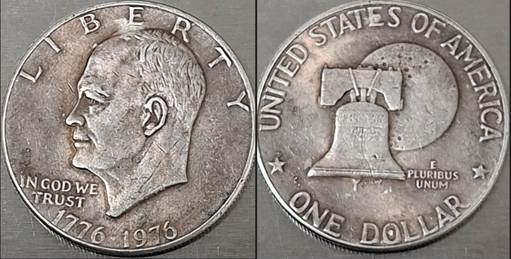
This article doesn’t focus on a connected “family,” rather a specific coin. This Bicentennial Eisenhower Dollar was previously shared in a Facebook group and many were shocked to learn that it is in fact counterfeit!


One may notice at a glance many raised “lumps” across the obverse fields and a large tell of the distended letters primary in “One Dollar”.


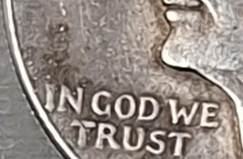
This surely isn’t a “one off” piece. I haven’t found a second example of one surface since this one so additional repeating marks are inconclusive. I suspect the diagonal notch through “trust” will be seen on all examples using this obverse.

Why would China counterfeit a common dollar like this?

Many hobbyists think that a high value of a coin makes it a candidate for counterfeiters. Counterfeiters take advantage of this false sense of security. The coin here probably was part of a complete set that someone purchased, realized the deception, and used or sold.

It costs about a dime to a quarter to make these dollars. Sell one, even for a dollar, and you have a substantial profit.

If you like posts like this, please go to our counterfeit archive with reports from Jack Riley, Jack D. Young, John Lorenzo and Michael Bugeja. Also, please subscribe so you be informed whenever there is a new article or column.

Proxiblog also has thousands of followers on Facebook Coin Groups, YouTube and social media. To get the latest discussion and commentary, be sure to friend us by clicking here.

You can find more information about errors and varieties as well as buying and bidding on coins in Coin News Updated: The Essential Guide to Online Bidding. Please consider purchasing the work for yourself or a friend, as it underwrites this hobbyist website. Thank you.

1998-2000 Wide AM Markers


While new hobbyists typically search for the unicorns–1992/92-D Close AM cents–veteran collectors know that chances are infinitely better looking for the 1998, 1999 and 2000 Wide AM varieties.

If you are interested in the 1992/92-D Close AM cents, click here. This post is about the 1998, 1999, and 2000 Wide AM varieties, all from the Philadelphia Mint.

In 1994, the U.S. Mint developed rules for Lincoln Memorial Cents. Business strikes were supposed to use a “Close AM” reverse die. Proof coins would use the “Wide AM” reverse die.

Between 1998-200, two US Mints produced business strikes for cents, Philadelphia and Denver. At the Philly facility, coin operators mistakenly used a “Wide AM” reverse die on some of the production runs.

There are three markers to discern what you have.


Let’s dissect each of these.


Now let’s compare with the regular correct business strikes:


An easy way to determine wide v. close is to look at the position of the “M” in “America.” If that letter is centered between the “A” and the “E,” it is wide. If the “M” is close to the “A” than the “E,” it is close.

Other markers:


Values for these varieties depend on the coin’s condition and color (Brown, Red-Brown, or Red).

Here are mintage estimates and values for each year:

YEARESTIMATED VARIETY MINTAGERANGE OF VALUES
1998100,000$25 to $150, Lower Mint State
19992,000 $400 to $1,000+, Lower Mint State
2000200,000+$15 to $35, Lower Mint State

Do not purchase raw Wide AM 1998-2000 cents unless you know the markers. Almost every raw example on eBay has the wrong markers (Close AM) for the rare 1999 cent. Examples:


One more point. Lincoln proof cents from 1998 through 2000 are supposed to have a Wide AM.


Finally, there are true “unicorn” coins, theorized but never found, including the 1964 Morgan Dollar and the 1965 Kennedy Half on a 1964 90% Silver Planchet. You can add the 1998-D Wide AM, 1999-D Wide AM and 2000-D Wide AM to that list.

ALL of the several 1998-D, 1999-D and 2000-D Cents on eBay listed as “Wide AM” are just regular “Close AM” cents. Example:


If you like posts like this, subscribe so you can be informed whenever there is a new article or column.

Proxiblog also has thousands of followers on Facebook Coin Groups, YouTube and social media. To get the latest discussion and commentary, be sure to friend us by clicking here.

You can find more information about types, varieties, errors, grading, bidding and buying in Coin News Updated: The Essential Guide to Online Bidding. Please consider buying or gifting the work for a friend, as it underwrites this hobbyist blog. Thank you.

Filled “S” 1921-S Morgan


Grease or debris, coupled with die deterioration, causes a filled mintmark, evidenced on many coins, including Morgan dollars. But the “1921-S VAM 6B, Filled S” dollar is special because the mintmark has a flaw in the die as well as a gouge on the obverse.

Before we delve into this variety, we need to define some terms, beginning with VAMs, initials of numismatists Van Allen and Mallis who cataloged die varieties of U.S. Morgan and Peace silver dollars.

You can learn more about VAMs by reading this article by Jack Riley.

As noted earlier, the specific die marker for this coin is: VAM 6B.

In addition to the filled “S” mintmark, the 1921-S variety has a die gouge on the obverse, making it more valuable than a regular issue.

A die gouge can be mistaken at times for a die crack. So we have to define those, too.

Die gouges occur when a foreign object is dragged across the die face, allowing metal to fill the divot, resulting in a raised area. Sometimes the dragged object creates a line, as in the 1921-S VAM 6B dollar. It may appear like a die crack. The difference is a gouge is created by that foreign object whereas a die crack results from pressure during the striking process.

Here’s an example:


Now that we know those terms, we can discuss the die markers of the 1921-S VAM 6B.

Let’s look at the filled S mintmark first:


The filled mintmark of this Morgan variety differs from a grease strike because the “S” also exhibits a flaw in the die, distorting the S. Compare:


Now let’s look closely at the die gouge:


Not all die gouges are straight lines as here. In this case, the dragged object caused the line.

This particular variety carries a unique number in the PCGS catalogue (412698) from which these photos have been taken.


PCGS CoinFacts also lists values for this variety. Compare the prices with a regular 1921-S:

As you can see, the higher the grade on this variety, the more valuable.

While you may not be interested in this Morgan, going through the die markers here–or any VAM–will help you learn more about the minting process.

If you like posts like this, subscribe so you can be informed whenever there is a new article or column.

Proxiblog also has thousands of followers on Facebook Coin Groups, YouTube and social media. To get the latest discussion and commentary, be sure to friend us by clicking here.

You can find more information about types, varieties, errors, grading, bidding and buying in Coin News Updated: The Essential Guide to Online Bidding. Please consider buying or gifting the work for a friend, as it underwrites this hobbyist blog. Thank you.

Rare 1965 Transitional Errors


When the US Mint makes a transition from one type of planchet to another, as we have seen with the popular 1982-D Small Date brass cent, unused planchets are sure to be stuck somewhere in the coinage bins, which is precisely what happened with 1965 dimes and quarters.

To get your hands on one or both, you need to be rich … or lucky with rolls and pocket change. Nevertheless, you’ll have better odds with these than the 1982-D Small Date transitional error, of which only two have been found.

1965 Dime on 90% Silver Planchet

1965 dimes were supposed to be copper-nickel. The price of silver was responsible for common denominations to transition to clad. A small number of silver blanks got into feeder bins. Between 20-100 of the rarity may have escaped into circulation.


Value is between $3,000 and $13,000 and higher, depending on condition and certification grade by a top-tier holdering company.

To determine if you found the rarity, look at the edge. If you see a copper stripe, you have the clad dime. If you can’t see the stripe, weigh it. A clad dime weighs 2.27 grams; the silver dime, 2.5 grams.

1965 Quarter on 90% Silver Planchet

The same thing happened with quarters as with the dime above. Some leftover 1964 silver planchets got into 1965 clad hoppers. Fewer than 20 are believed to have left the Mint.


An authentic 1965 Washington quarter accidentally struck on a 90% silver planchet is valued between $4,000 and $17,000+, depending on its condition and professional grade and certification. Again, look at the edge. If you see a copper stripe, you have the common clad quarter. If not, weigh it. A clad quarter weighs 5.67 grams whereas a silver one weighs 6.25 grams.

The 1965 Half Dollar “Unicorn”

Hobbyists searching for the “Unicorn”–a coin so rare as to be mythic–continue to look for a 1965 Half Dollar struck on a 1964 90% silver planchet. Hey, if the same thing happened with the dime and quarter, why not the JFK Half?

Good luck with that. None have been found.

If you think you found the unicorn, it should weigh 12.5 grams whereas a 40% regular strike should weigh 11.5 grams.

It goes without saying, beware of replicas and alterations and false claims on eBay and Facebook.

If you like posts like this, subscribe so you can be informed whenever there is a new article or column.

Proxiblog also has thousands of followers on Facebook Coin Groups, YouTube and other social media. To get the latest discussion and commentary, be sure to friend us by clicking here.

You can find more information about types, varieties, errors, grading, bidding and buying in Coin News Updated: The Essential Guide to Online Bidding. Please consider buying or gifting the work for a friend, as it underwrites this hobbyist blog. Thank you.

Woody vs. Roller Marks


A woody–woodgrain marks on a coin–is caused by an improper alloy mix whereas similar marks are caused by dirty rollers at the Mint. Woodies are collectible. Roller marks are not.

A woody has irregular, streaky, wood-like toning, usually red brown often mixed with lighter brass-like colors. The lines are uneven, splotchy and on both sides of the coin. They often appear on older Wheat and Indian Head Cents.


Roller marks are easy to identify. They are straight and parallel. They usually appear on both sides of a coin, especially ones minted between 1978-1984.


Here is a handy chart:

Feature Woody (Improper Alloy)Roller Marks (Damage)
AppearanceIrregular, splotchy, wood grain textureStraight, uniform, parallel lines
ColorVaries (Red/Brown/Brass)Same as the rest of the coin
DepthSurface toning, usually flush with metalShallow, incuse lines (cut into the metal)
TextureUsually smoothScratched, feels textured
ConsistencyRandom streakingUniform, consistent width

Woodies are collectible but values depend on the condition and mintage/rarity of the coin. Most Wheat cents sell for $5-50; Indian cents, $10-75. Uncirculated ones can command high prices–basically, what one is willing to pay. Example:


If you are bidding on or buying a coin, make sure you can tell the difference. Roller mark coins are often mislabeled as woodies. Examples:


If you like posts like this, subscribe so you can be informed whenever there is a new article or column.

Proxiblog also has thousands of followers on Facebook Coin Groups, YouTube and other social media. To get the latest discussion and commentary, be sure to friend us by clicking here.

You can find more information about types, varieties, errors, grading, bidding and buying in Coin News Updated: The Essential Guide to Online Bidding. Please consider buying or gifting the work for a friend, as it underwrites this hobbyist blog. Thank you.


1982-D Small Date Cent Scam


There are all manner of scams by people looking to cash in on collectors who do not know markers for ultra rarities. And when it comes to the 1982-D Small Date Bronze transitional error, there is a desperation by newbies educated by clickbait social media that the third example is out there in pocket change.

Sellers take advantage of such ignorance.

If you are interested in an article about the various types of 1982 cents, including all markers for the transitional error, click here.

But let’s cut to the chase with basic knowledge.

Only two 1982-D Small Date 3.1 grams have been found.


Here’s how they look close up.


Here are markers for the small date.


DO NOT bid or buy any coin that is placed on a scale reading 3.1. You’ll be buying a zinc small date, of little or no value. Or a coin on tinkered scale.


You will see several examples on eBay of sellers showing a regular 1982-D large date bronze cent in a PCGS holder. Sellers think if they claim a regular strike is the small date, you’ll believe it, only because it is holdered by PCGS and you don’t know the markers.

Here’s an example:


Here’s how to decipher.

There are two numbers below the condition. In this case below, 146021.58, means two things: 146021 goes to the CoinFacts designation and the 58, the condition, AU58. In the image below, you can see that the 146021 goes to the regular large date strike.


Here’s another example with the seller claiming this large date is a small date. Again, the 146021 gives it away.


The seller of the above coin did not take kindly to my message that this is a scam.


He doesn’t like his time being wasted. He just wants to waste your money.

Ultra rarities are not found in pocket change; when one is, that becomes a national news story. If you think you found one, do not post it on social media and claim authenticity. If you are so sure, send it to PCGS, NGC, ANACS or CAC. And if you want to buy an ultra rarity, make sure you know how to read the holder company label.

If you like posts like this, subscribe so you can be informed whenever there is a new article or column.

Proxiblog also has thousands of followers on Facebook Coin Groups, YouTube and other social media. To get the latest discussion and commentary, be sure to friend us by clicking here.

You can find more information about types, varieties, errors, grading, bidding and buying in Coin News Updated: The Essential Guide to Online Bidding. Please consider buying or gifting the work for a friend, as it underwrites this hobbyist blog. Thank you.

Special W-Mintmark Coins


Special issue coins typically are made for collectors and have their own designations, devices and mintmarks. Ones featured here are readily available. Some hobbyists collect all of them.

1996-W Roosevelt Dime


One of the most popular special issues is the 1996-W Roosevelt dime, marking the half-century of the design. This was the first base metal coin struck at the West Point mint.

The 1996-W Roosevelt dime is the lowest-mintage business-strike coin in the series (1,457,949). The next lowest was the 1955 dime (12,450,000).

Unlike other business strikes, the coin was not released into circulation. It was a bonus coin included in that year’s U.S. Mint Uncirculated Coin Sets.

It is the only business strike dime carry the W mint mark for West Point.

PCGS recounts the trouble that the Mint had in adding the W mintmark. For the occasion, engraver John Mercanti was asked to hand-punch the mintmark into the die directly. But the steel die was not properly prepared (heated) so the force of the punch made it mushroom. It could not be used. Another engraver had to create an entire new dime model, carving the mintmark directly into the master plaster. This is why the mintmark looks different than on ones used for other W mintmark issues.


If you want to buy or bid on this dime, make sure that it has full bands. PCGS estimates it has holdered some 6,700 dimes that are not full bands compared with 4,500 that have them.

An MS68FB retails for about $60; in MS69FB, about $260.

2019-W Lincoln Cent


The 2019-W cent was produced to celebrate the 110th anniversary of the Lincoln cent. PCGS lists three finishes for the dime, released as a bonus in these sets:

  • Proof finish: Included with the standard 2019 Proof Set.
  • Reverse Proof finish: Included with the 2019 Silver Proof Set.
  • Uncirculated finish: Included with the 2019 Uncirculated Mint Set.

As with all coins manufactured for collectors, the overwhelming number of coins will be uncirculated still and not worth much unless in extremely high grades. Examples of the business strike in MS69 are worth about $30 whereas an MS70 retails for about $350.

2020-W Jefferson Nickel


This was the first U.S. nickel to bear a “W” mintmark. The regular nickel came inside the 2020 Mint Proof Set. A 2020-W Jefferson Nickel in a Reverse Proof format came inside the 2020 Silver Proof Set.

The Mint planned to make a 2020-W nickel with an uncirculated finish to be included in the 2020 Uncirculated Coin Set. The COVID-19 illness limited production, however, and the issue was canceled.

The 2020-W Proof Nickel had a mintage of 464,039; the 2020-W Reverse Proof Nickel, 313,185. These typically retail online for $35 in PR69 and $80 in PR70.

2015-W March of Dimes

The 2015-W March of Dimes Proof Silver Dime and the 2015-P March of Dimes Reverse Proof Silver Dime also were special release issues. They were available only when collectors bought the 2015 March of Dimes Special Silver Set.

2015-W Proof Silver Dime was the first ever silver proof Roosevelt dime to carry the “W” mint mark and also the first non-dollar denomination coin to ever be produced with a reverse proof finish.

The set was limited to 75,000 units. As such, both silver dimes are some of the scarcest in the Roosevelt series.

Depending on the price of silver, the 3-Coin Set typically sells for about $200.

If you like posts like this, please subscribe so you can be informed whenever there is a new article or column.

Proxiblog also has thousands of followers on Facebook Coin Groups, YouTube and other venues. To get the latest discussion and commentary, be sure to friend us by clicking here.

You can find more information about errors and varieties as well as buying and bidding on coins in Coin News Updated: The Essential Guide to Online Bidding. Please consider purchasing the work for yourself or a friend, as it underwrites this hobbyist website. Thank you.

Bad Coin Rolls and Documented Bay Seller


Jack D. Young for Proxiblog

So I previously wrote a Coin Week article on attributing a counterfeit 1893-O Morgan Dollar and noted the high bad feedback eBay seller:

Counterfeit 1893-O Morgan Dollar: A Diagnostic Case Study

That same seller also sold 2 mixed rolls of small cents faced with an apparent 1857 Flying Eagle cent to a Face Book friend; it turned out the FE is a known counterfeit, and the new owner posted them and the link to my Coin Week article about them!


The OP noted the counterfeit “tells” for this style counterfeit on his example (circled in red) referencing the Coin Week article attributions.

Bottom image of the OP’s FB post on the subject

Image from the referenced Coin Week article showing other examples with the matching marks:


Counterfeit 1857 Flying Eagle Cents You Should Avoid | CoinWeek

While reviewing the article for images (I often go back to my own published article for reference while researcher subject “coins”!) I noticed the OP had posted a comment which I responded to.

So, purchased in 2023 and now aware as a result of the article! Ironically the article was published in 2023 as well…

Comments from the subject Coin Week article

2023 and the seller is still “at large” 😎! I immediately found another listing from him for a similar roll, documented his images and then worked to “win” the auction.

Recent identical eBay roll listing- I won!

So all I had to do was wait for this to be delivered. I was already planning how to document what it is once in-hand, taking images as I worked to uncover the detail I thought would match my friends, but that turned to be too easy a thought…

I was initially pretty confident I would see the “Bad T” in UNITED, but that documented attribution point wasn’t there!

Image from my microscope of my FE in the roll

OK, so what, did the seller actually slip a genuine example in the roll? My plan was failing so I just carefully unwrapped the whole roll and then imaged the contents:


And the FE? 1st thing of note is he is using repeated stock images; mine was positioned differently relative to the roll:

Listing image of the roll on the left, received on the right- date not apparent

And once removed from the roll I immediately recognized it after digging through my article:

Coin received is actually the 2nd counterfeit documented in the article, as noted:

Additional article images

So, now again confident he slipped a counterfeit into the roll I decided to send him a message. My previous attempts on the 1893-O Morgan failed because he doesn’t accept messages but apparently does when a current purchased item is linked.


Yeah, right. … But he did immediately refund my purchase price without involving eBay- a surprise for sure given all of his past responses to negative feedback given.


And he then listed another one, but I found I am now banned by him for any future listings.

Keeping it real, Jack.

If you like posts like this, please subscribe so you can be informed whenever there is a new article or column.

Proxiblog also has thousands of followers on Facebook Coin Groups, YouTube and social media. To get the latest discussion and commentaries, click here.

You can find more information about errors and varieties as well as buying and bidding on coins in Coin News Updated: The Essential Guide to Online Bidding. Please consider purchasing the work for yourself or a friend, as it underwrites this hobbyist website. Thank you.