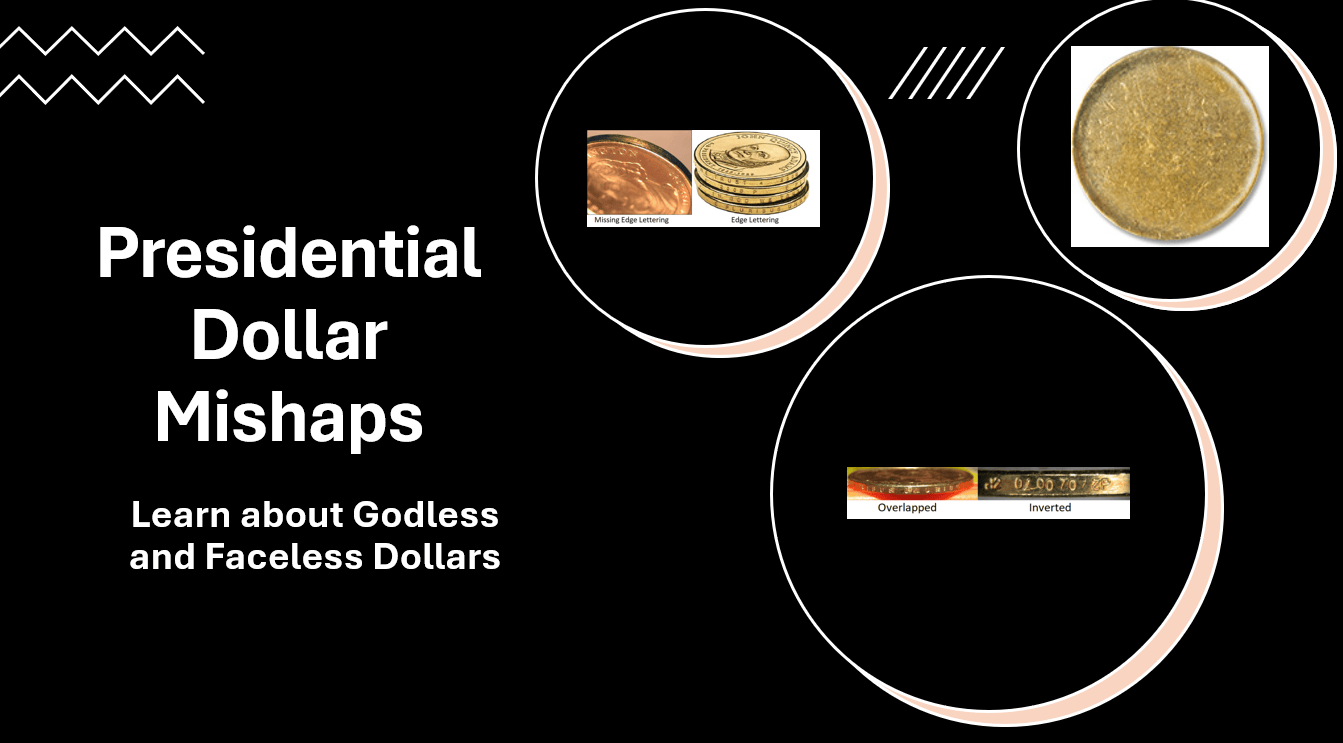
With the 2026 Semiquincentennial President Donald J. Trump $1 Coin, people are having a renewed interest in presidential dollars. Trump was not part of the series. Launched in 2007, the series requires a president to have been deceased for at least two years to appear on a coin. Trump got around this requirement as his is a commemorative coin.
A hallmark of the presidential series is edge lettering.
Depending on the year the coin was minted, these elements appear on the edge: year of minting, mintmark and “E Pluribus Unum.”
In 2007 and 2008, presidential dollars also included “In God We Trust.”
That brings us to one of the major varieties.
Godless Dollar
“In God We Trust” was moved to the obverse of these dollars in 2009 after a backlash occurred when edge letting was missing on the 2007 George Washington dollar. People started calling this variety “Godless dollars.”
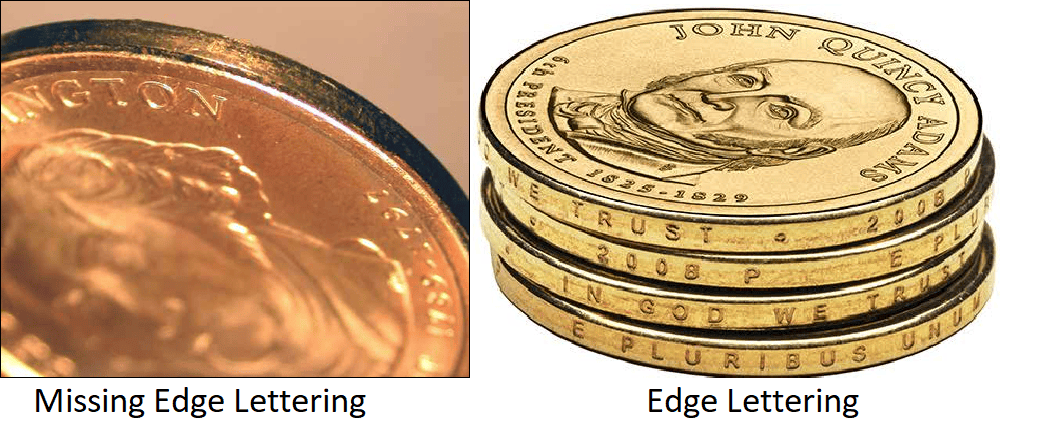
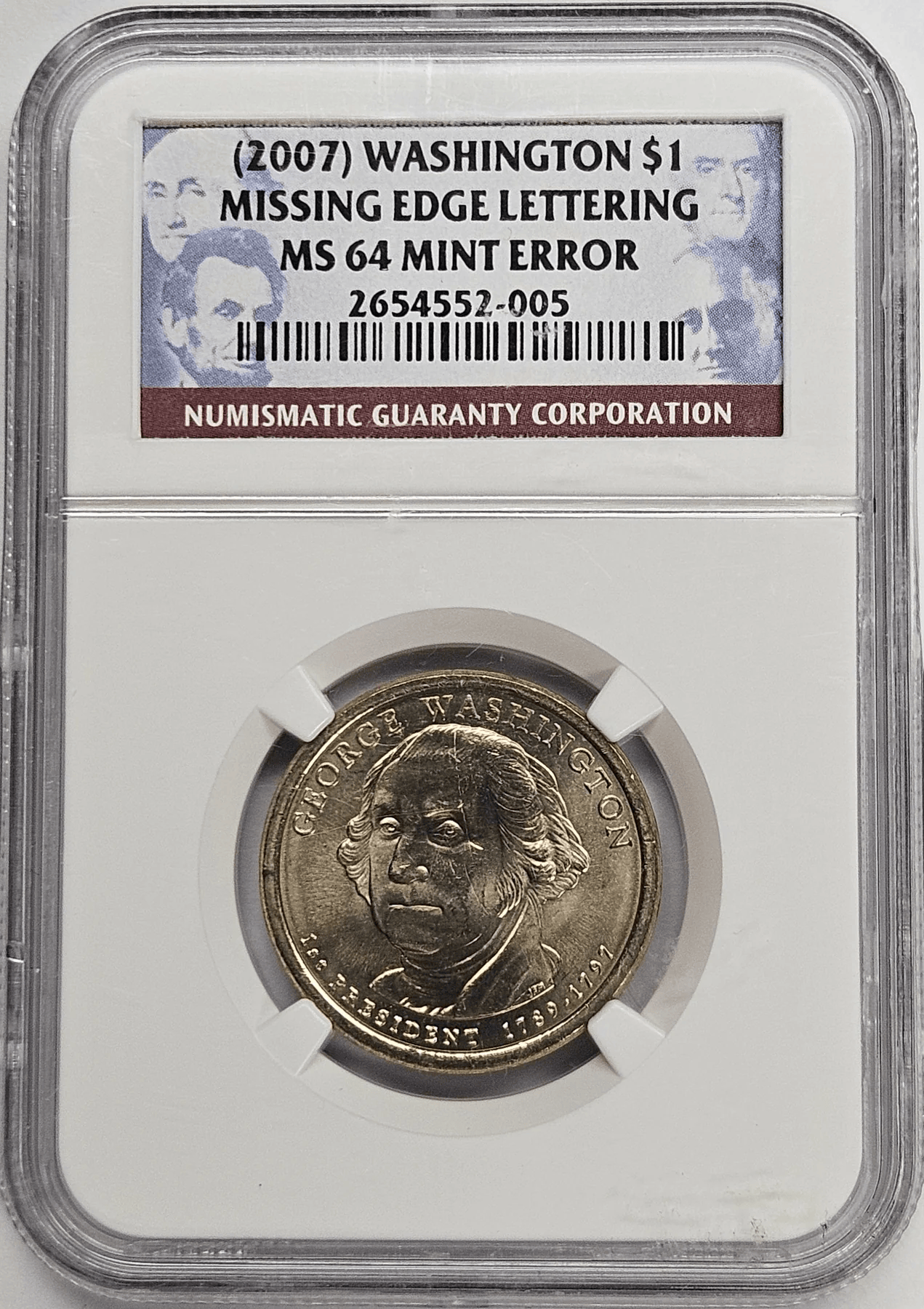
The error happened when the machine that strikes the edge lettering somehow malfunctioned, leaving the edge blank. That started the furor over US coins lacking any mention of a supreme being.
Senator Sam Brownback (R-Kan.) responded to the backlash by introducing an amendment to a federal appropriations bill. The amendment was part of the Consolidated Appropriations Act of 2008, ordering the U.S. Mint to move “In God We Trust” to either the obverse or reverse of all future Presidential dollars. The law took effect in 2009.
An average uncirculated 2007–2008 Godless Dollar is typically worth $40 to $100, while heavily circulated examples sell for around $15 to $30.
Faceless Dollar
Also in 2007-2008 some coins on blank planchets escaped the Mint. These had edge lettering but no obverse of reverse designs.

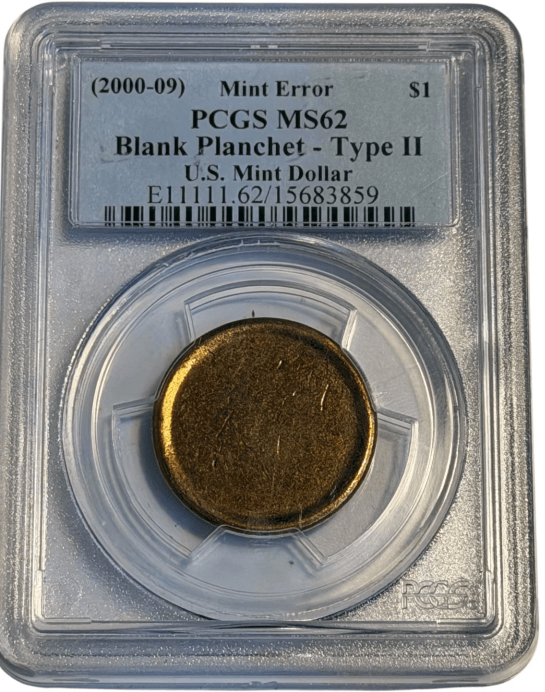
This occurred because these dollars had a two-step minting process. Blanks were fed into the coining press to stamp the obverse and reverse designs. The second step involved edge lettering.
The “lettered blank” error, popularly known as the “Faceless Dollar,” happened when blank planchets accidentally bypassed the main coining press, going directly to the edge machine.
The value of Faceless dollars typically ranges between $40 and $500, depending on authentication and condition.
Overlapped/Inverted Dollars
One final variety happened in 2007 involving the John Adams dollar. These coins were fed into the edge coining machine twice. This resulted in two varieties. Overlapped errors feature doubled edge lettering running in the same direction and inverted errors running in opposite directions and upside down.

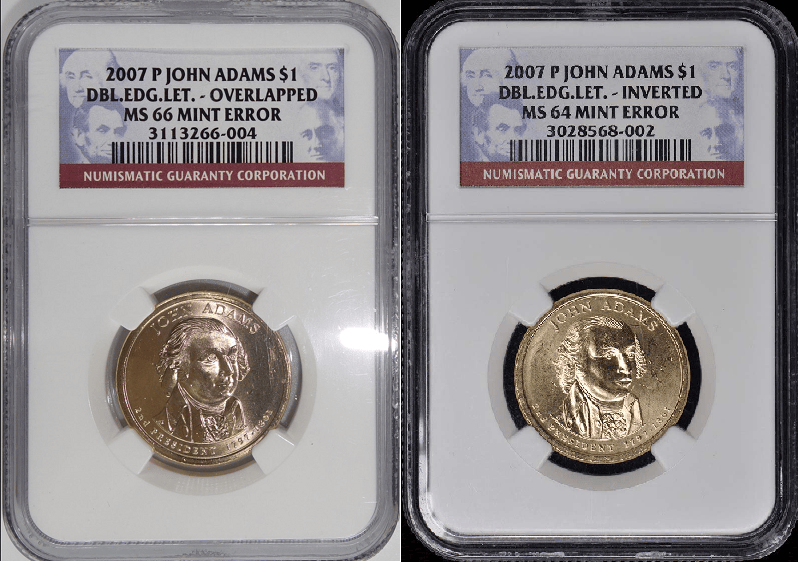
These varieties typically retail between $50 to $300, depending on condition.
If you like posts like this, please subscribe so you can be informed whenever there is a new article or column.
Proxiblog also has thousands of followers on Facebook Coin Groups, YouTube and social media. To get the latest discussion and commentary, be sure to friend us by clicking here.
You can find more information about errors and varieties as well as buying and bidding on coins in Coin News Updated: The Essential Guide to Online Bidding. Please consider purchasing the work for yourself or a friend, as it underwrites this hobbyist website. Thank you.
