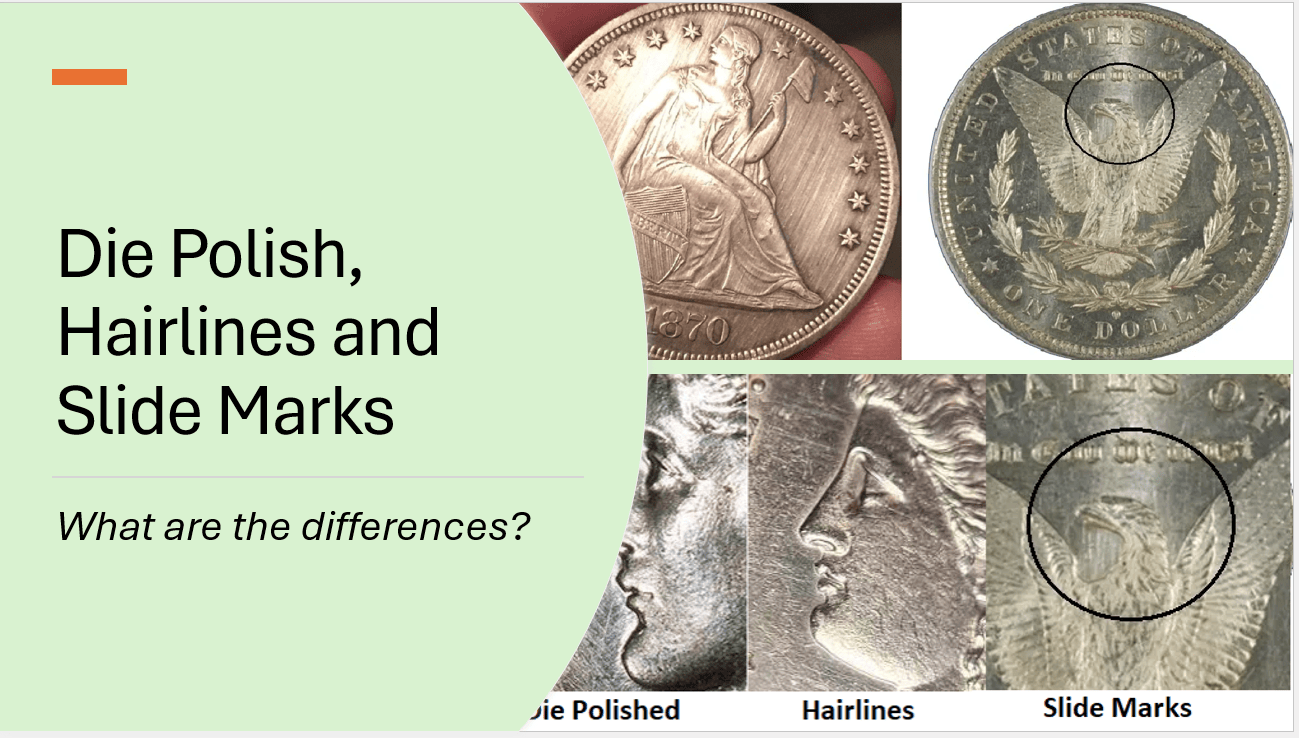
Die polish lines look like cleaning hairlines and album slide marks, but there are distinct differences, discussed here. Die polish lines meant to extend the life of a working die have no effect on straight grading. Album slide marks, if light, may lower a straight grade because of eye appeal or may disqualify it if significant. Hairlines earn a Details grade from major holdering companies.
Let’s look at the difference and similarity here:
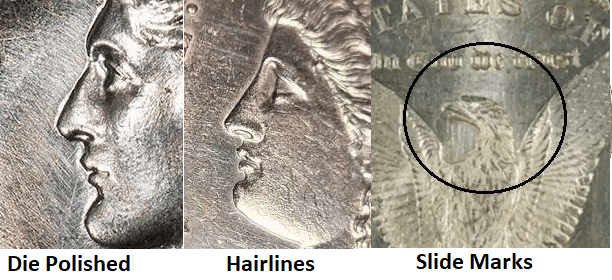
To understand the difference, you need to know how coins are made. Lines from die polish, done to preserve the life of the working die, are raised. In other words, the metal from the striking process fills in the lines and raises them. Lines from cleaning and album slide marks are not raised and dig into the metal surface.
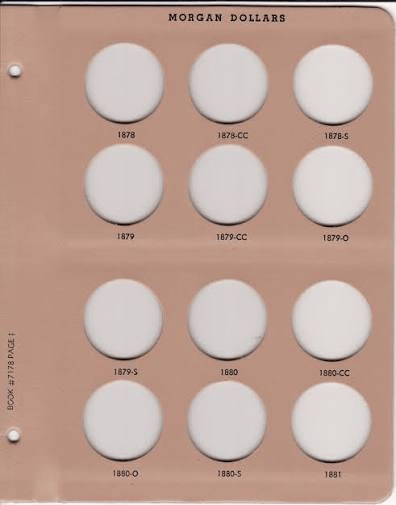
You should never clean a coin with any kind of abrasive. When you do, you get hairlines. Slide marks occur when plastic covers are inserted and removed from Dansco and similar albums:
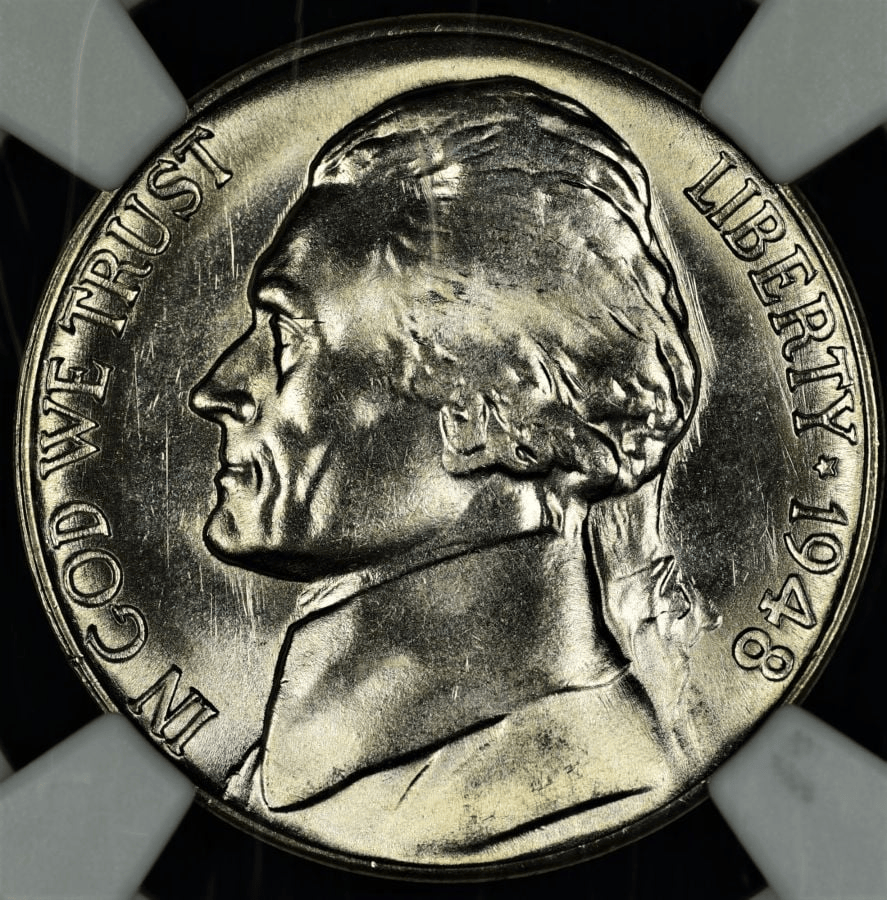
Another difference: Die polish lines do not go over nearby devices. See how the lines do not run into Jefferson’s profile on this nickel:
This 1870 dollar has been harshly cleaned, with hairlines going over devices. The same effect occurs with slide marks; however, the lines typically are straight rather than irregular. See the difference:
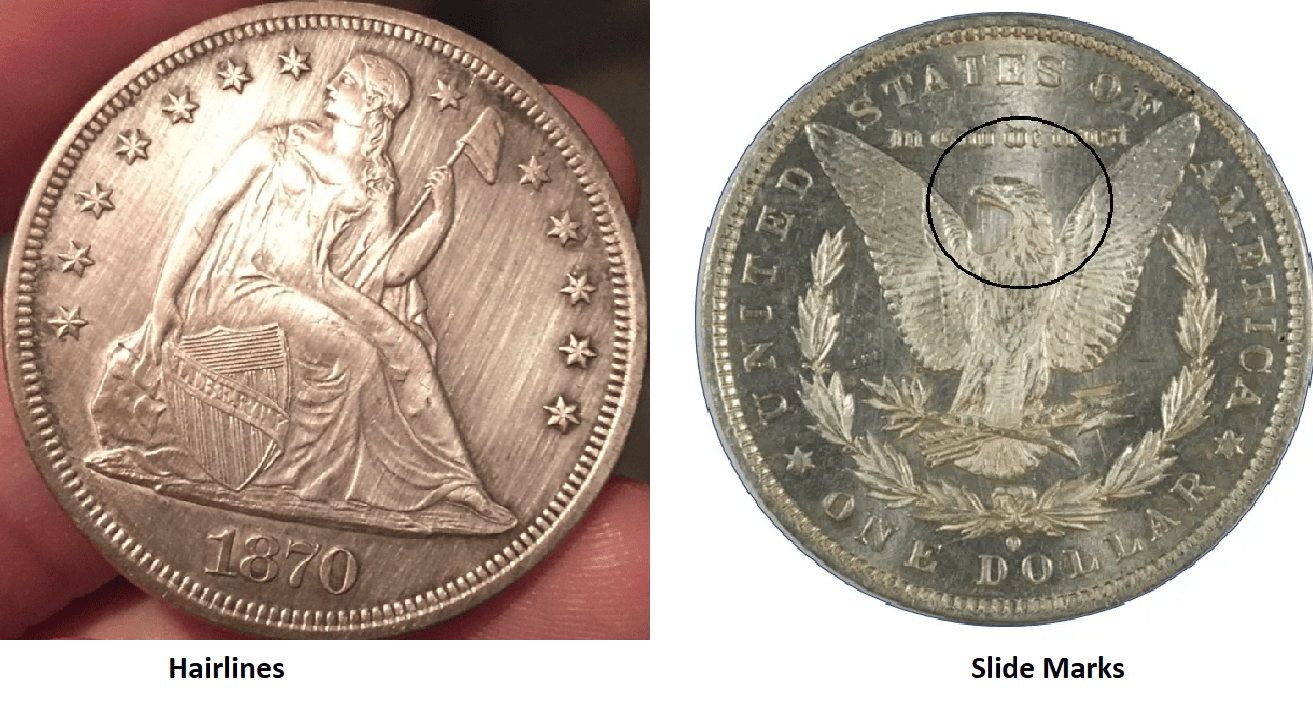
As you can see, hairlines not only go over devices but are curved and irregular. Slide marks go over devices but are usually more uniform as the plastic cover slides out in a uniform manner.
PCGS considers slide marks a common form of unintentional, secondary handling rather than deliberate alteration or harsh cleaning; as such, they do not trigger an automatic “Details” grade. If the lines are shallow, faint and not in key areas, the coin will straight grade with a lower numerical grade. However, if the plastic panels dragged debris across the coin, you probably will get a scratch/Details grade.
If you like posts like this, subscribe so you can be informed whenever there is a new article or column.
Proxiblog also has thousands of followers on Facebook Coin Groups and across social media. To get the latest discussion and commentary, be sure to friend us by clicking here.
You can find more information about types, varieties, errors, grading, bidding and buying in Coin News Updated: The Essential Guide to Online Bidding. Please consider buying or gifting the work for a friend, as it underwrites this hobbyist blog. Thank you.
