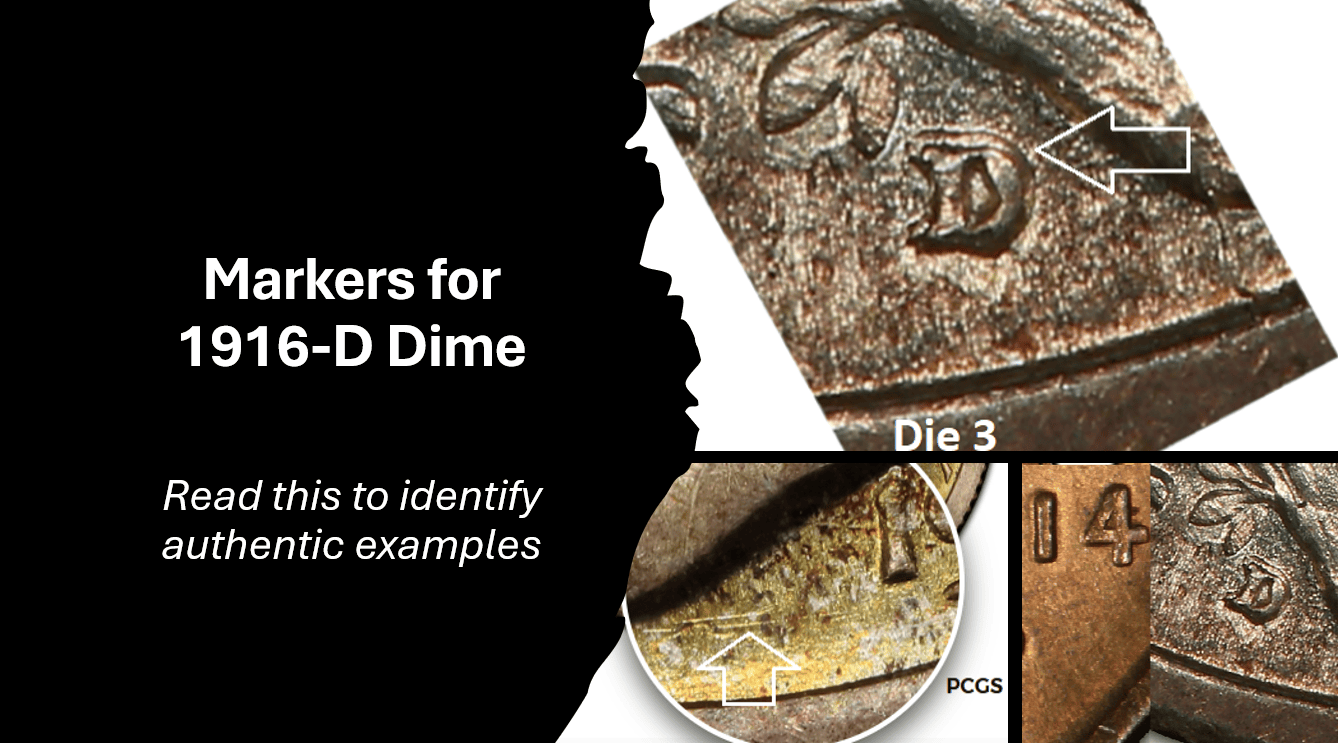
Markers for 1916-D Dime


The 1916-D Mercury Dime is the key date of the Mercury series with a mintage of 264,000 coins. In 1916, the Philadelphia Mint made 22,180,080 coins and the San Francisco Mint, 10,450,000. Those two other mintages are important because scammers began added a mintmark to Philadelphia coins that year. Many also altered 1916-S dimes to make that mintmark look like a D.

Fortunately, we know much about the Denver mintmark. For starters, the Mint used the same punch tool for the 1916-D as it did for the coveted 1914-D Cent.
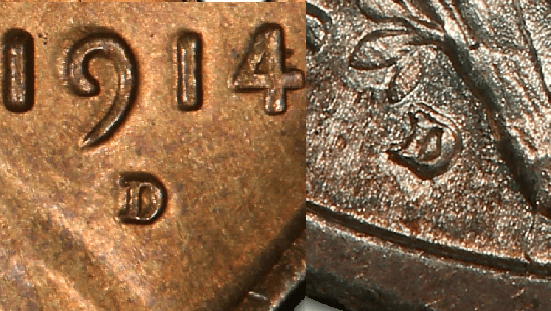

Look closely: The outer shape of the D is squared off rather than rounded. And the cavity inside the D has a vague triangular shape rather than oval.

Four reverse dies were used on the 1916-D Dime. If your coin deviates from these positions, it is fake.

Jack D. Young has a great Proxiblog article on fake 1916-Ds offered on eBay. He made this graphic below, which we use here. Take a photo of your 1916-D coin or a screenshot if you are considering purchasing one and then compare.
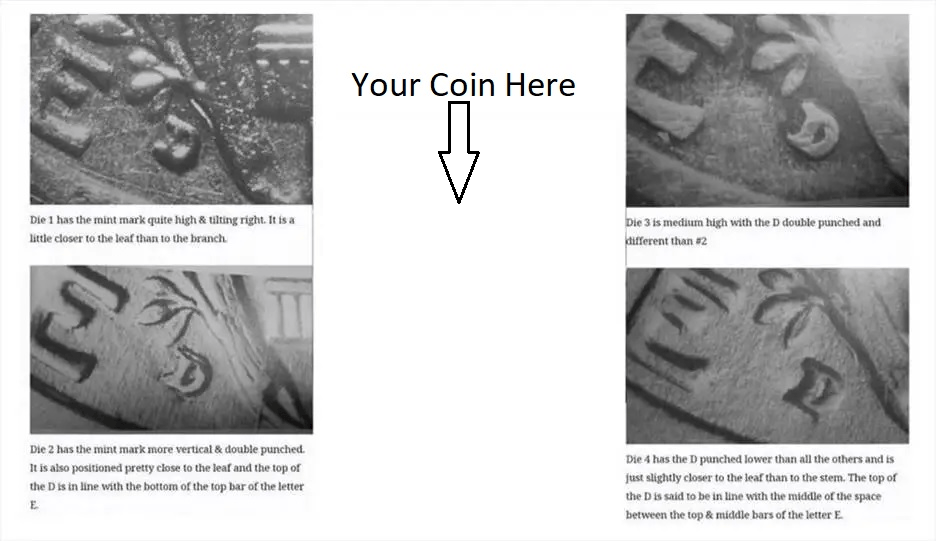
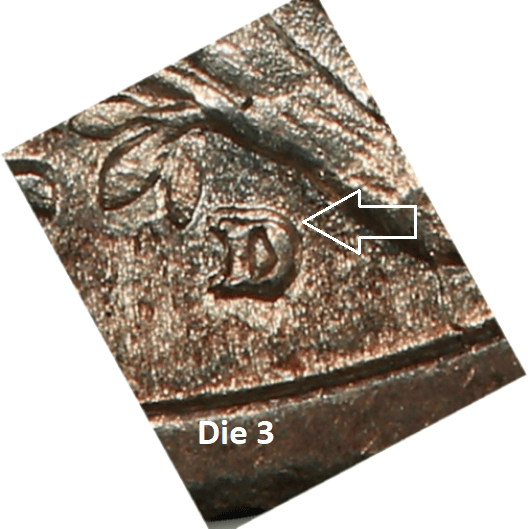
Two of the four genuine reverse dies feature a repunched mint mark (Dies 2 and 3 above).

Here is the example used earlier but now identified.

Genuine 1916-D Dimes often have tiny die scratches or die cracks near the date on the obverse.
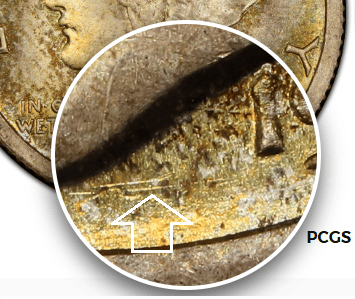

It is important to know markers of rarities in coin collecting. Otherwise you may end up with a counterfeit or replica if not holdered by a major company like PCGS or NGC. Be sure to check out our rarity tab for markers of our most desirable coins.


If you like posts like this, subscribe so you can be informed whenever there is a new article or column.

Proxiblog also has thousands of followers on Facebook Coin Groups, YouTube and social media. To get the latest discussion and commentary, be sure to friend us by clicking here.

You can find more information about types, varieties, errors, grading, bidding and buying in Coin News Updated: The Essential Guide to Online Bidding. Please consider buying or gifting the work for a friend, as it underwrites this hobbyist blog. Thank you.

Deceptive 1916-D Mercury Dimes


By Jack D. Young

Proxiblog has encountered several fake 1916-D Mercury Dimes on eBay and elsewhere and asked our counterfeit expert, Jack D. Young, to share his lengthy file of bad examples.

Jack begins by stating NGC lists the 1916-D as the No. 2 most counterfeited coin in their top 50 U.S. coins, just behind No. 1, the 1909-S VDB!

From NGC’s web site- Counterfeit Detection

One of my first articles for Proxiblog was on counterfeiters using Great Collection’s auction labels to add credibility to their bad coins. A counterfeit 1916-D Mercury Dime in a fake PCGS holder is shown with a GC label from a genuine 1926-D dime auction. The same “coin” was also the subject of a Coin Week article I had previously written so a good choice to show in this article. The original eBay listing as follows:


A rather poor choice for the counterfeiters, the PCGS cert # used shows a link to the genuine example sold in a past Heritage auction:

PCGS on-line certification site

Comparison images of this listed example and the genuine one show this as a bad miss (or mess)! And you can see the stuck-on GC label on the counterfeit (note: genuine on the right):


So, we can see pretty quickly the bad slab coin is suspect, but what about the “coin” itself?

I cut the reverse image from the listing and reoriented it for a better comparison view:

Reverse image of the subject slabbed example

As I always say when reviewing a subject coin, ATTRIBUTION is the key! And with help from a few friends I pulled this template together of the 4 known reverses/mint-mark positions and shapes for use in evaluation of the 1916-D. I have added this example in the middle of the template for a good comparison of good versus bad.

Template of four good mintmark positions and bad one in the middle.

And at a glance this one is confirmed not good; eBay actually removed this listing at the time as bad as well.

OK, so a current counterfeit coin in a current counterfeit TPG holder and a stuck-on GC label, pretty much all the bells and whistles on this one, so what next?

How about an actual replica! And a note, I know (and am occasionally guilty of) the word “counterfeit” is used on various nefarious bad coins so excuse me if I refer to this next one as counterfeit as well. Language in US counterfeit law speaks to “intent” to defraud and this one appears to have been altered (removed “COPY”) in an attempt to meet that criteria!


Maybe a little pricy for a raw example, certainly too much for this one!


I notified both the Bay and the seller; can’t speak to what he was thinking–“electron microscope,” maybe?

eBay listing images

OK, so on to another “type”! This one is a genuine coin, but NOT a genuine 1916-D Mercury Dime.

A friend purchased this one knowing what it is and posted in one of the FB Groups I am a member.


Not a very convincing altered date!

And the last “type” for discussion, the dreaded “added mintmark.”

Bay seller knew what he had and in hindsight I wish I had purchased it myself!

Bay listing
Seller’s description

And his images:

Bay listing images

And how does the mintmark look in my template? Kind of like a blob!

Template comparison

And the TPG didn’t like it:

TPG evaluation

So ends the latest journey of more “Fun with Fakes” (FwF) and Proxiblog. It is getting really hard to keep up with all the ways scammers and their ilk continue to challenge the hobby.

If you like posts like this, please go to our counterfeit archive with reports from Jack Riley, Jack D. Young, John Lorenzo and Michael Bugeja. Also, please subscribe so you can be informed whenever there is a new article or column.

Proxiblog also has thousands of followers on Facebook Coin Group, YouTube and social media. To get the latest discussion and commentary, be sure to friend us by clicking here.

You can find more information about errors and varieties as well as buying and bidding on coins in Coin News Updated: The Essential Guide to Online Bidding. Please consider purchasing the work for yourself or a friend, as it underwrites this hobbyist website. Thank you.