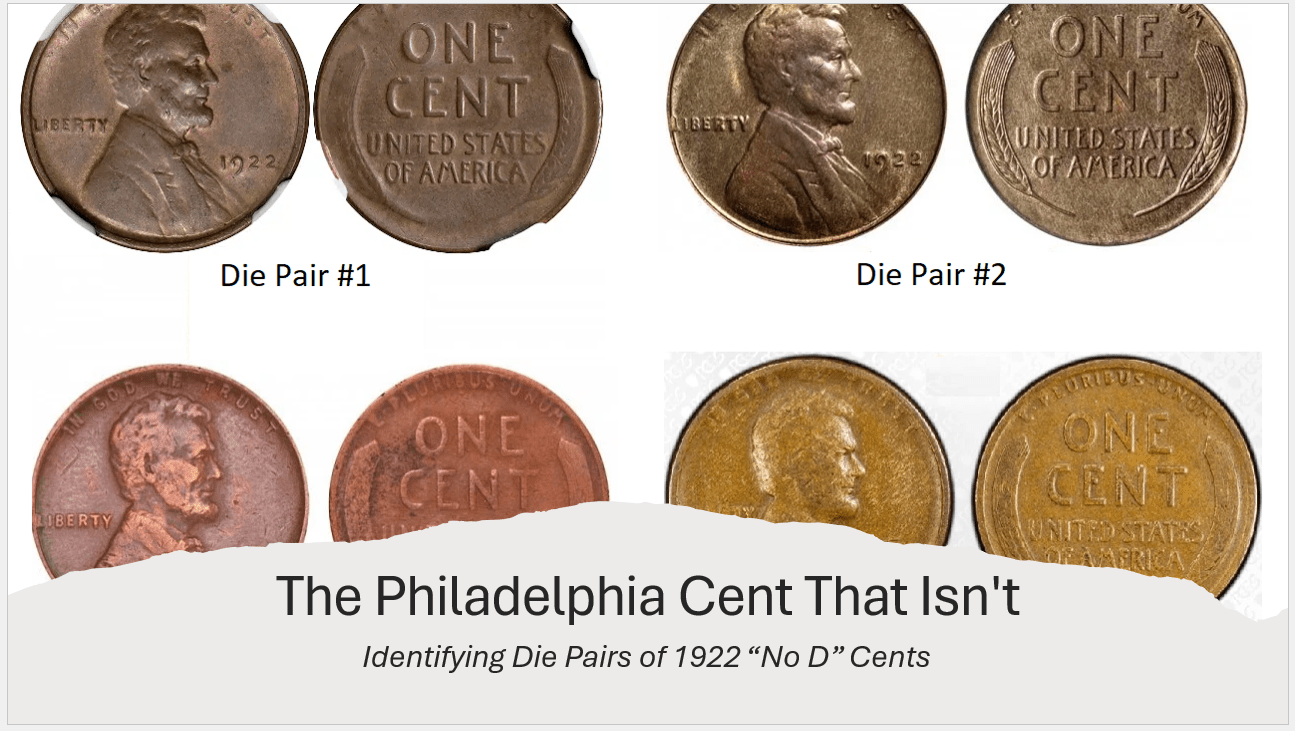
The Philadelphia Cent That Isn’t


Every 1922 cent should carry the “D” mintmark from Denver, which was the only facility to produce cents in 1922. But accidents happen, and a mint employee over polished a working die, erasing the “D.”

The Denver Mint struck a total of 7,160,000 Lincoln cents that year. Due to a shortage of coin dies, Denver workers polished and reused damaged, clogged dies. That is how the mistake happened.

Coin collectors know that the Philadelphia Mint typically does not use a mintmark for coinage. So the missing mintmark has the appearance of being struck at Philly.

Only about 15,000 examples exist of the missing mintmark cent, a key date for collectors and a rarity, worth hundreds and even thousands of dollars, depending on the die pairs.

That’s why identifying the rarity is important. We’ll explore that here.

The 1922 Cent is categorized as follows:

  1. Standard 1922-D (Normal mint mark)
  2. 1922 “Weak D” (Faint, blurry, or partially filled mint mark)
  3. 1922 “No D” / Plain (Mint mark completely missing)

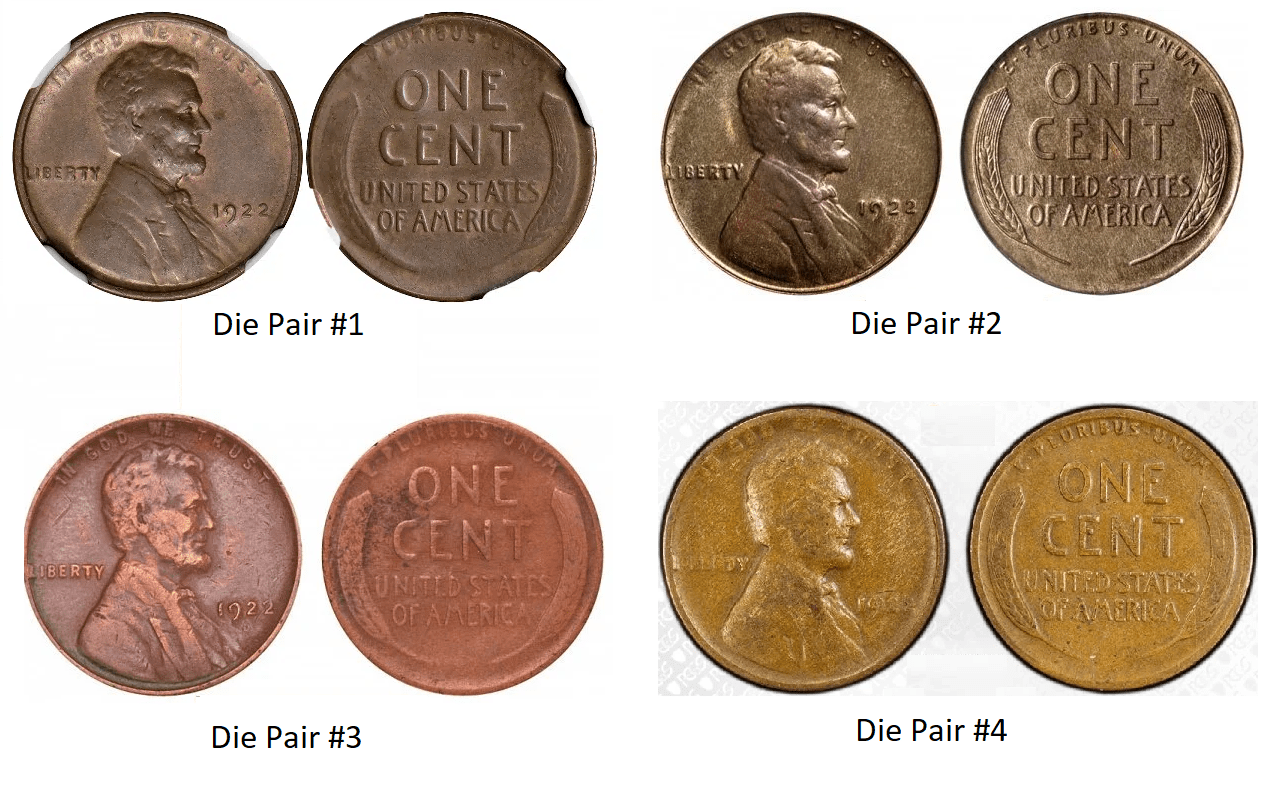
In addition, value is assessed by die pairs:

Die Pair #1 (Weak D / No D – Weak Reverse). Mushy or missing lines on wheat stalks.
Die Pair #2 (“No D” Strong Reverse). Clear lines on wheat stalks.
Die Pair #3 (Weak D / No D – Weak Reverse). The final “2” in the date is notably weaker than the first “2”.
Die Pair #4 (Weak D / No D – Weak Reverse): Very similar to pair 3 but typically even mushier.

Scammers find it easy to erase the “D” on a well-defined 1922-D normal mintmark coin. They do so by tooling or filling the area where the mintmark should be. Here’s a suspicioius example:
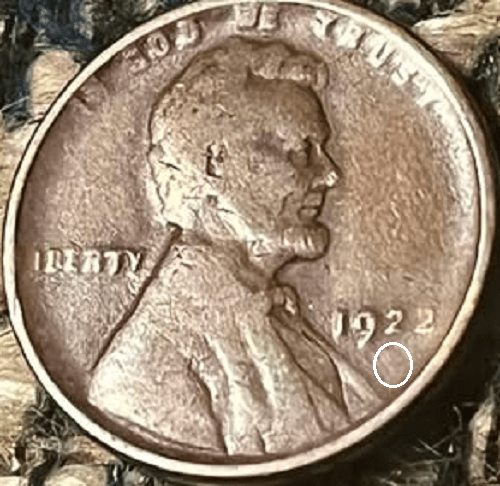

This is one occasion to use a coin microscope. Any deviation on the surface is suspect.

Also keep in mind that China mass produces replicas that dishonest sellers offer as authentic. Example:
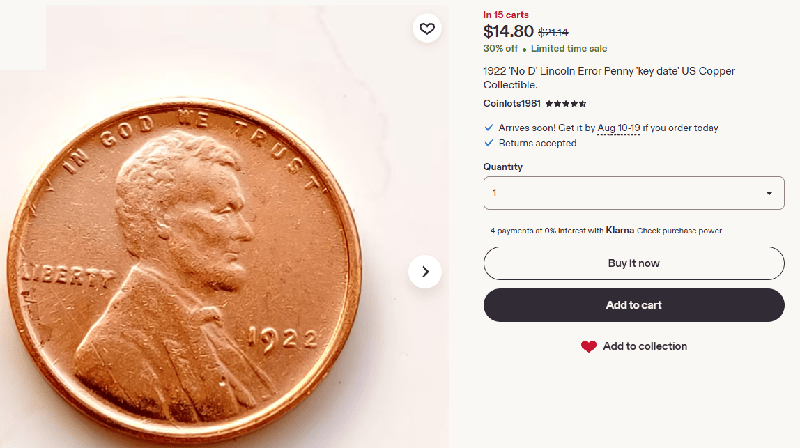

As always, if you cannot distinguish die pairs, or are unsure, do not bid on or buy any unholdered coin.

As you might anticipate, die pair #2 values are expensive.


If you like posts like this, subscribe so you can be informed whenever there is a new article or column.

Proxiblog also has thousands of followers on Facebook Coin Groups, YouTube and social media. To get the latest discussion and commentary, be sure to friend us by clicking here.

You can find more information about types, varieties, errors, grading, bidding and buying in Coin News Updated: The Essential Guide to Online Bidding. Please consider buying or gifting the work for a friend, as it underwrites this hobbyist blog. Thank you.

Wheat Cent Varieties You Can Find in Rolls!


Here’s a challenge for Wheat Cent roll hunters. How many of these can you find (or have found):

  • 1909 S Over Horizontal S (S/S)
  • 1922 No D Strong Reverse
  • 1942-S/S RPM FS-512
  • 1944-D/S
  • 1954-D/D/D RPM FS-501

1909 S Over Horizontal S (S/S)


The repunched mintmark of the 1909 S Over Horizontal S (S/S) Wheat Cent (Penny) is a rare and interesting error. This is what happened at the mint: The “S” mintmark was pressed atop a faint horizontal “S.” Look at the right side of the mintmark for indications of the “S” over “SS.” Also keep in mind that worn cents may hide the repunched mark because it is subtle, and you may need a loupe or even coin microscope to see it.

Values are about $500 for low mint state, brown, and much higher for red brown and red cents. You should use magnification on all 1909-S cents to search for this subtle error.


1922 No D Strong Reverse


All 1922 cents were minted at the Denver facility. Demand for cents was high so the mint was overworked trying to produce as many as possible. An employee took a worn obverse die and tried to increase its lifespan by filing it, filling the mintmark so that it seemingly disappeared.

Worn reverse dies created the weak variety. But the combination of the filed obverse and newer reverse die resulted in the strong reverse.

The key diagnostic, of course, is the clarity of the lines in the wheat devices on the reverse.


1942-S/S RPM FS-512


This repunched mintmark is relatively easy to spot because so many of the 85,590,000 1942-S cents were produced. So you should find one in higher mint states than other repunched coins. Of the three places to look for the error, the one on the top serif of the “S” is the key.

Values are in the hundreds of the dollars for low mint state. The auction record is $1,763 for an MS67 example.


1944-D/S


PCGS CoinFacts states that the underlying S is higher than the D, with the top of the S visible above the D. Thousands were minted, so you can find some even in mint state condition. Values exceed $100 for XF45 brown examples, rising to several hundreds for mint state ones.


1954-D/D/D RPM FS-501


You will need a loupe or a coin microscope to see the faint traces of three repunched marks. The arrows above tell you where to look. Almost uncirculated examples sell for under $100. Low mint state in the hundreds.


As you look through cent rolls for these varieties, also keep watch for doubled dies of Wheat Cents, which you can read about here.

Also check the Proxiblog “error and variety” list to assemble as many errors and varieties as possible in this exciting series.

If you like posts like this, please subscribe so you can be informed whenever there is a new article or column.

Proxiblog also has thousands of followers on Facebook Coin Groups, YouTube and other social media. To get the latest discussion and commentaries, click here.

You can find more information about errors and varieties as well as buying and bidding on coins in Coin News Updated: The Essential Guide to Online Bidding. Please consider purchasing the work for yourself or a friend, as it underwrites this hobbyist website. Thank you.