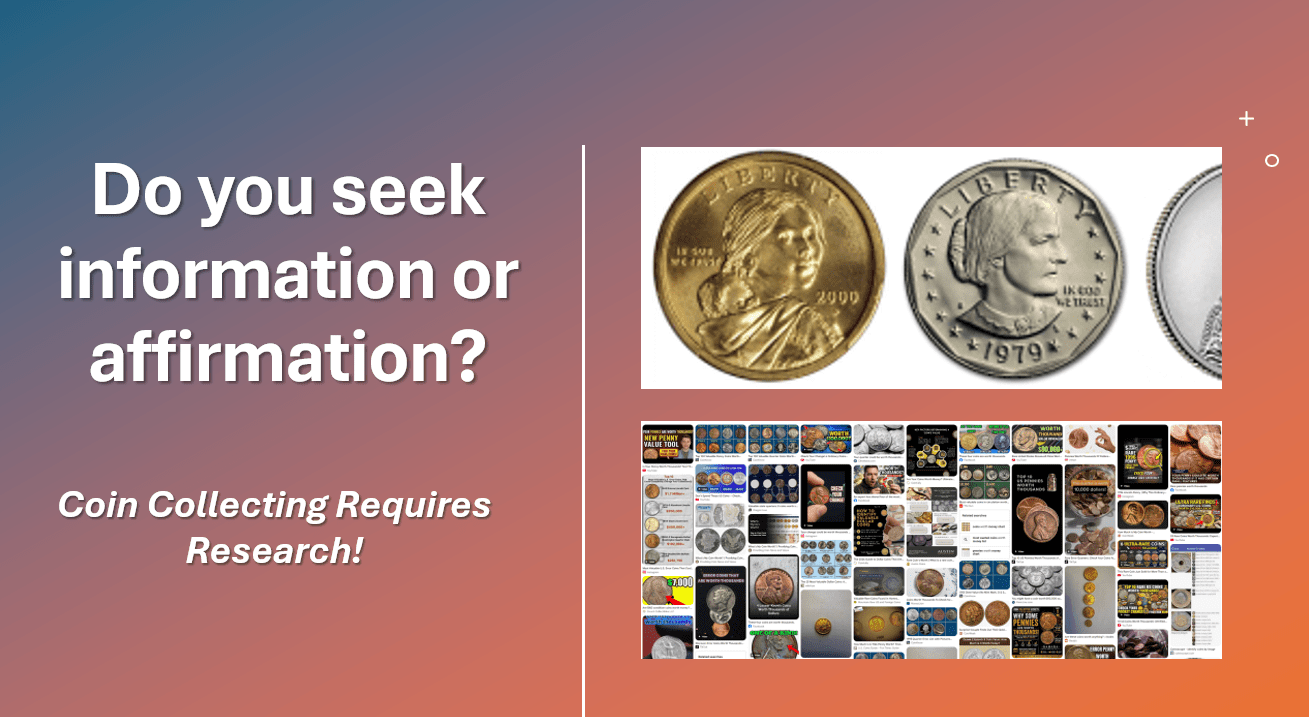
In addition to being a numismatist, I was a communication and technology professor for 48 years at research institutions. I wrote how society has changed since internet access became widespread. Algorithms chart what we like and believe. (Facebook is doing this now with each of your clicks.) My work documented that people no longer sought information. They seek affirmation.
Technology gives you what you want. Not what you need.
No where is this more apparent than with amateurs and visitors to Facebook coin groups. They get their affirmation (get-rich quick) from TikTok, YouTube and eBay, citing all manner of fabulous prices and sky-high values for near impossible-to-find double dies, copper war cents and condition rarities–all available in pocket change.
Look at these videos!
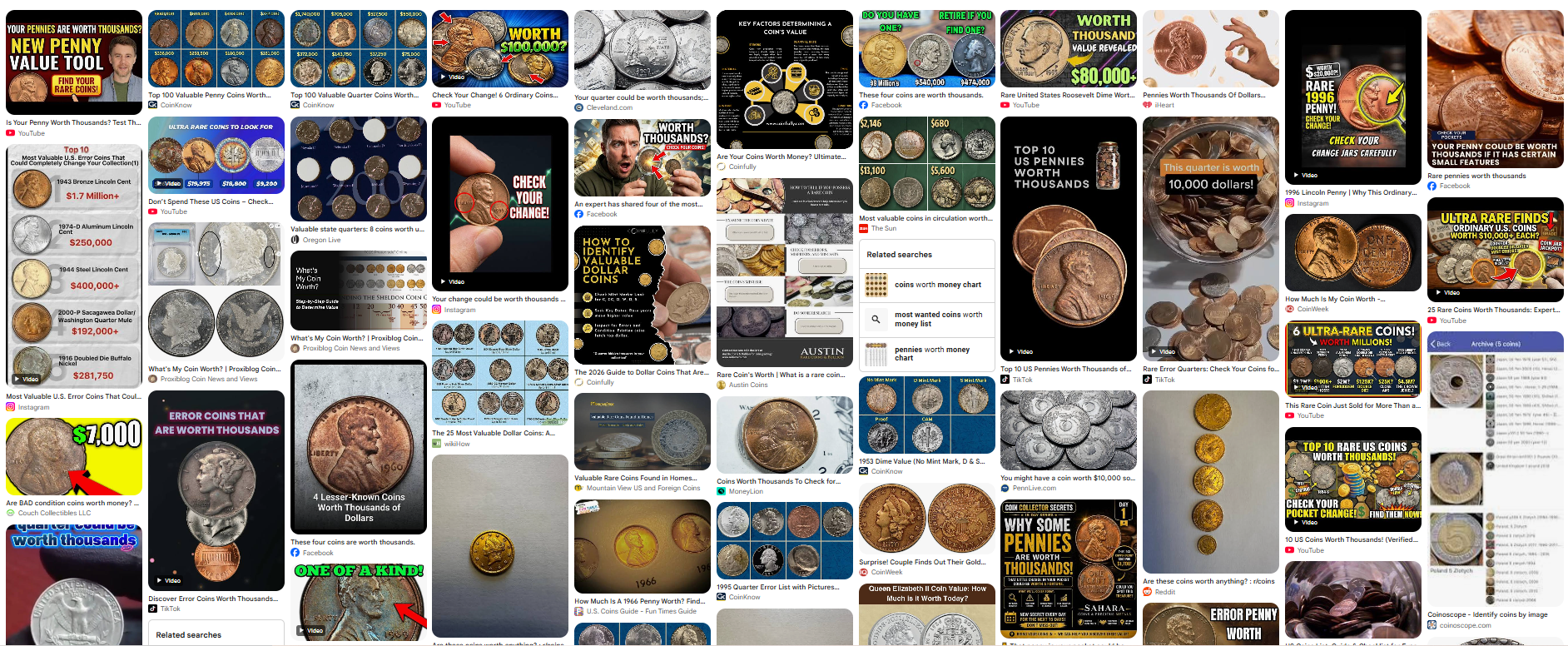
Typically new collectors know little about grading, comparing a circulated coin from pocket change with a condition rarity same date/mint mark coin graded MS67 by PCGS or NGC.
They may have a coin in a low grade but saw a social media post claiming they have hit the jackpot. This is especially true with condition rarities.
Note: For those who do not know what “condition rarity” means, that proves the point. It means a coin that is common in low grades but scarce or rare in higher ones. “Absolute rarity” means the total of that date and mint known to survive.

What annoys hobbyists are newbies who just show a coin or coins and post one word: “Value?” “Thoughts?” “Opinion?”
In other words, they don’t want to do the necessary research or even know the faintest idea about collecting. They just want a dollar figure, and if you state, no value or damage, etc., they reply that they have researched the coin on one of these social media sites.
Equally annoying are questions about U.S. currency–coins that often do not show up in pocket change. Example:

In the past year, I have seen Facebook members ask if their Eisenhower, Sacagawea and Susan B. Anthony dollars were valuable. Again, they had never seen them before. Same with 2009 Bicentennial Cents and that awful designed Jovita Idár quarter that looks like an error.

Just because you haven’t seen the coin before doesn’t make it valuable. That is a mantra that I have said repeatedly when asked about the above coins.
Then there are questions about the best coin app–something to store in your mobile phone that will tell you everything you need to know about a coin–value, rarity, error, etc.
I can tell you as an AI specialist that no app can assess from a photo the thousands of coin terms and conditions that affect value, from grade to mint error.
Just take a look at the 300 illustrated entries in Proxiblog’s illustrated glossary. No app can tell a bleb from a lamination peel.
Here’s a video about the best coin app on the market:
You may have bought a coin microscope. But if you do not know what you are looking at, it will be of little help. Once again, you will have to do research.
There are legitimate uses for a coin microscope. Here’s another video about that.
I hope this post encourages new hobbyists to do the necessary numismatic research rather than rely on algorithms to do that for you.
If you fall in that category, be sure to visit this tab: “New and Youth Hobbyists.”
If you like posts like this, subscribe so you can be informed whenever there is a new article or column.
Proxiblog also has thousands of followers on Facebook Coin Groups and across social media. To get the latest discussion and commentary, be sure to friend us by clicking here.
You can find more information about types, varieties, errors, grading, bidding and buying in Coin News Updated: The Essential Guide to Online Bidding. Please consider buying or gifting the work for a friend, as it underwrites this hobbyist blog. Thank you.
